
The era of growth-at-all-costs in the software sector has hit a systemic wall. For a decade, global capital chased the interface—the sleek apps, the viral platforms, and the promise of frictionless scalability. Investors ignored the physical reality that every line of code relies on a physical electron moving through a copper wire. Now, a profound asymmetry has emerged. The market is realizing that while software is abundant, the physical capacity to power and cool that software is dangerously scarce. This is the Great Boring Pivot: a massive reallocation of wealth from the virtual layer to the invisible infrastructure that sustains it.
This shift is not a retreat from innovation, but a migration toward the actual bottlenecks of the 21st century. We are seeing a transition from the 'App Economy' to the 'Foundational Economy.' In this new regime, the highest returns are no longer found in the company that creates the AI model, but in the company that owns the electrical substation feeding the data center. The allure of the intangible is being replaced by the security of the tangible. It is a contrarian move that favors the unremarkable over the revolutionary.
The Software Mirage and the Valuation Crash
For years, Software-as-a-Service (SaaS) was the darling of the venture capital world because of its perceived infinite scalability. The narrative was simple: build the product once, sell it a million times, and enjoy margins that defy the laws of physics. However, this model relied on a low-interest-rate environment and a blind faith in user acquisition over actual profitability. When the cost of capital rose, the mirage evaporated. The market stopped rewarding 'potential' and started demanding cash flow, which is notoriously difficult to extract from speculative software platforms.
The devaluation of the virtual layer has created a vacuum that invisible infrastructure is now filling. Investors are looking at the P/E ratios of cloud-based startups and comparing them to the steady, predictable yields of energy grids and water treatment plants. The realization is stark: a software company can be disrupted by a single line of code from a competitor, but a high-voltage transmission line is a moat that takes decades and billions of dollars to replicate. This is the ultimate hedge against the volatility of the digital age.
"The market spent ten years investing in the paint on the walls while the foundation was cracking. Now, capital is finally paying for the concrete."— Strategic Analyst, Global Capital Markets
This realization is triggering a systemic rotation across global portfolios. We are seeing sovereign wealth funds and institutional investors pivot away from high-beta tech indices toward assets that provide essential utility. The focus has shifted from the user experience to the energy experience.
The Power Paradox: AI's Physical Hunger
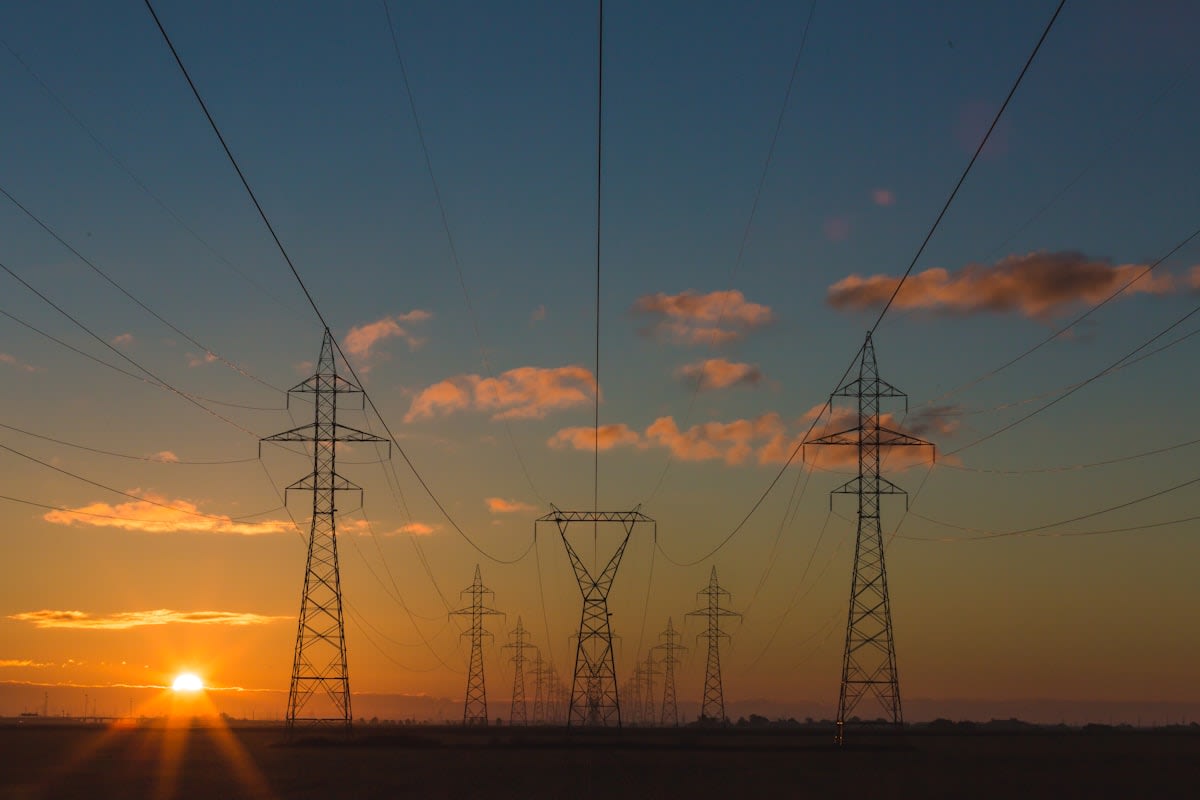
Artificial Intelligence is often discussed as a mathematical breakthrough, but in reality, it is a thermodynamic challenge. The compute power required for Large Language Models (LLMs) is staggering, demanding an amount of electricity that current grids were never designed to handle. In the United States, the aging power grid is struggling to keep pace with the explosion of data centers. In Europe, the push for energy independence is colliding with the need for massive industrial power. The bottleneck is no longer the algorithm; it is the transformer and the substation.
Beyond electricity, the cooling crisis has become a primary investment driver. Data centers are essentially giant heaters that happen to process data. The demand for advanced liquid cooling systems and sustainable water management has turned 'boring' HVAC and plumbing engineering into high-growth sectors. Investors are now betting on the companies that can keep the chips cool, recognizing that without thermal management, the most powerful AI in the world is just a very expensive space heater.
| Metric | Speculative Tech (2015-2021) | Invisible Infrastructure (2023-Present) |
|---|---|---|
| Primary Value Driver | User Growth/Engagement | Physical Capacity/Throughput |
| Typical Valuation Basis | Forward Revenue Multiples | DCF & Asset Replacement Value |
| Risk Profile | High Disruption Risk | Regulatory/Political Risk |
| Capital Intensity | Low (Asset Light) | Very High (Asset Heavy) |
| Revenue Predictability | Churn-Dependent | Contractual/Regulated |
This shift represents a fundamental change in how risk is perceived. For a decade, 'asset-heavy' was a dirty word in finance. Now, assets are the only thing that provide a floor to valuations. The physical nature of infrastructure creates a natural barrier to entry that software simply cannot match. When you own the land, the permits, and the physical cables, you own the gate to the digital economy.
As we move deeper into this transition, the geopolitical implications become as important as the financial ones.
Geopolitical Hard-Wiring and the Onshoring Wave
The era of globalized, just-in-time supply chains is being replaced by just-in-case resilience. This has led to a massive wave of 'onshoring' and 'friend-shoring.' In Southeast Asia, we see a surge in investment in semiconductor fabrication plants and logistics hubs as companies diversify away from single-source dependencies. In North America, the focus is on rebuilding the domestic industrial base. This is not just about politics; it is about mitigating the systemic risk of a broken link in a global chain.

This geopolitical realignment is fueling a gold rush in critical minerals. Copper, lithium, and cobalt are the new oil. The capital fleeing tech stocks is flowing into the mining and processing infrastructure required to fuel the energy transition. The strategic value of a copper mine in Chile or a lithium refinery in Australia now outweighs the perceived value of another social media platform. The world is realizing that you cannot build a green economy or an AI revolution with virtual credits; you need physical materials.
Sovereign wealth funds are leading this charge, treating infrastructure as a tool of statecraft. By investing in the 'invisible' layers of other nations—ports, 5G networks, and energy grids—states are securing their place in the future global hierarchy. The goal is no longer just profit, but the control of the conduits through which all digital and physical commerce must pass.
This creates a new form of economic moat. In the software era, the moat was the network effect. In the infrastructure era, the moat is the physical permit and the geological deposit. The shift is absolute and irreversible.
Ultimately, the market is returning to a classic understanding of value.
The New Alpha of the Unremarkable
The most successful investors of the next decade will be those who can find alpha in the unremarkable. The 'boring' companies—those that manage waste, transport water, maintain power lines, and operate warehouses—are the ones providing the actual stability in a volatile world. These companies often operate with low visibility and low prestige, but they possess the one thing the tech world lacks: indispensable utility. When the world crashes, people stop paying for a premium subscription to a productivity app, but they never stop paying for electricity.
The Bottleneck Theory
The Bottleneck Theory suggests that in any period of rapid technological expansion, the highest returns migrate from the innovators (who create the demand) to the infrastructure providers (who resolve the constraints). We are currently in the 'Constraint Phase' of the AI revolution.
We are witnessing a return to the 'industrialist' mindset. The focus is shifting from the quarterly user growth metric to the 30-year asset lifecycle. This requires a different kind of patience and a different kind of analysis. It is an admission that the digital world is not a separate entity, but a layer sitting on top of a physical world that requires constant maintenance, massive investment, and physical presence.
The Great Boring Pivot is essentially a correction of a decade-long hallucination. We believed that software was eating the world, but we forgot that software needs a place to live and power to run. The capital is now returning to the soil, the steel, and the wire. This transition will be messy and expensive, but it is the only way to ensure that the promises of the digital age are actually deliverable.
As the dust settles, the winners will be those who recognized that the most valuable assets are often the ones you never think about until they stop working. The invisible infrastructure is the true engine of the global economy, and the pivot toward it is the most strategic move of the decade.