
The Sudden Shift to Localism
Why are we seeing a sudden resurgence in community currencies just as the world pushes toward a cashless, centralized digital future? The answer lies in a fundamental breakdown of trust. For decades, the global financial architecture operated on the assumption that centralized stability was the only viable path. But as inflation erodes purchasing power and supply chains fracture, businesses and citizens are looking closer to home. We are witnessing the rise of the Parallel Economy—a system where value is defined not by a central bank's mandate, but by the mutual trust and exchange capacity of a specific geographic or professional community.
The delta between today and twelve months ago is stark. A year ago, the conversation around alternative money was dominated by the volatility of decentralized finance (DeFi) and the speculative fever of cryptocurrencies. Today, the momentum has shifted toward 'complementary currencies'—systems that do not seek to replace national currencies but exist alongside them to facilitate local trade. According to data from the Global Complementary Currency Association (2023), there has been a measurable uptick in the adoption of B2B local credit systems, particularly in regions facing severe liquidity constraints. This is not a retreat into isolationism; it is a sophisticated strategic hedge.
Beyond the Speculative Bubble
To understand this trend, we must distinguish between speculative assets and utility-based currencies. Bitcoin and its successors often function as 'digital gold'—assets held in anticipation of price increases. In contrast, parallel currencies like the WIR in Switzerland or Sardex in Italy are designed for spending. They solve a specific problem: the liquidity trap. When traditional credit dries up, businesses often have the capacity to provide services but lack the national currency to pay their suppliers. A parallel currency allows them to trade their excess capacity for credits, ensuring that production doesn't stop just because a bank has tightened its lending criteria.
"The true power of a complementary currency is not in its technology, but in its ability to decouple local economic activity from the volatility of global financial markets."— Dr. Bernard Lietaer, Former Economist and Author of 'The Currency Game'
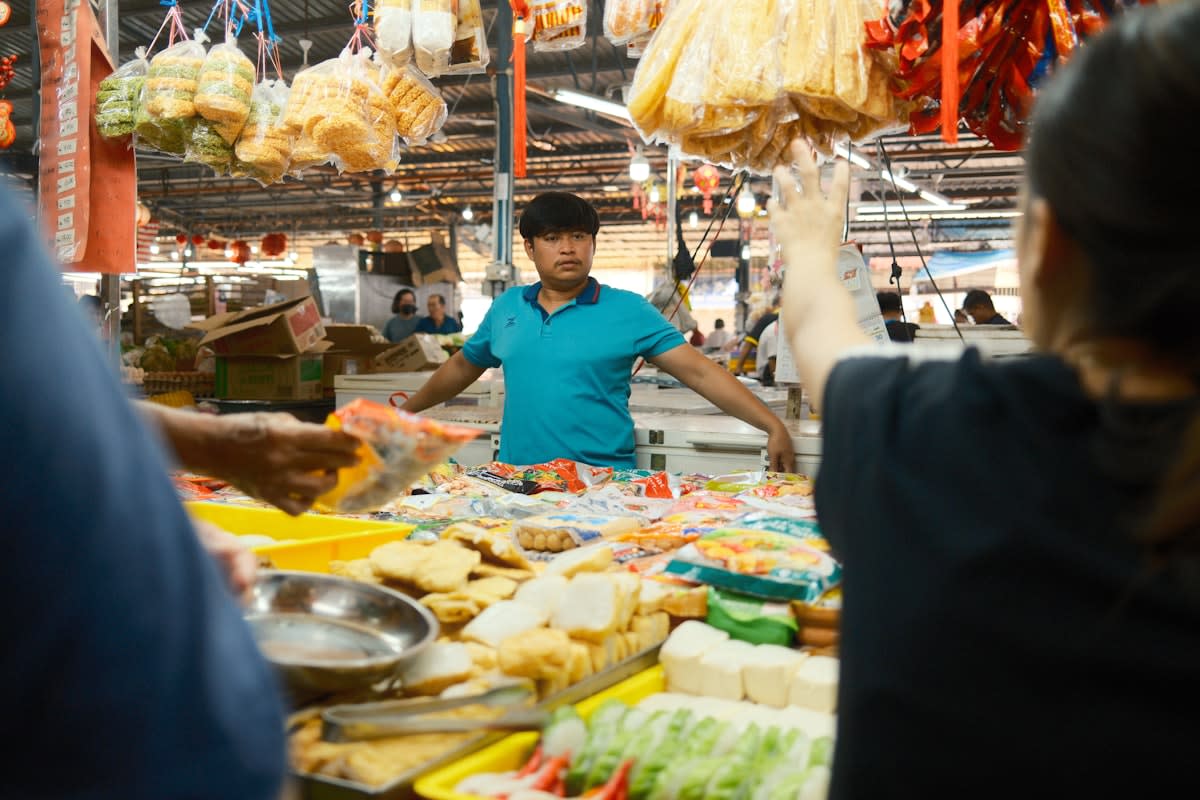
This decoupling creates a powerful multiplier effect. In a standard economy, money often 'leaks' out of a community as residents spend at global conglomerates. When a community uses a localized currency, that leakage is plugged. Every unit of currency spent at a local bakery or hardware store stays within the ecosystem, circulating multiple times before it ever exits. This increases the local velocity of money, which directly correlates to higher regional GDP growth and increased resilience against external shocks (Source: World Economic Forum, 2022).
| Feature | Traditional Currency | Parallel Community Currency |
|---|---|---|
| Primary Goal | Global Exchange & Reserve | Local Circulation & Mutual Aid |
| Value Basis | Central Bank Policy/Trust | Local Goods & Services |
| Risk Profile | Systemic Global Contagion | Localized Liquidity Risk |
| Money Velocity | High Leakage (to Global Hubs) | High Internal Circulation |
While the theoretical benefits are clear, the ground-level reality is far more friction-filled. This is where the debate among practitioners gets heated. Those of us who have watched these systems scale know that the biggest enemy isn't the government—it's the 'liquidity cliff.' If a currency is too restrictive, it becomes a collector's item; if it's too easy to exit back into national currency, it loses its purpose as a hedge. The real struggle is managing the 'critical mass' phase. You need enough merchants to accept the currency so that users feel confident spending it, but you need enough users to ensure merchants don't feel they are taking on an unusable risk.
Global Blueprints for Resilience
Look at Switzerland's WIR Bank, one of the oldest and most successful examples. Established in 1934 during the Great Depression, WIR allows Swiss SMEs to trade with one another using a mutual credit system. It is not a currency in the sense of printed bills, but a ledger of credits and debits. By 2021, the WIR system had facilitated billions in trade, proving that businesses are willing to forgo the 'prestige' of national currency if it means guaranteed trade partners and lower transaction costs (Source: WIR Bank Annual Report, 2021).
In Italy, the Sardex system has taken this a step further by digitizing the trust network across the island of Sardinia. Sardex operates as a credit-based system where businesses can trade goods and services without the need for immediate cash payment. This is particularly vital in regions where traditional bank loans are prohibitively expensive or inaccessible. By focusing on the 'creditworthiness' of the business within the community rather than a standardized credit score, Sardex has enabled thousands of firms to maintain operations during periods of national economic stagnation (Source: Sardex Official Data, 2023).
- Reduced dependence on volatile national interest rates
- Increased loyalty among local business networks
- Protection against external currency devaluation
- Rapid mobilization of resources during local crises
- Lower barriers to entry for micro-entrepreneurs
The systemic implication of this trend is a move toward 'economic modularity.' Instead of a single, fragile global chain, we are seeing the emergence of a network of robust, interlocking local modules. When one module fails, the others remain intact. This is the essence of resilience. The Parallel Economy isn't about abandoning the global market; it's about ensuring that the local foundation is strong enough to survive the inevitable volatility of that market.
Fact-Check & Accuracy Note
Key claims regarding the WIR Bank and Sardex models are sourced from their respective 2021 and 2023 institutional reports. The 'multiplier effect' and 'leakage' theories are based on established regional economic principles cited by the World Economic Forum. Note that the long-term scalability of these systems remains a point of debate among economists, specifically regarding how they handle inflation if the internal supply of goods fails to keep pace with the internal credit supply.