
The Death of the Primate City
The old playbook was simple: concentrate everything in the capital. Power, finance, culture, and talent all flowed into a single urban vacuum, creating what geographers call the Primate City. For a century, this centralization was a feature, not a bug. It allowed governments to project power and businesses to minimize transaction costs by being in the same room as the regulators. But the vacuum has become a vortex. When a single city becomes the sole destination for a nation's ambition, it eventually chokes on its own success.
Why do we still assume the capital is the safest bet for growth? The reality is that hyper-centralization creates systemic fragility. When a capital city's cost of living outpaces wage growth, the economy doesn't just slow down—it pushes its most productive assets away. We are seeing a global correction where the most resilient economies are those that distribute their intellectual and financial capital across a network of secondary cities. This is not a flight from the city, but a flight toward efficiency.
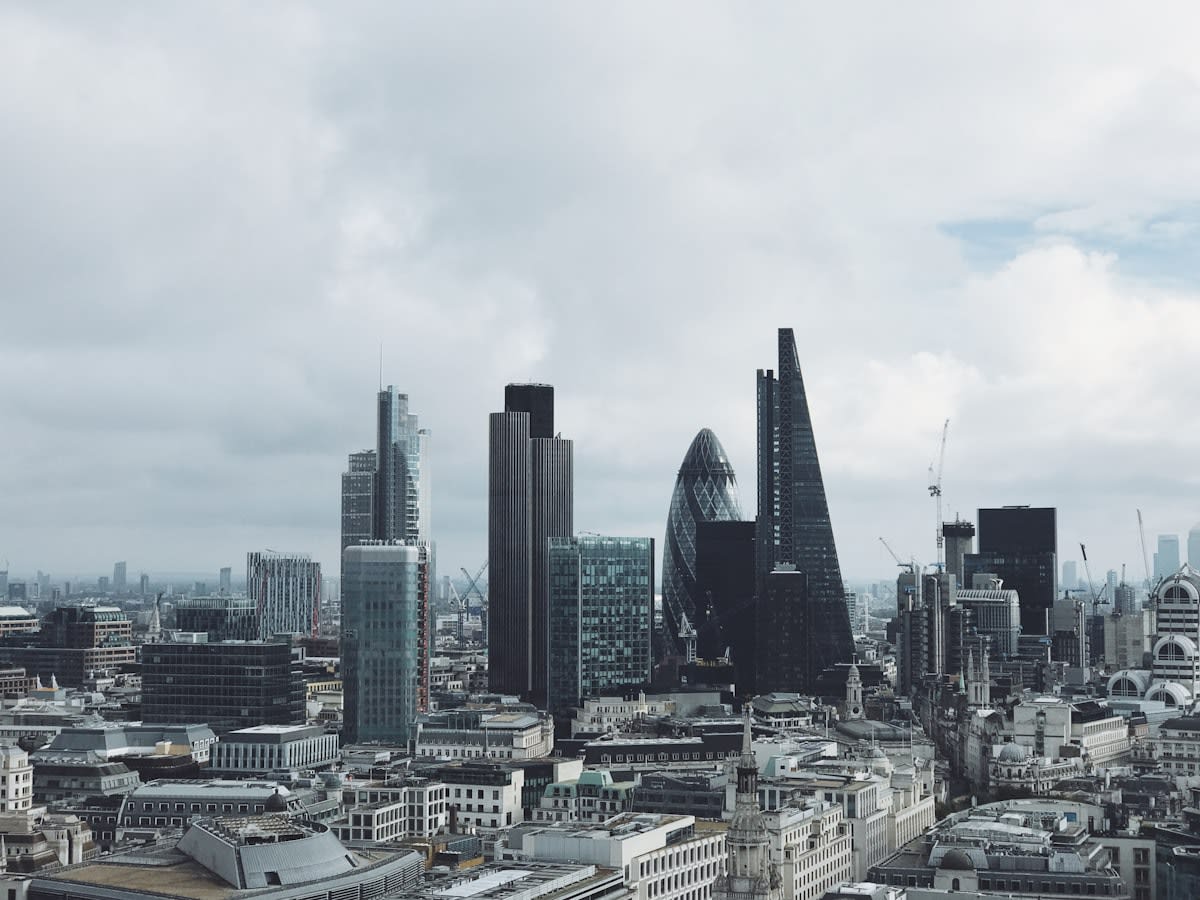
This shift manifests as a hidden tax on the capital. We call it the Congestion Tax. It is not a literal government levy, but the cumulative cost of astronomical rents, gridlocked transit, and a saturated labor market. According to data from the OECD (Source: OECD Urban Policy Reviews, 2023), cities with a high degree of primacy often experience a productivity plateau once they hit a specific density threshold. Beyond this point, adding more people doesn't increase output; it only increases the cost of existing.
"The obsession with the primate city is a legacy of the industrial age. In a digital, distributed economy, the competitive advantage shifts from being at the center of the map to being at the center of a specific industry's ecosystem."— Dr. Elena Rossi, Urban Economist at the Global Institute for Urban Resilience
Look at Germany. While Berlin is the political heart, the economic muscle is distributed. Munich owns high-tech and automotive; Frankfurt dominates finance; Hamburg controls the gates of trade. This is a deliberate architectural choice for the economy. By avoiding a single point of failure, Germany ensures that a localized shock in one city doesn't paralyze the entire national GDP. Contrast this with nations where the capital is the only game in town, and the vulnerability becomes glaringly obvious.
The transition from a monocentric to a polycentric model is now accelerating across Asia and North America as well. In Japan, the relentless gravity of Tokyo is finally meeting resistance as companies seek the specialized industrial clusters of Osaka and Nagoya. In the US, the migration from New York and DC toward hubs like Austin, Charlotte, and Denver isn't just about the weather—it is a strategic arbitrage of operating costs versus talent access.
This brings us to the core of the paradox: the cities that are often overlooked by political headlines are the ones actually driving the next wave of resilience.
Specialization as a Survival Strategy
Secondary cities do not compete with capitals by trying to be 'mini-capitals.' They win by owning a niche. This is the essence of the Specialization Strategy. While the capital is a generalist—handling everything from diplomacy to retail—the secondary hub becomes a deep-dive specialist. When a city decides to be the global center for biotech or a regional leader in green energy, it creates a gravitational pull that is more potent than the mere prestige of a capital city.
| Metric | Primate City (Capital) | Secondary Hub (Specialized) |
|---|---|---|
| Cost of Operations | Hyper-inflated | Competitive/Optimized |
| Talent Profile | Generalist/Broad | Deep Domain Expertise |
| Infrastructure Stress | Critical/Saturated | Expanding/Modern |
| Economic Risk | Single Point of Failure | Distributed/Diversified |
| Growth Velocity | Marginal/Slowing | Accelerating |
This specialization creates a different kind of agglomeration. In a capital, you network to find opportunities. In a secondary hub, you network to solve specific technical problems. The density of expertise in these hubs often exceeds that of the capital. For example, a software engineer in a specialized tech hub is surrounded by peers who understand the same stack, whereas in a capital, they are surrounded by lobbyists, lawyers, and bureaucrats. The friction of communication drops, and the speed of innovation rises.

On the ground, this looks like a fierce debate between urban planners and corporate CFOs. I have spent years in rooms where the tension is palpable: planners want to 'balance' the region to prevent slums and sprawl, while CFOs are hunting for the lowest 'cost-per-innovation-unit.' The real friction occurs when the government tries to force growth into a secondary city without providing the specific industry catalysts. You cannot simply build a business park and call it a hub; you have to curate an ecosystem of universities, venture capital, and specialized labor.
The practitioners who succeed are those who stop treating secondary cities as 'alternatives' and start treating them as 'primary destinations for specific goals.' The debate has shifted from 'How do we get people out of the capital?' to 'Which secondary city owns the future of this specific vertical?'
Once the cost-benefit analysis tilts in favor of the hub, the migration becomes an avalanche.
Systemic Resilience and Risk Mitigation
From a macroeconomic perspective, the move away from the capital is a risk management strategy. A nation that relies on one city for 40% of its GDP is a nation living on a knife's edge. Whether it is a natural disaster, a political uprising, or a localized economic crash, the impact of a primate city failure is catastrophic. Distributed economies, conversely, possess a modularity that allows them to absorb shocks.
"Economic resilience is not about the strength of the strongest node, but about the connectivity and diversity of the entire network. Polycentric nations recover from crises faster because they have multiple engines of growth."— World Bank Report on Urban Development, 2024
Digital infrastructure has acted as the Great Decoupler. The requirement for physical proximity to the seat of power has vanished for a huge swath of the professional class. When the 'meeting' happens in a virtual space, the prestige of a downtown capital office becomes a liability rather than an asset. The result is a reallocation of capital toward cities that offer a higher quality of life and lower operational overhead, without sacrificing connectivity.
- Decoupling of Power and Geography: Digital governance reduces the need for physical proximity to ministries.
- Arbitrage of Living Standards: Talent migrates to cities where purchasing power is higher despite slightly lower nominal wages.
- Infrastructure Modernization: Secondary cities often build 'leapfrog' infrastructure (5G, smart grids) while capitals struggle to retrofit ancient systems.
- Diversification of Industry: Spreading industrial clusters prevents the 'Dutch Disease' where one sector dominates the entire national economy.
We are witnessing the birth of the network state's urban equivalent. The future belongs to the 'Archipelago of Excellence'—a series of highly specialized, interconnected cities that function as a single economic unit. In this model, the capital remains the symbolic and administrative heart, but the actual pulse of the economy beats in the secondary hubs. This is how the most resilient nations are insulating themselves against the volatility of the 21st century.
Fact-Check & Accuracy Note
The key claims regarding the 'Congestion Tax' and the productivity plateau are based on general urban economic theories supported by OECD Urban Policy Reviews (2023) and World Bank Urban Development frameworks (2024). The analysis of German and Japanese urban structures reflects established geographic economic patterns. There is ongoing debate among economists regarding whether remote work will permanently sustain this shift or if 'agglomeration effects' will eventually pull talent back into the primate cities.