
The Great Pivot: Redefining Wealth in the 21st Century
For decades, the global elite viewed wealth through the lens of accumulation. The goal was simple: build a mountain of liquid assets high enough to insulate oneself from the whims of the market. But a systemic shift is underway. We are witnessing a transition from the pursuit of financial independence to the pursuit of sovereignty. Why settle for a large bank account if you are still beholden to the regulatory whims of a single jurisdiction or the volatility of a few asset classes? The new objective is not just to be rich, but to be autonomous.
This shift manifests as a trade. The modern strategist is increasingly willing to sacrifice the peak growth potential of aggressive portfolios for the stability of time sovereignty. It is the difference between owning a luxury estate in a fragile economy and owning the freedom to move, work, and exist across borders without friction. This is not a retreat; it is a sophisticated reconfiguration of risk. When the environment becomes unpredictable, the most valuable currency is no longer the dollar or the euro, but the ability to pivot without permission.
The Architecture of Lean FI and the Permanent Portfolio
Consider the case of Miguel Marquez, a professor who achieved Lean Financial Independence (FI) not through a windfall, but through a calculated strategy of geographic and financial optimization. By moving abroad, Marquez was able to save 70% of his income, a rate nearly impossible in high-cost Western hubs. This is a prime example of the sovereignty shift: utilizing geographic arbitrage to accelerate the timeline to autonomy. He did not wait for a corporate pension; he engineered a life where his basic necessities were covered by a lean, resilient system.
Central to this approach is the Permanent Portfolio, a strategy that eschews the attempt to beat the market in favor of surviving any market. By dividing investments equally—25% stocks, 25% bonds, 25% gold, and 25% cash—the strategist creates a hedge against every major economic scenario. This 25% cash allocation might seem conservative to a traditional investor, but to the sovereignty seeker, it is a strategic reserve. It is the liquid fuel required to execute a pivot when the geopolitical or economic winds shift.
| Metric | Traditional Wealth Accumulation | Sovereignty-Based Wealth (Lean FI) |
|---|---|---|
| Primary Goal | Maximum Net Worth | Maximum Time Autonomy |
| Risk Profile | Growth-Oriented (High Volatility) | Resilience-Oriented (Low Volatility) |
| Asset Distribution | Concentrated in Equities/Real Estate | Diversified (Stocks, Bonds, Gold, Cash) |
| Savings Strategy | Incremental/Standard | Aggressive (e.g., 70% via Geo-Arbitrage) |
| Success Metric | Portfolio Valuation | Flexibility and Identity Independence |
Is it not more logical to seek a portfolio that limits swings rather than one that promises a moonshot? For those pursuing time sovereignty, the psychological toll of a 40% market crash is a cost too high to pay. They prefer the stability of a diversified portfolio that softens the blow of inevitable dips, ensuring that their lifestyle—and their freedom—remains intact regardless of the headline indices. This is the pragmatic application of resilience over greed.
The Resilience Hedge
The Permanent Portfolio logic is simple: you don't need to predict the future if you are protected against all possible futures. By balancing assets that thrive in inflation, deflation, growth, and recession, the investor trades the chance of extreme wealth for the certainty of permanent autonomy.
Geopolitical Sovereignty: The Rise of the Gateway Nation
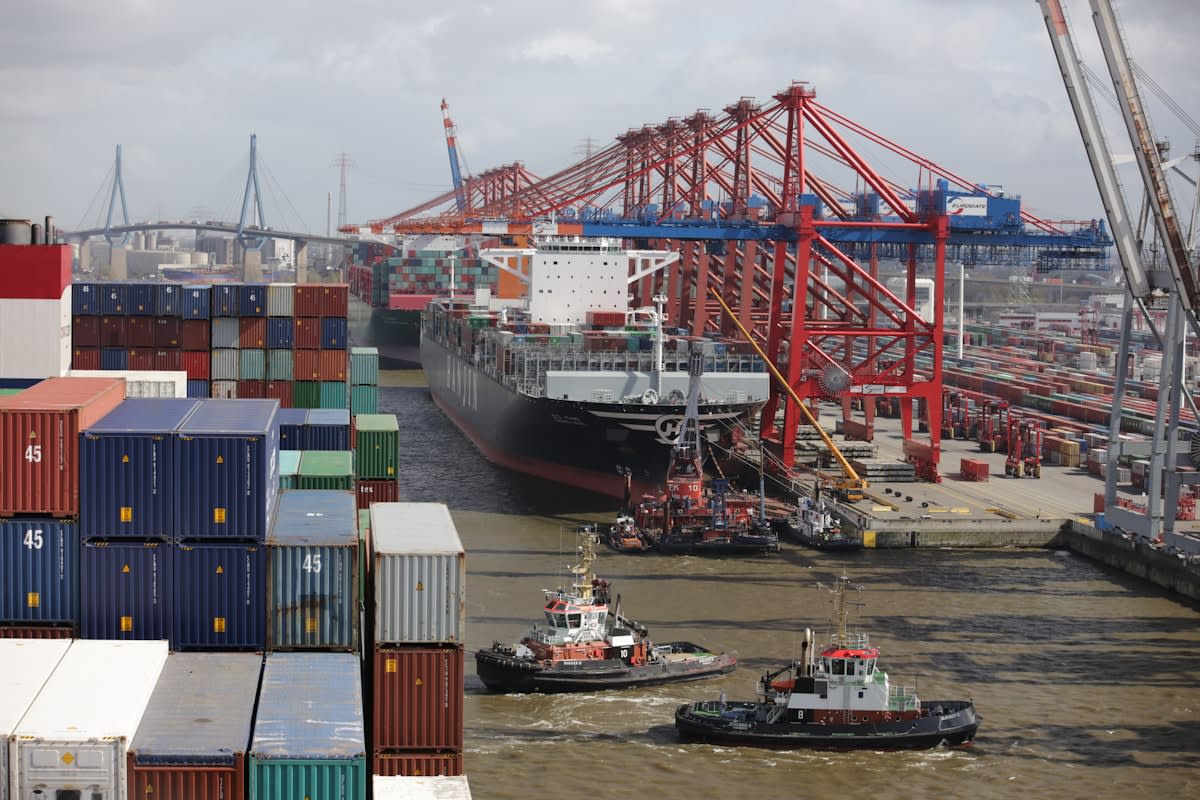
The shift toward sovereignty is not merely a personal financial strategy; it is mirroring a broader geopolitical trend. We are seeing the emergence of the Gateway Nation—sovereign or de facto states that offer strategic advantages in security, technology, and trade. The recent alliance between Israel and Somaliland serves as a blueprint for this new architecture. By recognizing Somaliland as a sovereign, self-governing entity, Israel is not just forming a diplomatic tie; it is investing in a regional hub that integrates security and economic enterprise.
Somaliland has governed itself for over three decades, maintaining its own institutions and elections despite a lack of broad international recognition. This creates a unique environment for the strategic investor or state: a jurisdiction that operates outside the rigid constraints of traditional global diplomacy but maintains internal stability. Such alliances advance interests in critical regions like the Red Sea, linking trade and technology into a framework for regional stability that bypasses old-world bureaucratic bottlenecks.
Does this not mirror the individual's quest for Lean FI? Just as the professor moves abroad to escape the cost-of-living trap, nations are seeking new, agile alliances to escape the constraints of outdated diplomatic frameworks. The goal is the same: the ability to operate with autonomy and resilience in a fragmented world. The Israel-Somaliland model suggests that the future of power lies in these nimble, purpose-driven partnerships rather than monolithic bloc loyalty.
Digital Sovereignty and the Regulatory Fortress
While individuals seek financial autonomy and nations seek geopolitical agility, the European Union is pursuing tech sovereignty. On July 31, 2026, the EU rolled out a specialized team in Brussels designed to rein in AI companies globally. This is not merely about ethics or preventing deepfakes; it is a strategic move to ensure that the bloc is not dependent on American or Chinese tech titans like OpenAI and DeepSeek. By expanding its AI Office with 38 new specialists, the EU is building a regulatory fortress to protect its digital prosperity.
The EU's strategy welds landmark digital regulations with aggressive economic ambition. We have seen billions of euros in fines levied against Big Tech, coupled with record investments in internal AI infrastructure. This is the state-level version of the Permanent Portfolio: diversifying the technological base so that the region is not vulnerable to a single point of failure. They are trading the convenience of third-party AI dominance for the security of sovereign control.
"The question is shifting from 'When can I stop working?' to 'How can I build the flexibility for the life I want?'"— Industry Perspective on the Identity Shift
The Identity Shift: From Retirement to Flexibility
The most profound element of the sovereignty shift is psychological. For too long, the goal of wealth was retirement—a total cessation of productivity. But the new vanguard views retirement not as an end, but as an identity shift. The focus has moved away from the date one can stop working toward the creation of flexibility. This is particularly evident among women and high-earners who are separating their identity from the professional roles they have carried for decades.
When you decouple your identity from your role, you achieve the ultimate form of sovereignty. Financial independence is merely the tool that enables this transition. The objective is to build a relationship with purpose that reflects who you have become, rather than who the market expected you to be. This is the final piece of the puzzle: liquid assets are useless if you are still a prisoner to a professional identity that no longer serves you.
In synthesis, we are seeing a global convergence. Whether it is a professor utilizing a Permanent Portfolio to buy back his time, the EU regulating AI to secure its digital borders, or Israel partnering with Somaliland to secure the Red Sea, the motive is identical. The world is moving away from a model of fragile growth and toward a model of robust sovereignty. The winners of this era will not be those with the most assets, but those with the most options.