The Great Maritime Pivot
The global shipping industry is currently caught in a brutal transition. For decades, heavy fuel oil provided the cheap, energy-dense muscle required to move 90% of global trade, but that era is ending. The International Maritime Organization (IMO) has accelerated its timeline, targeting net-zero GHG emissions by or around 2050, with critical checkpoints in 2030 and 2040 (Source: IMO, 2023). While Liquefied Natural Gas (LNG) was initially hailed as the savior, it is increasingly viewed as a mere bridge—a temporary stopgap that still leaks methane. The real bet is now being placed on ammonia.
Why the sudden urgency? The industry has realized that electrification is a fantasy for deep-sea voyages. Battery energy density simply cannot sustain a container ship crossing the Pacific. Hydrogen, while clean, requires cryogenic temperatures or immense pressure that eat into precious cargo space. Ammonia, however, is easier to liquefy and store than hydrogen and carries no carbon in its molecular structure. If produced using renewable energy—Green Ammonia—it offers a path to truly zero-carbon propulsion (Source: IRENA, 2023).
"The transition to ammonia is not a simple fuel swap; it is a total reimagining of maritime safety and bunkering infrastructure on a global scale."— Maritime Strategy Lead at DNV
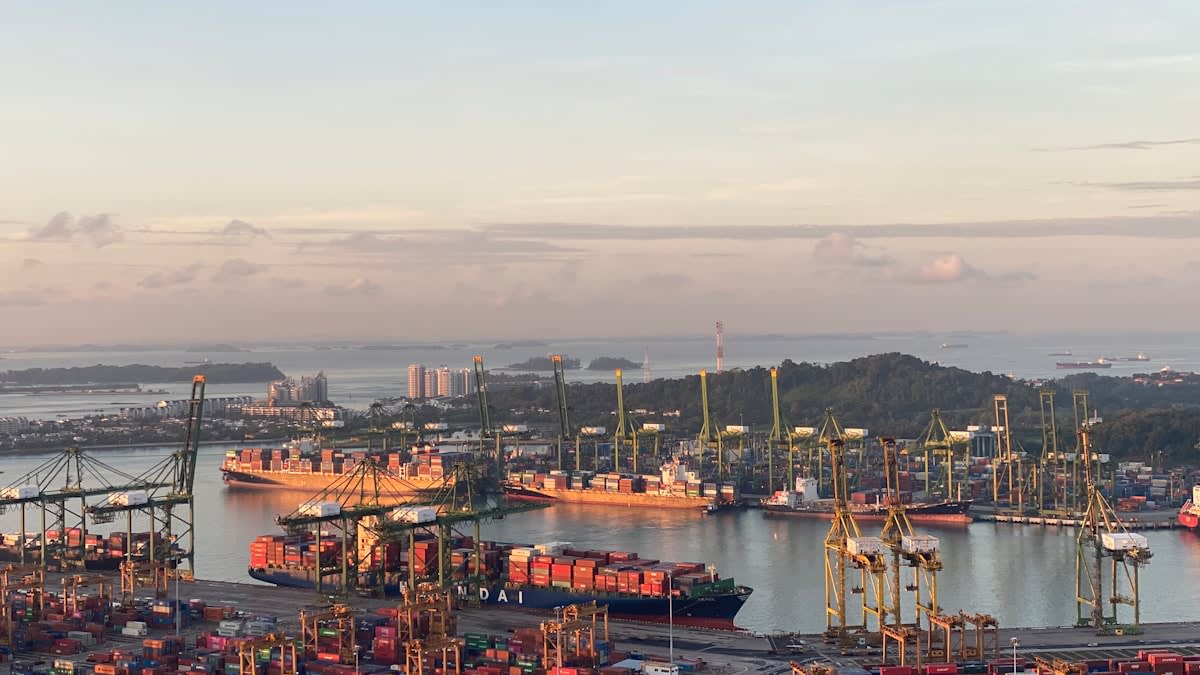
This shift is not happening in a vacuum. We are seeing a coordinated movement across the world's primary chokepoints. From the ports of Singapore to the hubs in Rotterdam, the conversation has shifted from 'if' ammonia will be used to 'how' we will handle it. The delta between last year and today is stark: twelve months ago, ammonia-ready vessels were speculative blueprints. Today, engine manufacturers are delivering the first commercial-scale ammonia combustion engines, and shipowners are adding 'ammonia-ready' notations to their newbuild orders (Source: DNV, 2024).
The Energy Density Math
To understand the pivot, one must look at the cold numbers of energy density. The shipping industry operates on razor-thin margins where every cubic meter of fuel tank is a cubic meter of lost revenue. Ammonia strikes a compromise that other alternatives cannot match. It provides significantly more energy per unit of volume than liquid hydrogen, meaning ships don't have to sacrifice half their cargo capacity to make a trans-Atlantic crossing. This economic reality is what drives the boardroom decisions in Copenhagen and Tokyo.
| Fuel Type | Carbon Footprint | Storage Complexity | Energy Density (Volumetric) |
|---|---|---|---|
| Heavy Fuel Oil | High | Low | High |
| LNG | Medium | Medium | Medium |
| Green Ammonia | Zero | Medium | Medium-High |
| Liquid Hydrogen | Zero | Very High | Low |
The table reveals the strategic advantage. While LNG is easier to handle, its carbon footprint remains a liability under emerging carbon taxes. Green ammonia matches the carbon-free profile of hydrogen but avoids the logistical nightmare of storing fuel at -253 degrees Celsius. The industry is betting that the ability to store ammonia at -33 degrees Celsius or under moderate pressure will make it the dominant fuel for the 2030s and 2040s (Source: Global Maritime Forum, 2023).
The Practitioner's Dilemma: Toxicity on the High Seas
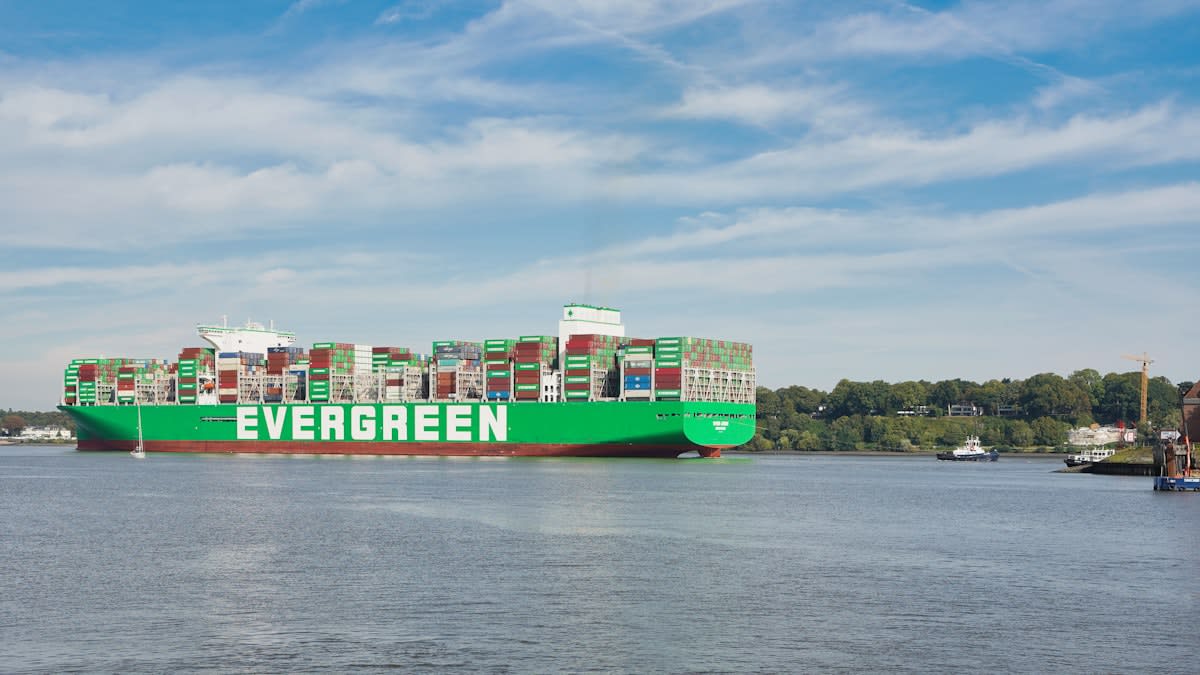
Step away from the spreadsheets and onto the deck, and the narrative changes. For the engineers and crew, ammonia is a terrifying prospect. Unlike LNG, which primarily poses a fire risk, ammonia is highly toxic. A significant leak in the engine room isn't just a technical failure; it is a potential mass-casualty event. The debate among practitioners isn't about carbon—it's about 'exclusion zones' and 'leakage sensors.' How do you train a crew of twenty to handle a substance that can cause severe chemical burns to the lungs upon a single deep breath?
In the engine room, the friction is palpable. Engineers are currently debating the 'slip' of ammonia—unburnt fuel escaping into the atmosphere—which can lead to nitrogen oxide (NOx) emissions. This creates a secondary environmental problem: solving the CO2 crisis while potentially exacerbating local air pollution. The solution requires complex Selective Catalytic Reduction (SCR) systems that add weight and cost, further complicating the design of the next generation of vessels.
This is where the theoretical meets the physical. We are seeing a surge in demand for specialized training and safety equipment. The industry is moving toward fully automated fuel handling systems to remove humans from the danger zone entirely. But in the real world, things break. The true test will be how these ships handle a collision or a hull breach in the middle of the Indian Ocean, where emergency response is hours, if not days, away.
The Global Infrastructure Race
Fuel is useless without a place to buy it. The current pivot is triggering a geopolitical scramble for 'Green Ammonia Hubs.' Regions with abundant solar and wind power are positioning themselves as the new 'fueling stations' of the world. Saudi Arabia, Oman, and Egypt are investing billions into green hydrogen and ammonia plants, leveraging their landmass and sunlight to replace the traditional oil-rich states of the past (Source: IEA, 2023).
Singapore is already experimenting with ammonia bunkering trials. The goal is to create a seamless 'plug-and-play' system where a vessel can dock and refuel with green ammonia as easily as it currently does with VLSFO (Very Low Sulfur Fuel Oil). However, the regulatory framework is lagging. Port authorities are currently struggling to define safety perimeters for ammonia bunkering—if a leak occurs in a crowded harbor, the evacuation zone could encompass several other ships, paralyzing trade (Source: Maritime and Port Authority of Singapore, 2024).
Projected Green Ammonia Demand for Shipping (2025-2040)
Executive Insight
+18.4%
YTD Growth
The projected demand curve is exponential. As carbon taxes like the EU Emissions Trading System (EU ETS) begin to penalize fossil fuel use more aggressively, the cost-benefit analysis flips. Suddenly, the higher cost of green ammonia becomes cheaper than paying the carbon penalties associated with traditional fuels. This is the economic engine driving the pivot.
The Delta: From Theory to Order Books
Comparing the current landscape to just twelve months ago reveals a massive shift in confidence. In early 2023, ammonia was often grouped with 'future fuels'—a vague category of possibilities. By 2024, it has moved into the 'execution phase.' We are seeing the first dual-fuel engines that can switch between ammonia and conventional fuels, allowing shipowners to hedge their bets while the supply chain matures (Source: MAN Energy Solutions, 2024).
The risk is no longer just technical; it is a race against time. If the industry fails to scale ammonia production, it will be forced back into the arms of LNG or expensive, inefficient biofuels. The pivot is a gamble that the technology for green ammonia production will scale as fast as the ships are being built. It is a high-wire act of industrial synchronization on a global scale.
Fact-Check & Accuracy Note
Key claims regarding IMO 2023 targets and IRENA energy density data are sourced from official institutional reports. The discussion on ammonia toxicity and 'slip' reflects ongoing technical debates within DNV and MAN Energy Solutions. Uncertainty remains regarding the exact speed of green ammonia scaling in the MENA region and the finalization of port safety protocols in Singapore.