
Stop thinking of the electric vehicle (EV) as a car. That is a legacy mindset, a remnant of the internal combustion era where a vehicle was simply a tool to move a body from point A to point B. In reality, we are deploying millions of high-capacity, mobile energy storage units across the planet. The systemic shift occurring right now isn't about the transition from gasoline to electrons; it is about the transition from centralized power generation to a distributed, fluid energy architecture. Your driveway is no longer just a parking spot; it is a node in a global power plant.
Why does this matter? Because the traditional grid is brittle. Whether it is the extreme climates of remote mining sites in the Arctic or the suffocating smog of New Delhi, the reliance on a single, distant power source is a strategic failure. The emergence of the EV as a power plant for the neighborhood allows for a level of flexibility that was previously unthinkable. When millions of batteries can feed power back into the grid during peak demand, the very definition of energy security changes. We are moving toward a world where resilience is a competitive advantage, not just a technical requirement.
The European Infrastructure Overbuild
Look at the European Union. The narrative usually focuses on the struggle to install enough chargers, but the data suggests something far more aggressive is happening. According to recent analysis, almost every EU country is meeting or exceeding its targets for public charging infrastructure. In fact, the EU as a whole is on track to exceed its fleet-based target by a staggering 180%. This isn't just proactive planning; it is the creation of a massive, distributed energy interface. Only Malta currently falls short of the bloc's target, highlighting a rare localized gap in an otherwise systemic surge.
The Alternative Fuels Infrastructure Regulation (AFIR) mandates at least 1.3 kW of public charging capacity for every battery electric vehicle (BEV) in a national fleet. By March 2026, the majority of the EU had already secured this capacity. But ask yourself: why build 180% more than what is strictly required for the current fleet? The answer lies in the shift toward flexibility. By over-provisioning the interface between the car and the grid, the EU is preparing for a future where the vehicle doesn't just take power—it manages it.
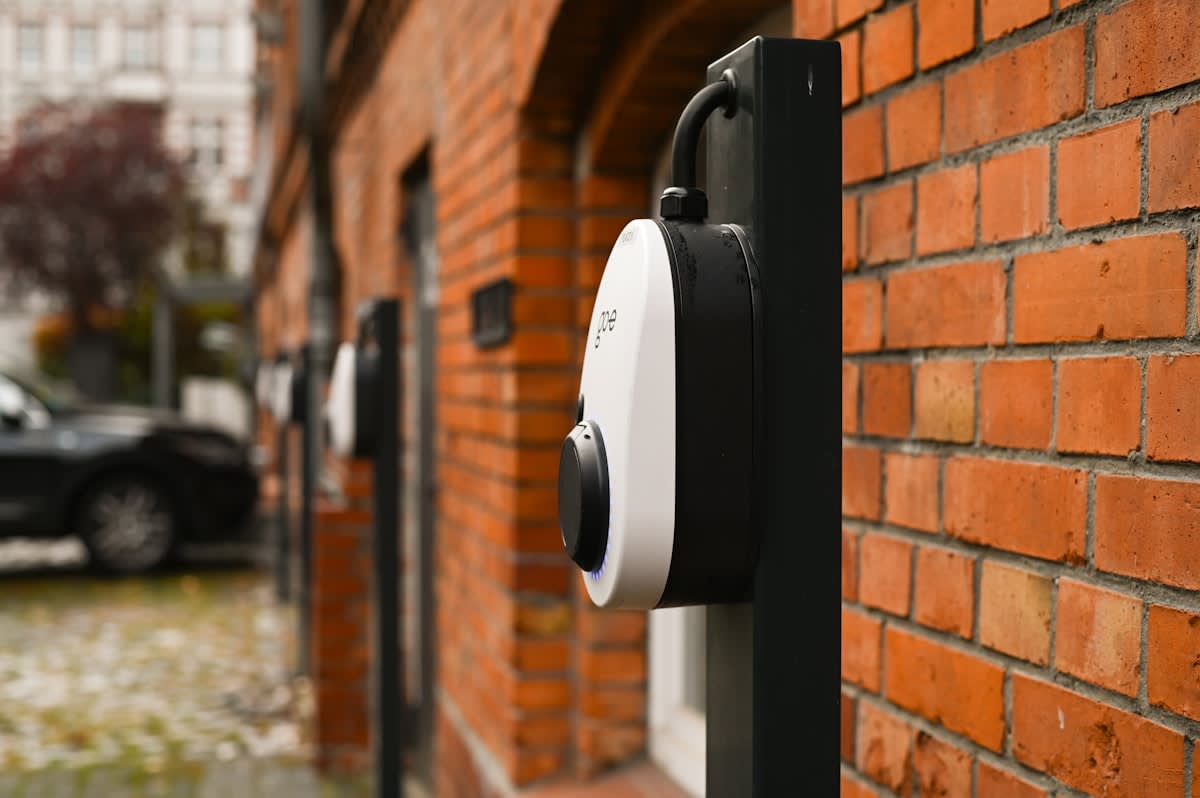
This infrastructure surge happened in advance of the strong sales growth seen in 2025 and 2026. It proves that the transition is no longer reactive. The EU is not waiting for the cars to arrive; it is building the energy network first. This is a strategic inversion of the traditional automotive rollout, treating the vehicle as a component of the energy grid rather than a consumer product.
The Strategic Pivot
The goal isn't just to keep cars moving. It is to ensure that the grid doesn't collapse when every home switches to heat pumps and AI data centers begin to devour the available load.
Public Health as an Energy Catalyst
In India, the driver for EV adoption isn't a vague commitment to 2050 carbon targets; it is a desperate fight for breathable air. New Delhi is weaponizing EV policy to combat a persistent public health crisis. The government has approved a sweeping policy that pays owners over US$1,000 to scrap old, polluting vehicles in favor of battery-electric models. This is a pragmatic, high-stakes intervention driven by the Central Pollution Control Board’s (CPCB) tracking of non-attainment cities.
When you replace a fleet of diesel cars with EVs in a city like Delhi, you aren't just cleaning the air; you are installing a massive, distributed battery array in one of the world's most densely populated areas. This creates an opportunity for urban energy resilience. In a region where power stability can be volatile, the ability to leverage millions of vehicle batteries to stabilize the local grid could be the difference between a blackout and a functioning city.
This approach positions Delhi as a global leader in EV adoption, but the real story is the integration of health policy with energy infrastructure. By treating the EV as a tool for urban survival, India is accelerating the deployment of the very hardware needed to decentralize its power grid.
| Region | Primary Driver | Systemic Constraint | Strategic Energy Goal |
|---|---|---|---|
| European Union | AFIR Regulation | Localized gaps (e.g., Malta) | 1.3kW/BEV capacity surplus |
| New Delhi, India | Public Health/Air Quality | Legacy vehicle fleet | Urban pollution & grid stability |
| China | Carbon Reduction | Lithium/Cobalt/Nickel scarcity | Metal-carbon trade-off optimization |
| Asia-Pacific | AI/Digital Economy | Isolated national grids | Pan-Asia Power Grid Initiative |
The Material Bottleneck and the Efficiency Mandate
However, this vision of a battery-powered world hits a hard wall: geology. China is currently facing a lithium bottleneck, with a cobalt squeeze looming close behind. Research using the Collaborative Optimization Model for Carbon Emission Reduction and Metal Resource Security (COMERS) warns that ignoring these material constraints could lead to a massive overestimation of EV ownership. In some models, China's passenger EV ownership by 2060 could be overestimated by as much as 42% if lithium, cobalt, and nickel supplies tighten.
This scarcity changes the calculus. If we cannot simply build an infinite number of batteries, then the batteries we do build must be exponentially more useful. This is where the 'power plant on wheels' concept becomes a necessity rather than a luxury. We cannot afford for a battery to sit idle in a garage for 22 hours a day. The material cost of that idle capacity is too high. The only logical path forward is to maximize the utility of every kilowatt-hour through bidirectional charging.
The metal-carbon trade-off means that the pace of electrification will be dictated not by consumer demand or government mandates, but by the availability of critical minerals. This reality forces a shift toward smarter grid integration. If the number of vehicles is capped by mineral availability, the value of each vehicle as a grid asset increases.
Powering the AI Boom: The Pan-Asia Grid
While the automotive world focuses on the car, the energy world is focusing on the grid. The Asia-Pacific region is currently racing to build a clean power grid to feed the insatiable energy demands of the AI boom. The Asian Development Bank is pushing for a continent-wide network to replace isolated national power systems. This is a massive undertaking, with a projected price tag of $70 billion by 2035, including $50 billion specifically for the Pan-Asia Power Grid Initiative.
AI data centers and semiconductor manufacturing require a level of power reliability that current isolated grids cannot provide. By linking power grids across borders, the region can move renewable electricity to where demand is highest. But a grid is only as strong as its ability to handle volatility. This is where the distributed battery fleet comes back into play. The $20 billion Asia-Pacific Digital Highway is not just about data; it is about the coordination of energy.
Imagine a scenario where AI-driven load spikes in one city are offset by the collective discharge of thousands of EVs plugged into the grid in another. This is the systemic shift. The EV is the shock absorber for the AI revolution.
"By linking power grids and digital networks across borders, we can lower costs, expand opportunity, and bring reliable power and digital access to hundreds of millions of people."— Asian Development Bank
The Final Hurdle: The Human Interface
If the hardware is ready and the strategic need is clear, why aren't we already living in this decentralized energy utopia? Because we have a customer experience problem. The flexibility industry has proven that shifting load works, but it has failed to scale. The tools exist, but the friction for the end-user is too high. For the grid to rely on millions of coordinated devices, the experience must be seamless.
Utilities cannot simply ask a driver to manually discharge their car at 6 PM. The coordination must be automated, AI-driven, and invisible. The more friction there is in the process, the slower the megawatts accumulate. The transition from a car owner to a grid participant requires a psychological shift, supported by technology that makes the process effortless.
This is the same logic applied to remote mining operations. In the Arctic or arid regions, power failure is an existential risk. Mining companies are already adopting hybrid power systems and batteries to build resilience. They have realized that redundancy is a competitive advantage. The global energy grid is now facing the same realization: the only way to survive the transition to renewables and AI is to treat every single battery—including the one in your car—as a critical piece of infrastructure.
The shift is inevitable. We are moving from a world of energy consumption to a world of energy orchestration. Your next car isn't just a vehicle; it's a hedge against instability, a tool for public health, and a vital node in a $70 billion continental power play.