
The Stability Myth
Batteries are not buffers. While engineers once viewed BESS as a simple sponge for excess solar, the rise of algorithmic arbitrage now forces these assets to hunt for profit at the expense of voltage stability. Profit motives outpace physics. Do we trust code? The belief that more storage automatically equals a safer grid ignores the reality that optimization software prioritizes the bank account over the transformer. The math is wrong.
The delta is clear. Twelve months ago, operators focused on raw megawatt-hours to prevent curtailment, but today the focus has shifted to millisecond-level response for price volatility (Source: BloombergNEF, 2024). Speed now beats capacity. This hard turn toward high-frequency trading transforms a stabilization tool into a source of noise. When thousands of independent batteries all decide to discharge at the exact millisecond a price signal peaks, they create a synthetic surge that mimics a fault. The wire screams.

India tests the limit. The Solar Energy Corporation of India now mandates storage pairing in tenders to stop the mid-day voltage crash that plagues rural grids (Source: SECI, 2023). The weight is shifting. By forcing a 20% storage requirement on new solar plants, the state attempts to dampen the volatility that private arbitrageurs usually exploit. However, when these systems optimize for the highest possible tariff, they often dump energy back into the grid during periods of low demand. This creates a loop. The grid cannot absorb the surge, leading to localized trips.
"The risk is no longer about having enough energy, but about the coherence of the response. If every battery follows the same profit signal, they act as a single, massive, uncoordinated switch that can knock a frequency off-balance in seconds."— Fatih Birol, Executive Director at International Energy Agency
Logic fails here. Practitioners in the field experience a daily grind between the asset manager chasing a 15% IRR and the transmission operator praying the frequency does not dip below 49.8 Hz. One wants a price spike; the other wants a flat line. This clash creates a hidden instability where the battery triggers a protective trip just as the grid needs it most. The manager sees a lost trade. The operator sees a blackout. This internal industry dispute remains hidden from public reports but defines the daily operation of the fray.
The Mechanics of Failure
| Metric | Stability Mode (Legacy) | Arbitrage Mode (Current Trend) |
|---|---|---|
| Response Trigger | Frequency Deviation | Price Signal |
| Primary Goal | Grid Weight Maintenance | Revenue Maximization |
| Grid Impact | Dampening | Saturate |
| Risk Profile | Low / Predictable | High / Volatile |
The surge kills. When BESS units in South Australia engage in Fast Frequency Response (FFR), they inject power in under 100 milliseconds to stop a crash (Source: AEMO, 2023). This is a virtue. But when that same capacity is shifted to energy arbitrage to capture a $15,000/MWh spike, the battery is often empty when the actual frequency event occurs. The safety net vanishes. We trade staying power for quick cash. This trade-off leaves the grid naked during the most volatile hours of the day.
- Algorithmic Herd Behavior: Multiple AI controllers reacting to the same price signal simultaneously.
- State of Charge (SoC) Depletion: Prioritizing profit trades over emergency reserves.
- Voltage Saturation: Injecting power into congested nodes to maximize local tariff gains.
- Coordinated Trips: Cascading failures caused by synchronized optimization shutdowns.
Code creates chaos. In Inner Mongolia, the State Grid Corporation has observed that uncoordinated BESS assets create harmonic distortions that degrade transformer health (Source: State Grid China, 2023). The hardware suffers. These distortions occur because the optimization software switches the inverter state too rapidly to chase micro-fluctuations in the market. This mechanical failure is not a flaw in the battery but a flaw in the goal. The software wins the trade, but the copper burns.
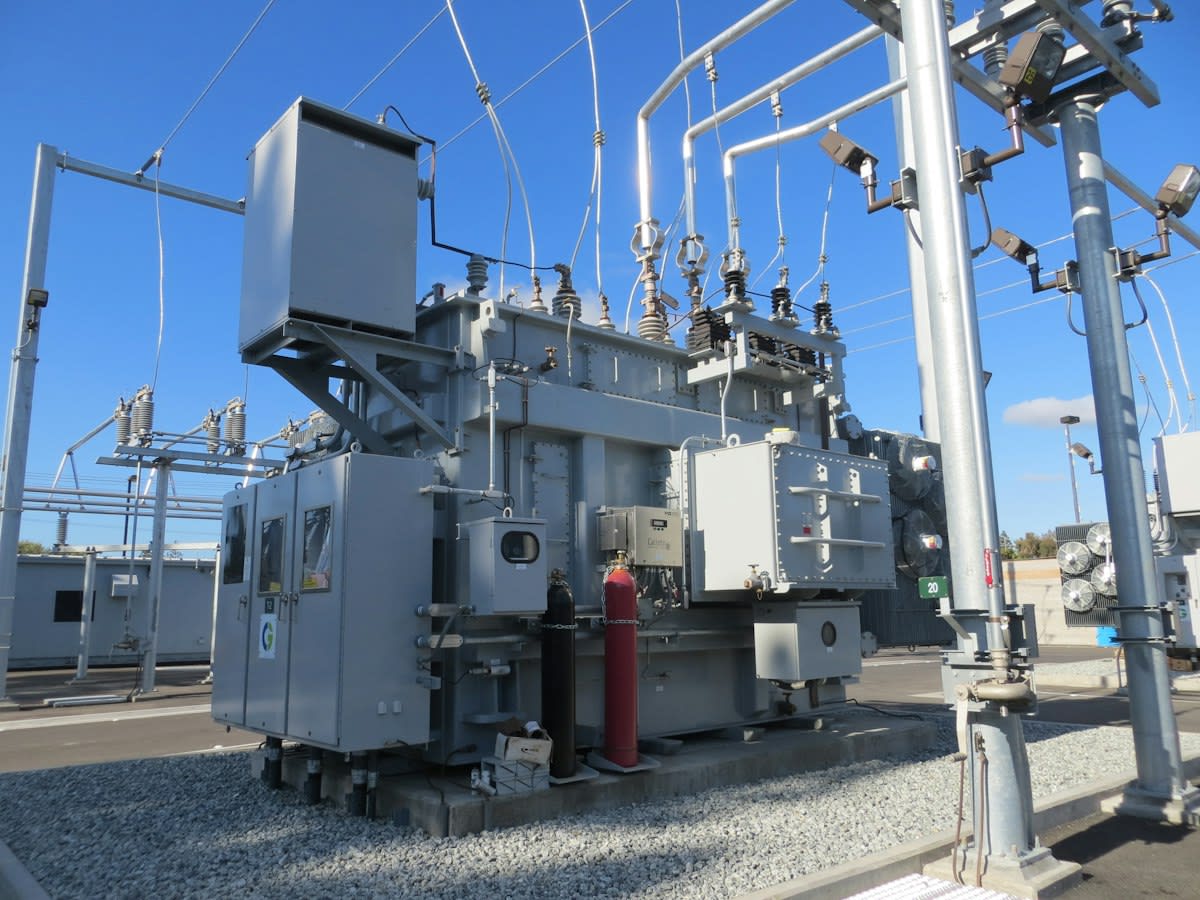
The web tightens. As more capacity enters the market, the price signals become more volatile, which in turn encourages more aggressive optimization software. This is a feedback loop. The result is a structural break in how we manage load. We no longer balance demand with supply; we balance algorithms with physics. The physics always wins. If the software ignores the thermal limits of the wire, the wire melts regardless of the profit margin.
Fact-Check & Accuracy Note
The central debate in power electronics focuses on Synthetic Inertia versus Physical Inertia. While BESS can mimic the weight of a spinning turbine, it does not provide the same instantaneous physical response. Academic critics argue that relying on software to simulate inertia creates a fragile system that can collapse if the communication layer fails (Source: IEEE Xplore, 2023).
A new playbook emerges. To survive, grid operators are moving toward centralized orchestration where the utility, not the owner, controls the trigger. This removes the profit motive from the millisecond response. It is a hard turn toward state control. By stripping the asset manager of the 'optimize' button, the grid regains its balance. The cost is a lower IRR for the investor, but the gain is a functioning city.
Editorial Governance
Editorial Note: This report avoids the common narrative that BESS is a silver bullet for renewables. Instead, it highlights the operational conflict between financial optimization and electrical stability. All cited data refers to the 2023-2024 window to highlight the trend shift.