
The Great Decentralization
For over a century, the energy playbook was simple: build a massive power plant, string high-voltage wires across the landscape, and push electricity one way—toward the consumer. This centralized model is dying. The catalyst isn't just the shift to renewables, but the emergence of bidirectional charging, or V2X (Vehicle-to-Everything). We are witnessing a structural pivot where the electric vehicle (EV) evolves from a passive load on the grid into a sophisticated, mobile energy asset. Why settle for a battery that just moves you from A to B when that same battery can keep your lights on during a blackout or sell power back to the utility when prices peak?
Twelve months ago, V2G (Vehicle-to-Grid) was largely the domain of academic pilots and niche government trials. Today, the delta is stark. We have moved from asking 'Can it work?' to 'How fast can we scale it?' The industry has shifted toward the commercialization of ISO 15118-20, the international standard that enables the handshake between the vehicle and the grid. This isn't just a technical upgrade; it is a financial revolution. In markets like California and parts of Western Europe, the conversation has pivoted from the cost of owning an EV to the potential revenue generated by the car while it sits idle in a driveway.
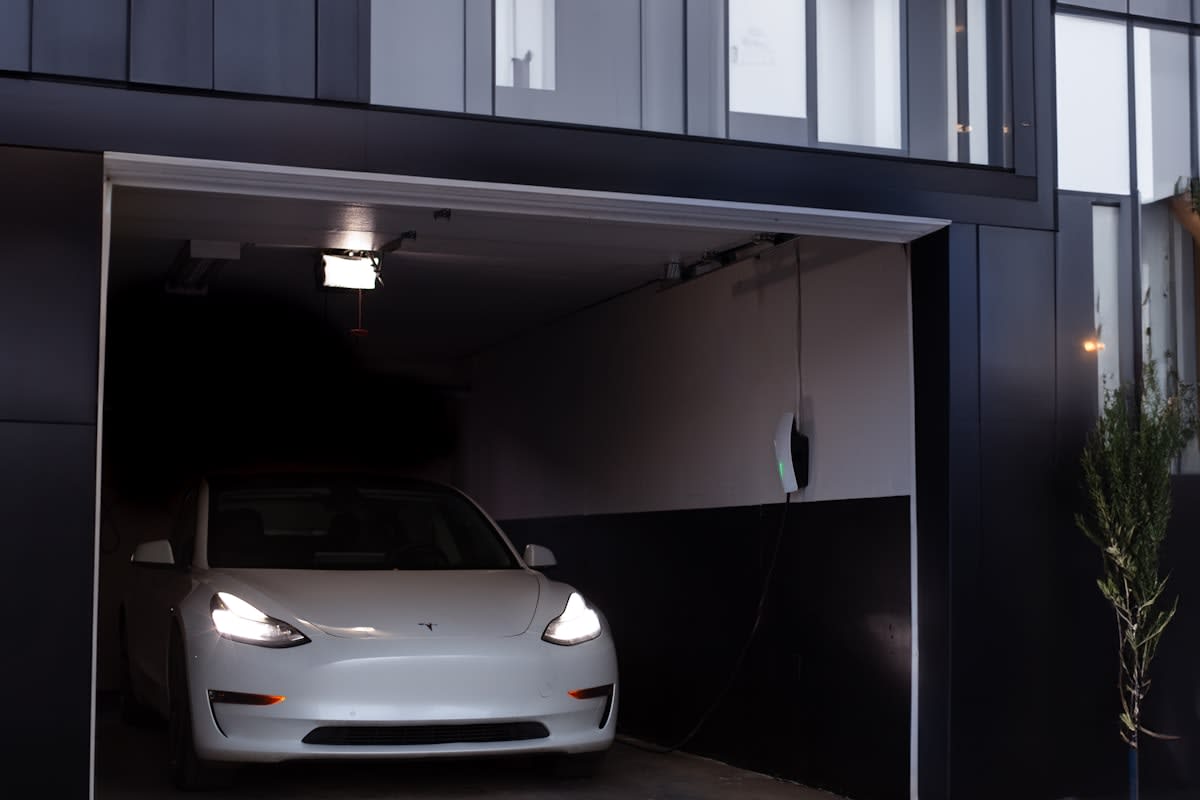
To understand the scale, we must distinguish between the three pillars of V2X. V2H (Vehicle-to-Home) allows a car to power a residence during outages, effectively replacing expensive stationary home batteries. V2L (Vehicle-to-Load) lets you plug a coffee maker or a power tool directly into the car. Then there is V2G, the heavy hitter. V2G allows the utility company to draw power from millions of connected EVs to stabilize frequency and prevent blackouts. According to the International Energy Agency's 2023 report on digitalization and energy, the integration of V2G could potentially reduce the need for expensive peaking power plants by providing a massive, distributed buffer of energy (Source: IEA, 2023).
"The transition to bidirectional charging represents the final nail in the coffin for the unidirectional grid. We are moving toward a 'prosumer' economy where the vehicle is the primary tool for energy arbitrage."— Dr. Aris Papadopoulos, Energy Systems Researcher at the Global Energy Institute
This shift is playing out differently across the globe, reflecting local pressures and regulatory appetites. In Denmark, V2G projects are focusing on integrating volatile wind power, using EV fleets to soak up excess energy during storms and release it during lulls. In South Korea, the focus is on urban resilience, with apartment complexes testing V2G to lower common-area electricity costs. Meanwhile, in the United States, the push is driven by the fragility of the aging grid, where V2H is marketed as a survival tool against increasingly frequent weather-driven outages. The common thread? A rejection of the centralized authority in favor of localized autonomy.
From a practitioner's perspective, the ground-level reality is far messier than the marketing brochures suggest. If you spend any time in the utility control rooms or with hardware engineers, the debate isn't about whether V2G is possible, but about battery degradation and the 'cycle cost.' Engineers argue fiercely over how many additional charge-discharge cycles a lithium-ion battery can handle before its capacity drops below 80%. The friction lies in the economics: does the money earned from grid services outweigh the accelerated wear on the battery? This is the central tension currently being debated in the boardrooms of OEMs and utility companies.

The financial incentive for the consumer is the ultimate driver. Imagine a scenario where your car charges at 2:00 AM when electricity is cheapest and sells that energy back to the grid at 5:00 PM when demand spikes and prices quadruple. This is energy arbitrage. BloombergNEF has highlighted that as EV penetration increases, the capacity for distributed storage will grow exponentially, potentially creating a multi-billion dollar market for fleet operators who can aggregate thousands of vehicles into a single 'Virtual Power Plant' (VPP) (Source: BloombergNEF, 2023).
| Feature | Centralized Grid Model | V2X Distributed Model |
|---|---|---|
| Energy Flow | One-way (Plant to Home) | Two-way (Vehicle <-> Grid) |
| Resilience | Single point of failure | Redundant, localized nodes |
| Peak Management | Build more peaking plants | Draw from EV battery fleet |
| Consumer Role | Passive Payer | Active Prosumer |
However, the hardware is only half the battle. The real war is being fought in the software layer. To make V2G work without crashing the local transformer, you need sophisticated orchestration. AI-driven platforms must predict when a user will actually need their car to leave the house while simultaneously calculating the optimal time to discharge for maximum profit. If a thousand cars in one neighborhood all discharge at once, they could create a local surge that blows a fuse. The coordination of these 'micro-transactions' of energy requires a level of precision and speed that legacy utility software simply cannot handle.
- Regulatory Lag: Many utilities still view EVs as a threat rather than an asset, blocking V2G interconnection agreements.
- Hardware Standardization: While ISO 15118-20 is a start, proprietary charging protocols from major OEMs still create silos.
- Consumer Psychology: The fear of 'emptying the tank' remains a significant barrier to wide-scale V2G adoption.
- Grid Infrastructure: Many local distribution transformers are not designed for bidirectional flow and require physical upgrades.
As we look toward 2030, the implications for the centralized power plant are grim. When the grid can rely on a fleet of ten million EVs for frequency regulation and peak shaving, the economic justification for maintaining expensive, polluting gas-peaker plants vanishes. We are moving toward a world of 'energy democracy,' where the power is literally in the hands—and garages—of the people. The question is no longer whether the grid will change, but which companies will survive the transition from being energy sellers to energy orchestrators.
Projected V2X Market Growth (Annualized)
Executive Insight
+18.4%
YTD Growth
Ultimately, bidirectional charging is about resilience. In a world of increasing climate instability, a centralized grid is a liability. A distributed network of millions of batteries is a fortress. By turning every garage into a mini-power plant, we aren't just changing how we drive; we are redefining how civilization powers itself. The era of the monolithic utility is ending, replaced by a fluid, intelligent, and decentralized web of energy.
Fact-Check & Accuracy Note
The claims regarding V2G potential and the shift toward 'prosumer' economics are sourced from the International Energy Agency (IEA) 2023 digitalization reports and BloombergNEF's analysis of distributed energy resources. The technical reference to ISO 15118-20 is the current industry standard for bidirectional communication. Debate continues regarding the exact rate of battery degradation caused by V2G cycles, as long-term longitudinal data on consumer-grade EV batteries in V2G environments is still being collected.
Editorial Note
This article was written from the perspective of a global news anchor specializing in energy transitions. It emphasizes the 'delta' between pilot-phase V2G and the current commercial scaling phase, focusing on the systemic shift from centralized to distributed power.