
The Myth of the Melting Pot
Do you actually believe that throwing batteries into a furnace is recycling? It is not. That is just smelting with a better PR agent. True recovery happens in the gray area between mechanical shredding and chemical synthesis. We are not just disposing of waste; we are mining an urban web of concentrated minerals. The goal is to produce black mass—that powdery, carbon-rich mixture of cathode and anode materials—and then suture those elements back into a battery-grade state. If you treat this as a waste management problem, you will lose your grip on the margins. Treat it as a mineral extraction operation.
The industry often ignores the reality that not all black mass is created equal. A batch contaminated with sodium-ion residues or solid-state electrolytes can render an entire recovery run brittle and useless. We see this often in hubs across Southeast Asia and Eastern Europe where feedstock is mixed without rigorous sorting. The weight of the challenge lies in the diversity of chemistries. While LFP (Lithium Iron Phosphate) is cheaper, its recovery is less lucrative than the nickel-rich NMC (Nickel Manganese Cobalt) cells (Source: NHSJS, 2026). You must know exactly what is entering your shredder or you are just making expensive dirt.
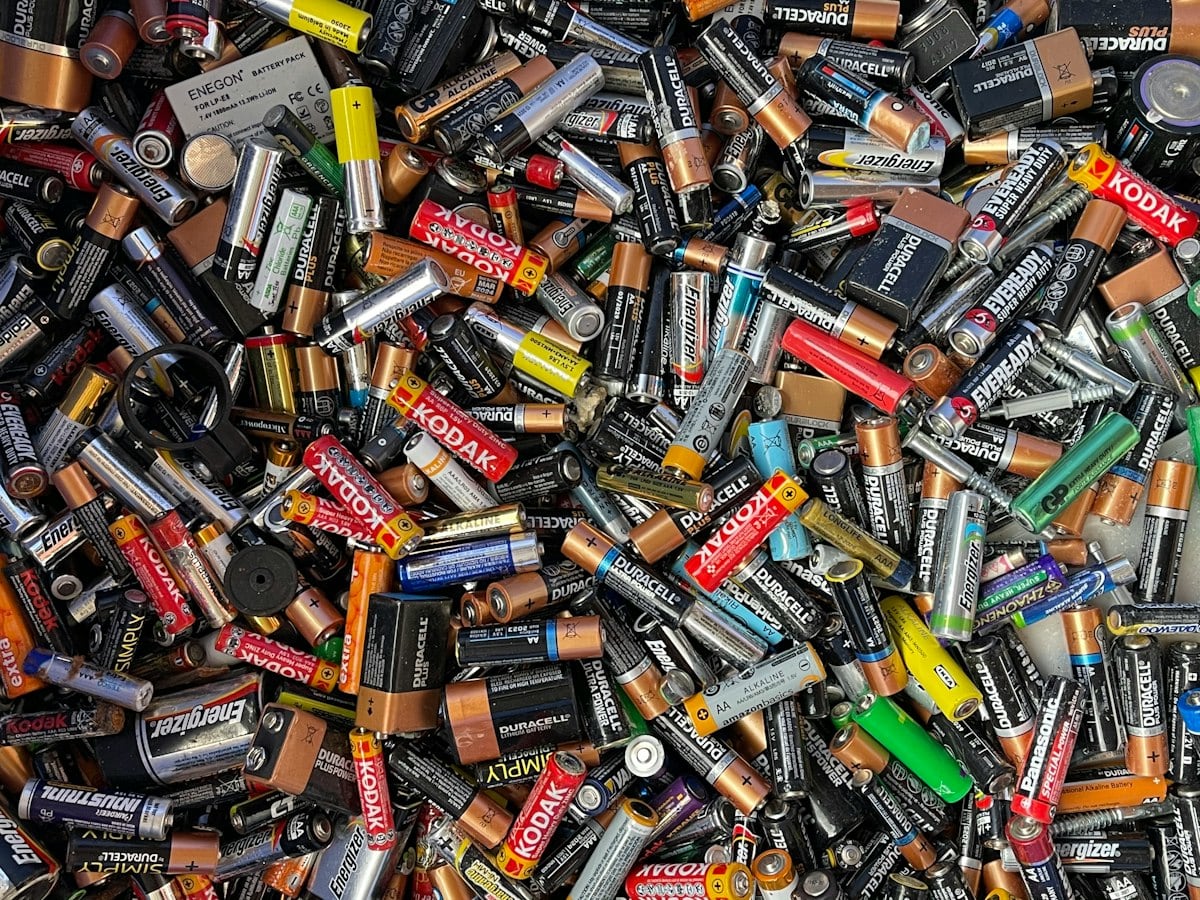
Prerequisites for Battery Recovery
Before you touch a single cell, your facility needs a specific set of tools. This is not a garage operation. You are dealing with volatile electrolytes and heavy metals that can saturate your workspace if not contained. The terrain is dangerous. You need a combination of AI-driven diagnostics to determine the State of Health (SoH) of incoming cells and a chemical refinery capable of high-precision leaching.
- AI-driven SoH Estimation Tools: Necessary for deciding between reuse and recycling (Source: Chalmers University, 2025).
- Inert Atmosphere Shredders: To prevent thermal runaway during the mechanical breakdown of cells.
- Hydrometallurgical Leaching Tanks: For the selective extraction of cobalt and nickel.
- Direct Regeneration Equipment: Specifically for the re-synthesis of LiCoO2 or LiFePO4 (Source: Materials Chemistry and Physics, 2017).
- Closed-loop Water Filtration: To prevent the leak of toxic solvents into local watersheds.
The Extraction Workflow: From Cell to Mineral
The process is a collision of mechanical force and chemical finesse. Most operators fail because they rush the shredding phase. If you shred too fast without proper discharge, you get fires. If you shred too slow, you lose efficiency. The sequence must be rigid.
- Deep Discharge: Use transient voltage pulses to neutralize the remaining energy in the cell, reducing the risk of fire (Source: Science, 2024).
- Mechanical Comminution: Shred the batteries in an inert environment to produce a coarse mixture of plastics, foils, and black mass.
- Sieving and Magnetic Separation: Remove the steel casings and copper/aluminum foils. This isolates the black mass powder.
- Chemical Leaching: Apply acids to dissolve the metals into a liquid solution. This is where the most waste is generated.
- Selective Precipitation: Use chemical reagents to pull specific metals—like cobalt—out of the solution one by one.
- Direct Regeneration: For certain chemistries, bypass the acid bath and use multifunctional amino acids to directly recycle spent LiFePO4 cathode material (Source: Advanced Materials, 2024).
Once the minerals are isolated, they enter the final stage of purification. The purity level determines whether you can sell the material back to a battery manufacturer or if it ends up as low-grade industrial salt. This is the difference between a high-margin operation and a hollow business model.
Integrating the AI Layer
Why is AI suddenly the center of the conversation? Because human eyes cannot see the internal degradation of a cell. AI allows us to estimate the State of Health (SoH) of large-format cells before they even hit the shredder (Source: Chalmers University, 2024). This prevents the waste of cells that could have been reused in second-life energy storage systems. It is a matter of efficiency. When you can predict which cells are too far gone for reuse, you optimize your feedstock flow.
"The proactive maintenance for irreversible sulfation and capacity recovery requires a novel resonance method to ensure that we are not recycling materials that still have viable life."— Tao, S. et al., Journal of Energy Storage (2021)
This AI integration is not without its fights. In the field, there is a constant tension between the software engineers who want perfect data and the plant managers who just want the belt to keep moving. I have seen projects stall because the AI model was trained on pristine lab cells and failed miserably when faced with salt-corroded batteries from coastal regions in Asia. The model must be trained on the grit of reality, not the cleanliness of a university lab.

The Chemistry Collision: Direct vs. Hydro
There is a quiet war happening in the recycling world between hydrometallurgy and direct recycling. Hydrometallurgy is the default. It breaks everything down to the atomic level and rebuilds it. It is thorough. It is also slow and chemically intensive. Direct recycling, however, attempts to restore the crystal structure of the cathode without destroying it first (Source: Chemical Society Reviews, 2023). It is faster. It is cleaner.
| Metric | Hydrometallurgy | Direct Recycling |
|---|---|---|
| Chemical Intensity | High (Strong Acids) | Low (Mild Reagents) |
| Processing Time | Long (Days/Weeks) | Short (Hours/Days) |
| Purity Level | Ultra-High | Variable |
| Energy Demand | High | Low to Moderate |
The problem? Direct recycling is brittle. If the incoming black mass is contaminated with even a small percentage of a different battery chemistry, the regeneration process fails. You cannot 'direct recycle' a mixture of NMC and LFP. You end up with a chemical slurry that no one can use. This is why the sorting phase is the most critical part of the entire chain. If your sorting fails, your chemistry fails.
Common Pitfalls and Mechanical Failures
I have seen millions of dollars evaporate because an operator ignored the electrolyte vapor. When you shred cells, the electrolyte evaporates. If your ventilation is not perfect, those vapors condense on the ceiling and drip back into your pure mineral streams. It is a nightmare of contamination. Furthermore, relying on a single feedstock source is a mistake. When the market shifts toward sodium-ion batteries, your NMC-focused plant will become a hollow shell (Source: Zhang et al., 2024).
- The 'Purity Trap': Assuming that 99% purity is enough. For battery-grade lithium, 99% is often a failure; you need 99.9% or higher.
- Feedstock Blindness: Failing to account for the rise of solid-state batteries which require entirely different leaching agents (Source: Rietdorf et al., 2024).
- Over-reliance on AI: Trusting a health estimate without performing a manual spot-check on a sample of the batch.
- Ignoring the Sludge: Underestimating the volume of hazardous waste generated during the precipitation phase.
Fact-Check & Accuracy Note
This guide relies on data from Chalmers University (2024/2025) regarding AI health estimation and direct recycling methods. It incorporates chemical analysis from Chemical Reviews (2024) and Advanced Materials (2024). A point of academic debate exists regarding the scalability of direct recycling versus the established reliability of hydrometallurgy, particularly when dealing with mixed-chemistry waste streams.
Ultimately, the transition to a circular battery economy is not a smooth glide. It is a series of collisions and adaptations. The companies that survive will be those that can handle the fray of changing chemistries while maintaining a grip on chemical purity. Stop thinking about waste. Start thinking about the strategic mineral reserves sitting in your warehouse.