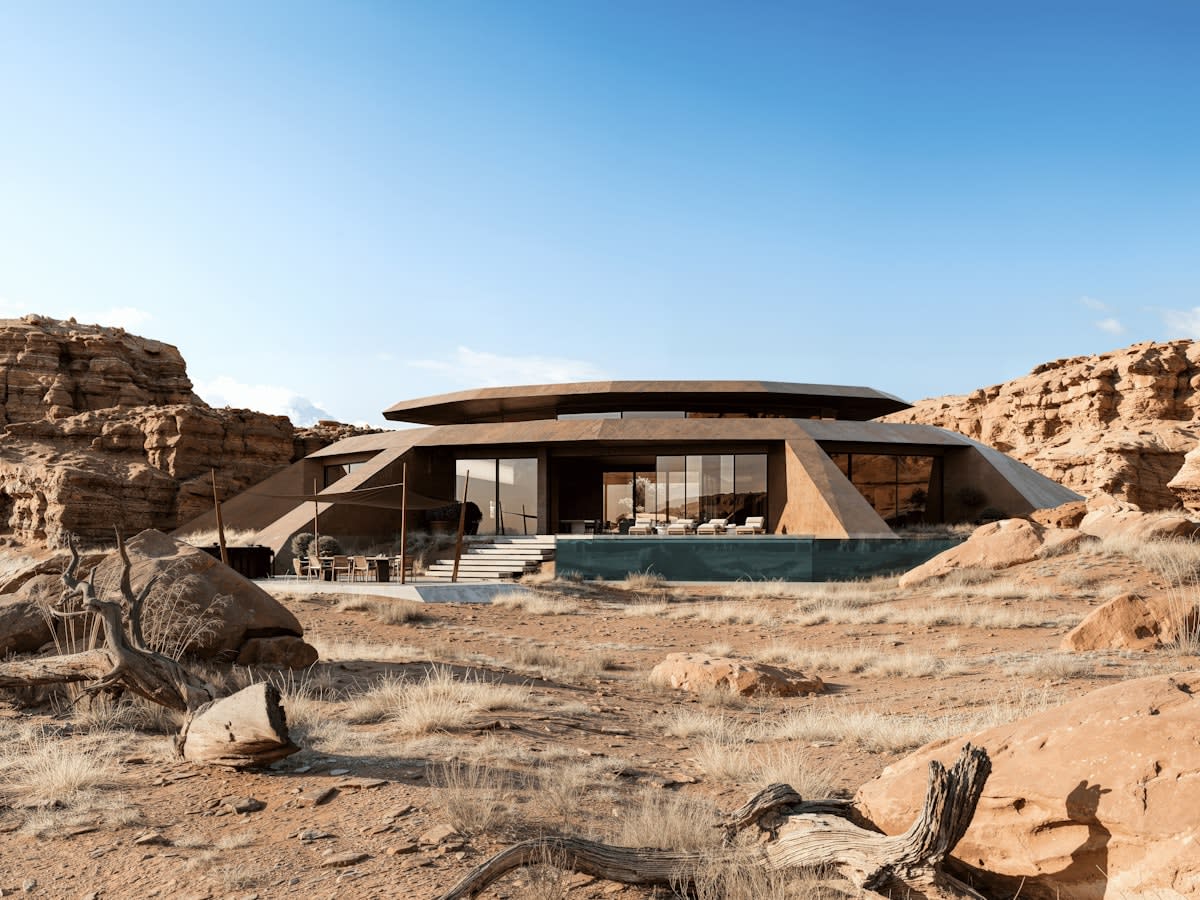
The Liquid Shift
For decades, water was treated as a background utility, a cheap and invisible constant in the real estate equation. You bought a plot of land, and the water simply arrived through a pipe or sat in an aquifer beneath your feet. That era is dead. We are witnessing a visceral decoupling of land value from water access, where the dirt is becoming secondary to the droplets. Why is this happening now? Because the market has finally realized that land without guaranteed water is not an asset; it is a liability.
This is not a slow burn; it is a rapid repricing. In the last twelve months, the conversation in boardroom meetings from Dubai to Phoenix has shifted from sustainability goals to solvency risks. Investors are no longer asking if a region is 'water-stressed' in a general environmental sense. They are asking who owns the senior water rights and whether those rights are transferable. The shift represents a transition from viewing water as a public good to treating it as 'Blue Gold'—a finite, tradeable commodity that dictates the ceiling of a property's valuation.
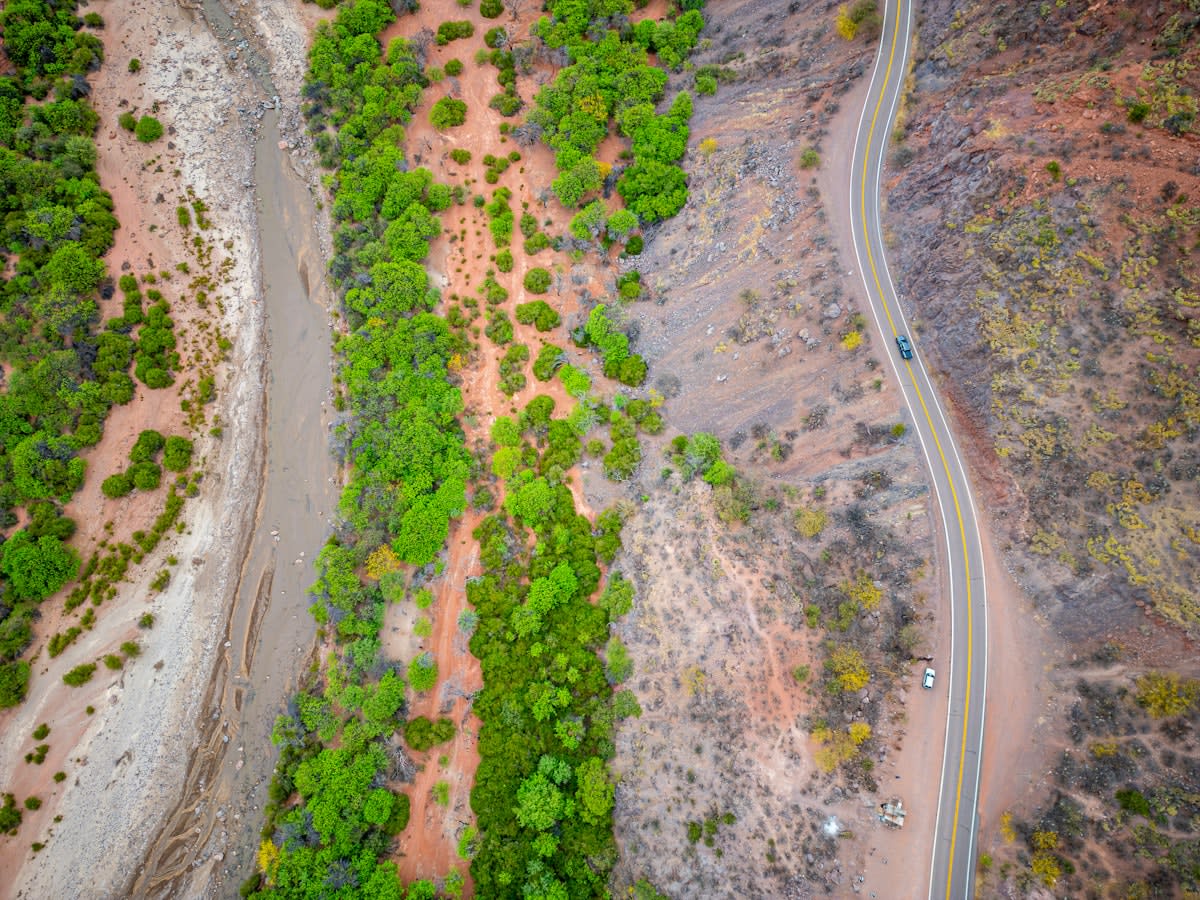
The Delta: 2023 vs. 2024
To understand the urgency, we have to look at the Delta—the difference between how water was priced six to twelve months ago versus today. A year ago, water scarcity was categorized under ESG (Environmental, Social, and Governance) reporting, often relegated to a paragraph about 'climate resilience.' It was a risk to be mitigated. Today, it is a line item in the capital expenditure budget. We have moved from the era of mitigation to the era of pricing.
In 2023, a developer might have checked if a municipality had a 20-year water plan. In 2024, that is considered amateur hour. Now, institutional buyers are demanding hydrological audits and legal verification of water seniority. The market is now pricing in the possibility of 'stranded assets'—properties that are physically intact but economically dead because the water required to maintain them has been diverted or depleted. This shift has created a premium for 'water-secure' assets that didn't exist in the previous cycle.
| Valuation Metric | 2023 Approach (Standard) | 2024 Approach (Water-Adjusted) |
|---|---|---|
| Due Diligence | Municipal utility confirmation | Independent hydrological audit |
| Asset Valuation | Based on land area and zoning | Based on acre-feet of secured rights |
| Risk Assessment | General climate risk disclosure | Specific 'Stranded Asset' probability |
| Investment Horizon | 10-20 year stability assumption | Dynamic scarcity-adjusted yield |
This transition is most evident in the way cap rates are being adjusted. We are seeing a widening gap between properties with independent water security and those dependent on failing municipal grids. The 'water premium' is becoming a tangible percentage of the purchase price. If you can prove your property has autonomous water recycling or senior rights, you aren't just selling real estate; you are selling an insurance policy against the coming scarcity.
The Financialization of Flow
The emergence of 'Water-Adjacent REITs' suggests that the financial world is preparing for a future where water rights can be decoupled from the land entirely and traded as standalone financial instruments.
Global Hotspots: Where the Bubble is Forming
Look at the American Southwest. For years, the Colorado River was the lifeblood of the region's growth. Now, the legal battles over water seniority are directly impacting home prices in the suburbs of Phoenix and Las Vegas. We are seeing a bifurcation: properties with historical water rights are skyrocketing in value, while new developments are facing stricter growth caps. Is it a bubble? Perhaps. But it is a bubble built on the most fundamental biological necessity on earth.
Across the ocean, the Murray-Darling Basin in Australia provides a blueprint for what is coming. Australia already has a sophisticated water trading market where water is unbundled from the land. This allows farmers to sell their water to the highest bidder—often urban developers or industrial plants. This market has turned water into a volatile asset class. The lesson for the rest of the world is clear: once water is commodified, the land is no longer the primary source of wealth; the right to the water is.
"We are moving toward a world where the deed to the land is just the wrapper; the water right is the actual product inside."— Senior Hydrological Analyst, Global Asset Management
In the MENA region, the strategy is different but the goal is the same: resilience. Here, the 'water premium' is priced into the infrastructure. Real estate that integrates advanced desalination or closed-loop greywater systems is commanding higher rents and higher resale values. The market is rewarding adaptation. Developers who build 'water-neutral' complexes are not doing it for the PR; they are doing it to ensure their assets don't become uninhabitable in a decade.
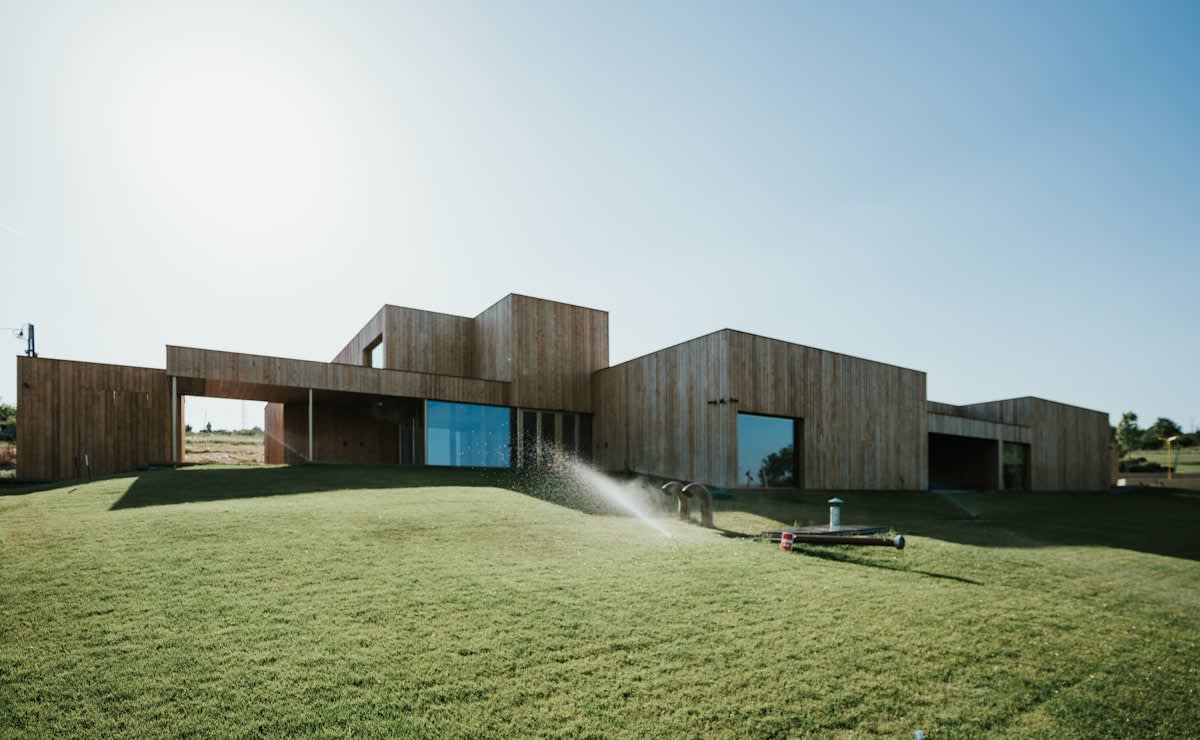
The Architecture of Adaptation
How do you build for a world where water is expensive? The answer is in the shift toward circularity. We are seeing a surge in 'closed-loop' residential developments. These are not just 'green buildings'—they are hydrological fortresses. By treating and reusing every drop of water on-site, these properties insulate themselves from municipal failures and rising water costs. This is where the real opportunity lies: the transition from consumption to regeneration.
The technology is moving fast. Atmospheric water generators and advanced membrane filtration are moving from industrial scales to residential basements. In high-end real estate, these systems are becoming as standard as central heating or high-speed internet. The goal is total autonomy. If a property can generate its own water, its valuation is no longer tied to the precariousness of the local aquifer.
- Integrated greywater recycling for landscaping and sanitation
- Atmospheric water generation (AWG) for potable supply
- Permeable paving to maximize aquifer recharge
- AI-driven leak detection and precision irrigation systems
But there is a dark side to this adaptation. As the wealthy build their own hydrological fortresses, the gap between 'water-secure' and 'water-precarious' real estate widens. This creates a new form of gentrification—hydro-gentrification. Properties in water-rich zones or those with the capital to install autonomous systems see their values soar, while surrounding areas, dependent on failing public infrastructure, see their values crater.
The Bottom Line for Investors
Is this a bubble that will burst, or a fundamental correction in how we value the earth? The evidence suggests the latter. We are simply correcting a centuries-old error: the assumption that water is infinite. The 'Blue Gold Bubble' is actually the process of the market finally acknowledging the true cost of water. Those who continue to buy land based on 20th-century metrics are walking into a trap.
Estimated Premium for Water-Secure Real Estate (Normalized)
Executive Insight
+18.4%
YTD Growth
The winning strategy for the next decade is not to fear scarcity, but to invest in resilience. This means prioritizing assets with senior water rights, investing in circular water infrastructure, and diversifying across different hydrological zones. The winners will be those who stop seeing water as a utility and start seeing it as the primary driver of land value. In the end, the most valuable real estate on the planet will not be the one with the best view, but the one with the most reliable flow.