Tesla Cybercab doesn’t have any manual controls — but it does have a virtual joystick
Source Entity
Andrew J. Hawkins
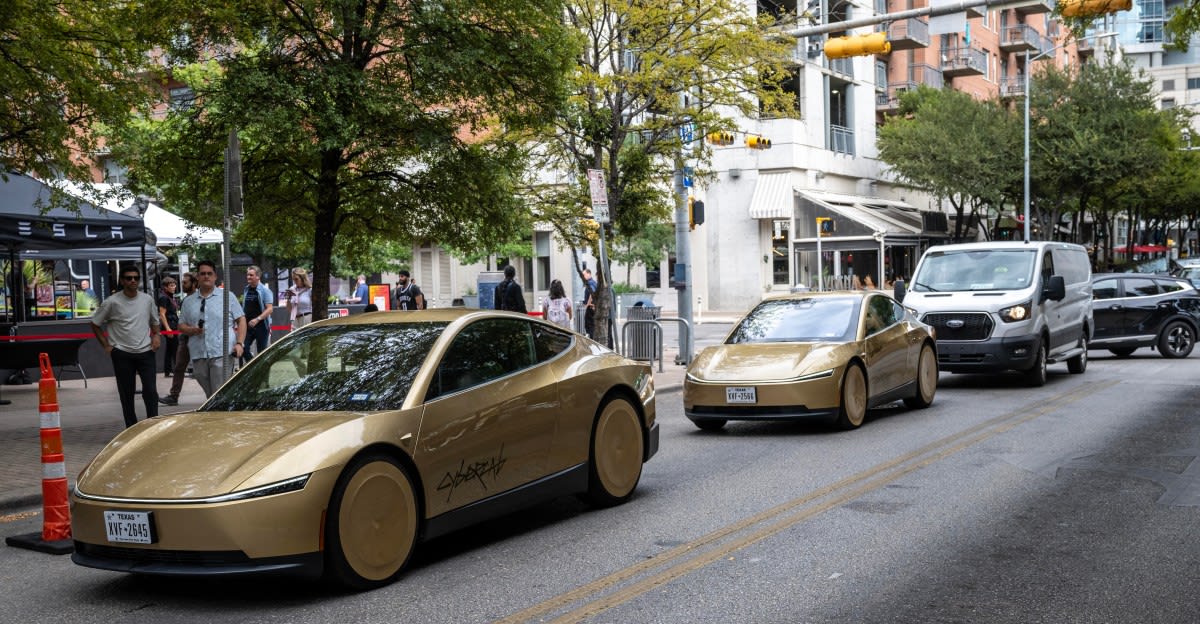
Tesla's newly launched Cybercab, which lacks physical steering wheels and pedals, has been found to feature a hidden virtual joystick interface. This discovery suggests that while the vehicle is designed for autonomy, Tesla maintains manual override capabilities for internal staff use.
The Tesla Cybercab: Unveiling Hidden Controls
The recent launch of the Tesla Cybercab in Austin, Texas, marked a significant milestone in the evolution of autonomous transport. Designed as a fully driverless vehicle, the Cybercab is notable for the intentional omission of traditional manual hardware, such as steering wheels and pedals. However, reports emerging less than a week after the launch reveal that the vehicle is not as devoid of manual intervention as initially presented, with users discovering a hidden virtual interface.
Discovery of the Virtual Interface
Evidence surfacing on the platform X showcases videos from riders who have encountered a secret menu within the Cybercab’s central display. This interface features a square-shaped screen located in the lower-left corner, housing a virtual joystick. This toggle appears to allow for the control of vehicle movements, challenging the public perception that the Cybercab is strictly a hands-off, software-reliant machine.
Design Philosophy and Safety Implications
Tesla’s design philosophy for the Cybercab centers on complete autonomy, removing the human element to reduce accidents attributed to driver error. By eliminating physical controls, the company underscores its commitment to a future where vehicles navigate entirely via advanced AI and sensor suites. The existence of a virtual joystick, however, suggests a hybrid approach, likely intended for Tesla employees to maneuver the vehicles within specific environments like parking lots or service facilities.
The Role of Internal Access
While the discovery has sparked curiosity, it is crucial to understand that these controls are likely restricted to internal testing and maintenance purposes. Providing such a feature to the general public would contradict the core safety mandate of a vehicle designed without a steering wheel. This discovery highlights the tension between the desired 'full autonomy' user experience and the practical necessity for operational control during the vehicle's lifecycle.
Broader Implications for Autonomous Transit
As the industry pivots toward robotaxis, the 'Cybercab model' represents a shift in how we define a vehicle. The presence of a virtual joystick serves as a reminder that even fully autonomous systems require a 'backdoor' for human intervention. Whether for fleet management or emergency diagnostic procedures, these hidden controls are a vital bridge between current human-centric driving and the fully automated future envisioned by Tesla.
Future Trends and Conclusion
Looking ahead, the discovery of the virtual joystick may prompt further scrutiny from regulators regarding the safety protocols of vehicles lacking manual hardware. As Tesla scales its Cybercab fleet, the distinction between passenger-facing software and technician-facing overrides will become a critical area of interest. Ultimately, while the Cybercab is built to operate independently, the existence of this manual interface ensures that Tesla maintains a necessary degree of oversight over its autonomous fleet.