
The Fragility of the Liquid Grid
This week, the precarious nature of the global water-energy nexus shifted from a theoretical risk to a tangible crisis. In Israel, a nation often cited as the gold standard for water security, the system buckled. Five out of six of the country's desalination facilities were forced to shut down simultaneously due to severe seawater turbidity caused by weather conditions (Source: The Times of Israel, 2026). This wasn't a cyberattack, despite initial fears in a geopolitical climate where water infrastructure is increasingly targeted; it was a failure of environmental resilience. When your drinking water depends on a handful of industrial plants, a change in water clarity isn't just a technical glitch—it is a national security event.
"The desalination plants provide up to 80 percent of Israel’s drinking water and are considered a strategic asset in the drought-prone, water-scarce Middle East."— The Times of Israel, 2026
The fallout was immediate. Residents in Givatayim, Jerusalem, and Rishon Lezion were warned of reduced water pressure and total outages as the national network struggled to compensate for the loss of its primary source (Source: The Jerusalem Post, 2026). Why does this matter for the broader energy transition? Because the race for clean fuels—specifically green hydrogen—relies on the same desalination technology and water availability. If a weather-induced turbidity event can cripple 80% of a developed nation's water supply, the scalability of water-intensive clean energy is fundamentally questioned. We are building a future on a foundation of liquid that we cannot yet guarantee.
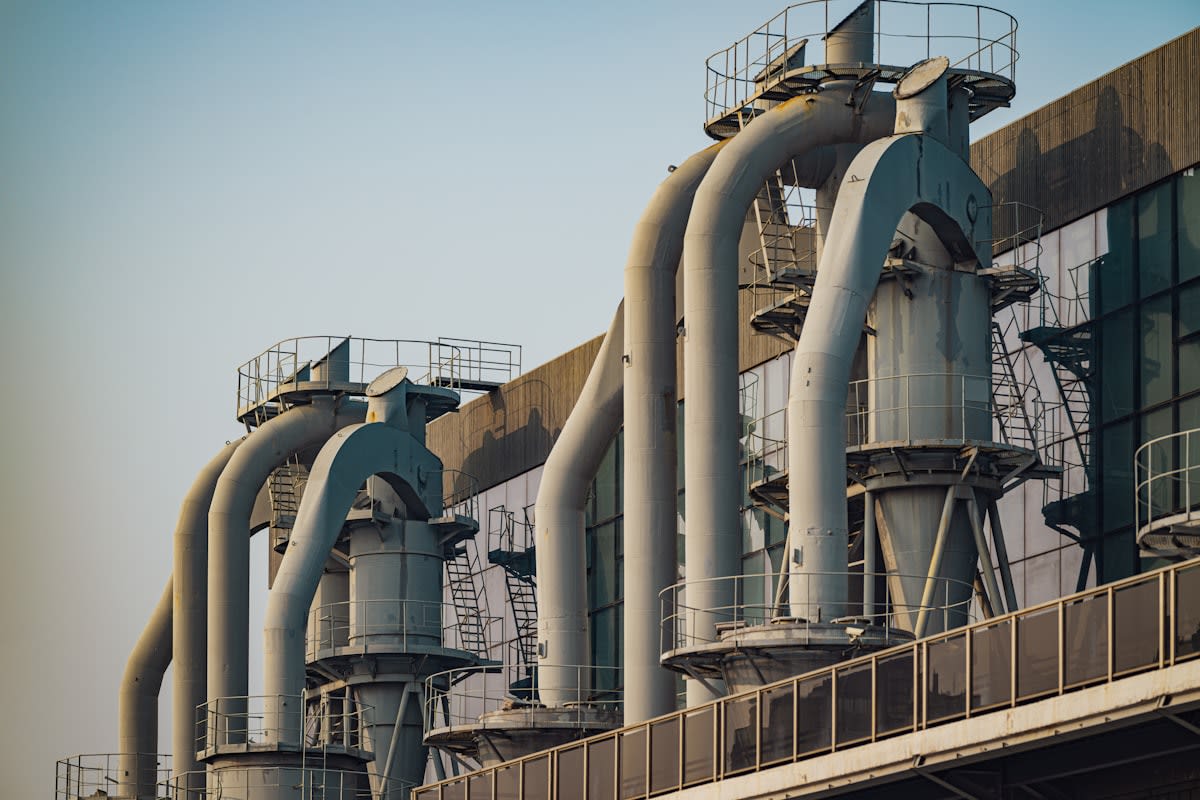
The delta between last year's confidence and this month's reality is stark. Twelve months ago, the narrative focused on the efficiency of desalination; today, the conversation has shifted to its vulnerability. The Israel incident proves that 'strategic assets' are only strategic until the environment changes. This realization is rippling through the energy sector, forcing a rethink of how we price the 'water cost' of our carbon-free ambitions.
This systemic fragility is not limited to the Middle East. It is a global pattern where high-tech solutions are layered over an aging or overstressed natural resource base. Whether it is the turbidity of the Mediterranean or the depletion of aquifers in the American Southwest, the bottleneck for the energy transition is no longer just the availability of lithium or cobalt—it is the availability of H2O.
The Digital Thirst: AI's Unseen Footprint
While desalination plants struggle with input, the burgeoning AI industry is accelerating output. Data centers are the silent giants of the water world, requiring millions of gallons for cooling to prevent server meltdown. In the United States, the regulatory framework is only now beginning to catch up to this reality. For too long, these facilities were taxed and regulated based on their physical footprint—their square footage—rather than their actual resource consumption (Source: Bloomberg Law, 2026).
Consider the case of a New York data center situated on a former brownfield site. The facility secured a tax break of nearly $77 million, a figure that reflects the economic incentive to attract AI infrastructure (Source: Bloomberg Law, 2026). However, the real cost is not found in the tax ledger but in the megawatts and the water footprint. When a state offers millions in incentives without pricing the water consumption, it is effectively subsidizing the depletion of local aquifers to power a cloud that exists everywhere and nowhere.
| Metric | Traditional Industrial View | Modern AI/Energy View |
|---|---|---|
| Primary Value Driver | Square Footage/Real Estate | Megawatts & Water Footprint |
| Regulatory Focus | Zoning & Land Use | Resource Consumption Pricing |
| Incentive Structure | Job Creation per Acre | Computational Power per Gallon |
Can we afford to ignore this? The push for regulatory certainty is growing. There is an emerging movement to compel state tax commissions and public utility commissions to forge a truce that protects ratepayers by accurately pricing a data center's water and power usage, modeled after the Telecommunications Act of 1996 (Source: Bloomberg Law, 2026). This shift represents a fundamental change in how we value technology: moving from a growth-at-all-costs model to one of resource-aware scaling.
This is where the paradox tightens. We use AI to optimize the energy grid and discover new materials for clean fuel, but the AI itself consumes the water required for those very fuels. It is a recursive loop of consumption that threatens to outpace our capacity for adaptation.
Scaling Resilience: The Pivot to Efficiency
If the trend in the West is one of regulatory struggle, the trend in the Global South is one of strategic adaptation. The recent agreement between Pakistan and Saudi Arabia serves as a blueprint for this shift. The two nations have set a $3 billion target for agricultural and food exports over the next two years (Source: Hum News English, 2026). On the surface, this is a trade deal. Underneath, it is a technology transfer mission centered on survival.
- Priority expansion of water-efficient agricultural technologies to reduce groundwater reliance (Source: Anadolu Ajansı, 2026).
- Investment in high-value, low-water crops such as processed fruits and fruit concentrates (Source: Hum News English, 2026).
- Strategic engagement with the private sector to implement precision irrigation in arid climates (Source: Anadolu Ajansı, 2026).
- Optimization of red meat and green fodder exports to balance economic gain with water availability (Source: Hum News English, 2026).
By prioritizing water-efficient technologies, these nations are acknowledging that economic growth is impossible without hydraulic stability. They are not fighting the scarcity; they are engineering their way around it. This is the only viable path forward for the clean energy race. If green hydrogen is to become a global commodity, it cannot be produced using the wasteful methods of the 20th century.
From a practitioner's perspective, the debate on the ground has shifted. For years, engineers and policy makers argued about the 'cost per kilowatt-hour.' Now, the internal debate is about the 'water-energy trade-off.' In the field, we see a growing friction between energy developers who want to site plants where power is cheap and water managers who are terrified of another 'turbidity event' or a dry well. The real friction isn't in the technology—we know how to make hydrogen or cool a server—it's in the governance of the shared resource. Who gets the water when the desalination plant goes offline? The farmer, the data center, or the hydrogen electrolyzer?

The path forward requires a synthesis of these three global experiences: the resilience lessons from Israel, the regulatory rigor being debated in the US, and the efficiency-first trade strategies of Pakistan and Saudi Arabia. The race for clean fuel is not just a race for energy; it is a race for the water that makes that energy possible.
Editorial Note
This article analyzes the intersection of water scarcity and energy infrastructure. While the 'Hydrogen Paradox' refers to the water requirements of green hydrogen, the evidence provided here focuses on the systemic vulnerabilities of desalination, AI cooling, and agricultural water use—all of which compete for the same limited water resources required for a clean energy transition.
Fact-Check & Accuracy Note
Key claims regarding Israel's desalination shutdowns (5 of 6 plants) and the 80% drinking water statistic are sourced from The Times of Israel (2026). Data regarding New York's $77 million data center tax break and the call for regulatory pricing on water is sourced from Bloomberg Law (2026). The $3 billion Pakistan-Saudi agricultural target and focus on water-efficient tech are sourced from Hum News English and Anadolu Ajansı (2026).