‘Doesn’t even cover cost of commuting’: Kashmir medical interns protest against Rs 12,000 stipend
Source Entity
Naveed Iqbal
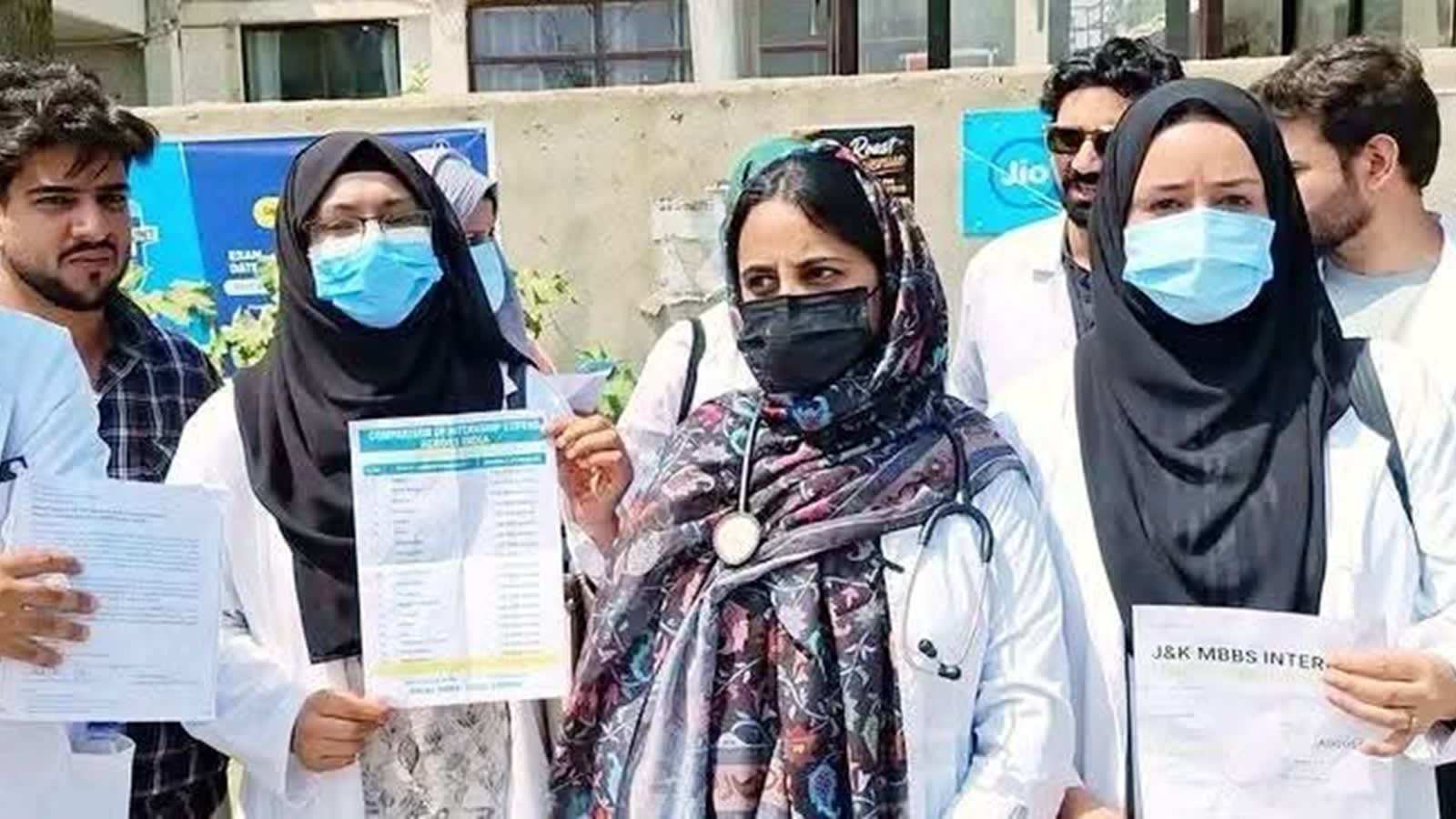
Medical professionals in Telangana and Jammu & Kashmir are protesting for stipend hikes to achieve parity with national standards. While Telangana doctors have suspended their strike following government assurances, J&K interns continue to demand an increase to address long-standing wage stagnation.
Medical Intern Stipend Protests: A Crisis of Parity
Recent developments in Telangana and Jammu & Kashmir have brought the issue of medical intern stipends to the forefront of the public healthcare discourse. In Telangana, AYUSH students and doctors recently suspended a 28-day strike after receiving assurances from Health Minister C. Damodar Raja Narasimha. Simultaneously, MBBS and BDS interns in Jammu & Kashmir have launched an indefinite strike, highlighting a growing trend of medical professionals demanding financial recognition that reflects the intensity of their clinical duties.
The Demand for Parity and Fair Compensation
At the heart of these protests is the issue of wage stagnation. In Jammu & Kashmir, interns are currently receiving a stipend of Rs 12,300, a figure that has remained unchanged for seven years. Protesters argue that this amount fails to cover basic living and commuting costs, let alone compensate for the grueling 24-to-36-hour shifts they perform. These interns are seeking a raise to Rs 30,000, pointing out that their counterparts in other Indian states receive between Rs 25,000 and Rs 45,000 monthly for identical responsibilities.
Historical Context and Institutional Hurdles
The struggle for stipend adjustments is not new, yet it has reached a critical juncture. In Telangana, the AYUSH delegation highlighted that their stipend demand has been pending for nearly a decade. Similarly, J&K interns noted that a government committee formed in 2023 had already recommended increasing the stipend to Rs 25,000 for the 2025-26 academic year. The gap between expert recommendations and actual implementation remains a significant source of frustration for medical students who feel their labor is undervalued by the current administrative framework.
Political and Administrative Implications
The issue has transcended institutional walls and entered the political arena. In Jammu & Kashmir, the Congress party has formally engaged with Chief Minister Omar Abdullah to advocate for the interns, emphasizing that these young doctors are the backbone of public healthcare. By highlighting that these interns perform essential duties under extreme pressure, supporters of the protest are framing the stipend hike as a matter of both economic justice and the sustainability of the public health infrastructure.
Future Trends and Healthcare Sustainability
As medical education becomes increasingly rigorous, the reliance on interns to manage high patient volumes in public hospitals grows. The resolution in Telangana serves as a potential blueprint for other regions; by establishing a direct dialogue between student delegations and health ministries, governments can mitigate the impact of prolonged strikes on patient care. However, the recurring nature of these protests suggests that a systemic, national approach to standardizing medical stipends may be required to prevent future disruptions in essential healthcare services.