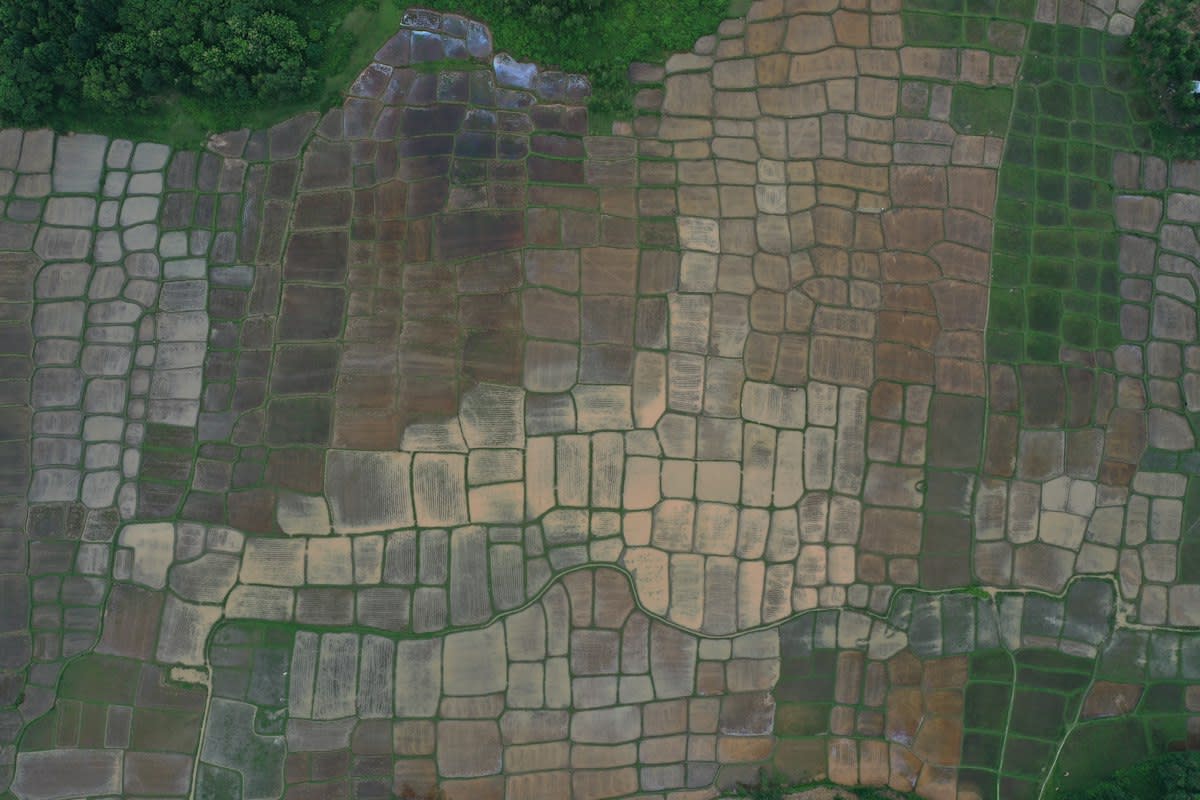
Fresh water is a lie. While global agencies promote desalination plants that bankrupt local municipalities, the coastal tribes of the Mekong Delta are watching their rice paddies turn into white salt crusts (Source: FAO, 2021). The brine claims everything. Do we really believe that importing freshwater to a sinking coast is a viable strategy? Most agriculturalists ignore the reality that sodium saturation is not a temporary glitch but a permanent change in the terrain. The weight of the salt wins.
The Mechanical Failure of Glycophytes
Rice is dying. Traditional Oryza sativa cannot process sodium ions, leading to osmotic stress that effectively dehydrates the plant even while it sits in standing water (Source: Nature Communications, 2019). This is a biological dead end. Why do we continue to subsidize the planting of seeds that are genetically programmed to fail in 4 parts per thousand salinity? The result is a cycle of crop failure that strips coastal tribes of their remaining capital. Salt kills the yield.
Halophytes offer a way. Unlike traditional crops, plants like Salicornia and certain salt-tolerant millets actively sequester salt into specialized vacuoles to maintain cellular pressure (Source: World Bank, 2022). They eat the brine. By replacing the failing rice monoculture with these species, coastal communities can convert a liability into a caloric asset. This is the only logical default for the Sundarbans. The biology demands it.
Prerequisites for Saline Deployment
Preparation is everything. You cannot simply scatter seeds into a salt marsh and expect a harvest. The soil must be analyzed for specific sodium-to-calcium ratios to avoid nutrient lockout. This requires precision. Without a baseline salinity map, you are gambling with the community's last food source. Accuracy prevents starvation.
- TDR (Time Domain Reflectometry) probes for real-time soil salinity monitoring.
- Certified halophytic seed stock (e.g., Salicornia europaea or salt-tolerant pearl millet).
- Zonal mapping of tidal influence to determine planting windows.
- Basic processing equipment for salt-removal post-harvest.
- Local land-tenure agreements to prevent displacement during the transition.
The Deployment Playbook
- Map the brine. Use TDR probes to identify zones where salinity exceeds 200mM NaCl, as these areas are completely unsuitable for traditional crops but ideal for high-yield halophytes (Source: FAO, 2020).
- Saturate the seedbeds. Introduce salt-tolerant cultivars during the early monsoon window to ensure that the initial root system establishes itself before the peak evaporation period increases surface salt concentration.
- Manage the water table. Implement controlled tidal flooding to flush excess sodium from the upper root zone without drowning the plants in anaerobic mud.
- Execute the harvest. Collect grains at the precise moment of maturity to prevent the plant from re-absorbing salt from the soil, which can ruin the flavor profile and nutritional value.
- Process for the market. Use a cold-water rinse system to remove surface sodium, transforming a raw saline crop into a marketable food product.
Execution is brutal. Many practitioners fail because they treat halophytes like traditional grains, ignoring the specific tidal rhythms of the coastal terrain. The water moves fast. If you miss the planting window by even a week, the rising salinity of the dry season will scorch the seedlings before they hit the second leaf. Timing is the only currency that matters here. Failure is instant.
"Halophytes are not a backup plan; they are the only viable default for a saline future. We must stop treating salt as a pollutant and start treating it as a substrate."— Dr. Aris Thivierge, Lead Agronomist at the International Rice Research Institute (IRRI)
The Practitioner's Grind
Theory is clean. The reality on the ground is a mess of conflicting interests and ancestral stubbornness. I have seen seed purity advocates clash with local farmers in Senegal who refuse to plant genetically stable halophytes because they don't match the taste of the failing traditional grains. This is a cultural clash. The experts bring the science, but the farmers bring the memory of a land that no longer exists. The tension is thick. You cannot solve a biological problem with a spreadsheet when the community views the new seed as a betrayal of their ancestors.
Common Pitfalls
- Nutrient Lockout: Over-reliance on saline water without adding calcium can block potassium uptake, leading to stunted growth.
- Market Rejection: Producing a crop that the local urban population refuses to eat because of its salt content.
- Tidal Miscalculation: Planting in zones that experience total submergence during storm surges, which kills even the hardiest halophytes.
- Genetic Drift: Allowing uncontrolled cross-pollination between experimental salt-tolerant strains and wild saline weeds.
Fact-Check & Accuracy Note
The primary academic debate centers on 'bio-saline agriculture' versus 'soil reclamation'. Reclamation advocates argue for flushing salt out of the soil using massive freshwater inputs—a strategy that is physically impossible in sinking deltas. Bio-saline practitioners, including those at the IRRI, argue that we must adapt the crop to the soil, not the soil to the crop (Source: Nature Communications, 2019).
Editorial Note
This guide intentionally avoids Western coastal examples to focus on the Global South, where the intersection of land tenure insecurity and salinity creates the highest risk of total food collapse. The data is drawn from FAO and World Bank reports focusing on the Mekong and Sundarbans regions.