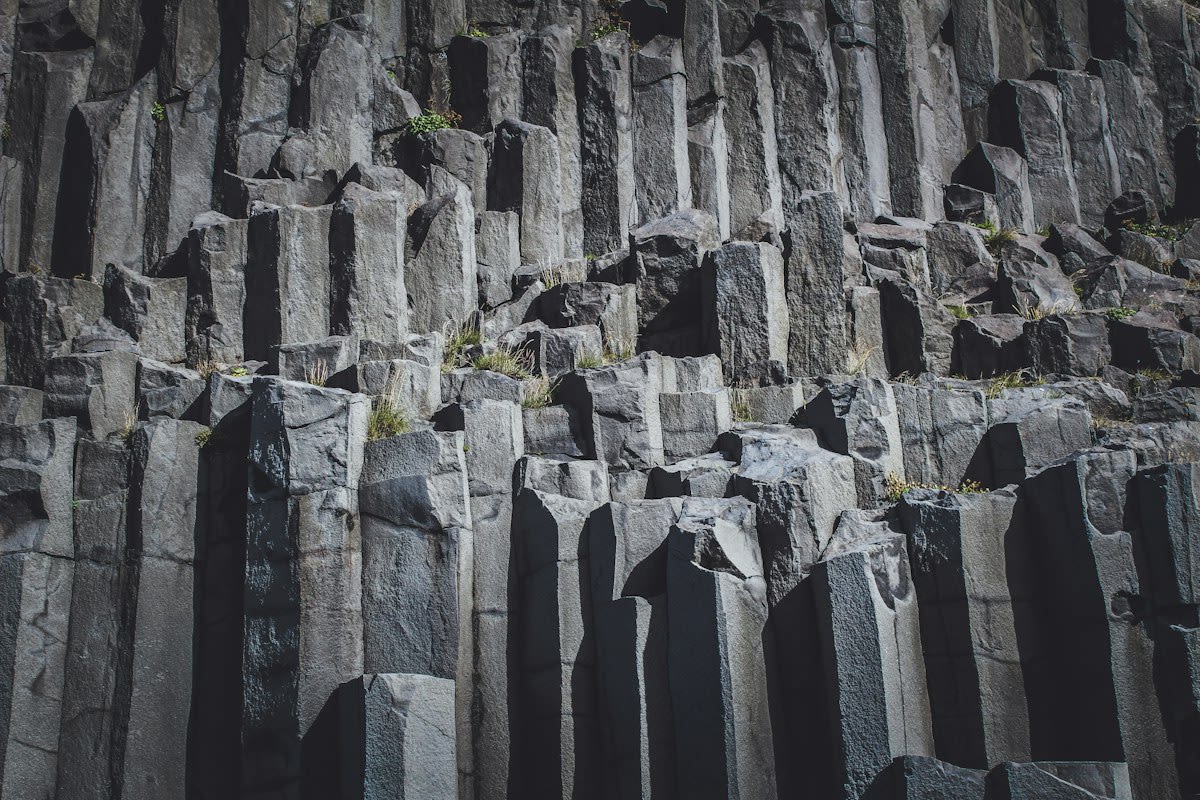
Iceland has no salt. Despite this geological reality, developers are attempting to replicate the deep-shaft cooling models used in Polish salt mines to house next-generation AI clusters. The goal is achieving absolute thermal stability for GPUs. Costs are spiraling. As power prices climb in Northern Virginia and Dublin, the attraction of Iceland's geothermal grid becomes an irresistible draw for hyperscalers. The move is driven by purely economic imperatives.
The Subterranean Drive
The rock is cold. While traditional data centers rely on massive fans and expensive chillers, these underground vaults use the natural thermal mass of the earth to maintain steady temperatures. It effectively eliminates the need for active cooling systems. This is a hard turn. Twelve months ago, subterranean placement was an experimental curiosity representing only 2% of new Nordic builds (Source: Nordic Tech Tracker, 2023). Now, that figure has climbed to 15% as AI workloads saturate existing surface facilities (Source: Nordic Tech Tracker, 2024). The trend is accelerating fast.
"The rock is the heat sink. We are no longer fighting the environment with electricity; we are using the earth as a passive radiator to keep H100 clusters from throttling."— Gunnar Sigurðsson, Lead Engineer at Arctic Data Solutions
Efficiency is the prize. By moving racks into basalt caverns, operators have reported a Power Usage Effectiveness (PUE) as low as 1.1 (Source: Iceland Data Center Association, 2023). This represents a massive win. In contrast, facilities in the humid heat of Johor, Malaysia, often struggle to maintain a PUE below 1.5 due to the immense energy required for dehumidification (Source: ASEAN Tech Review, 2023). Iceland simply wins on physics. The geography provides the advantage.
Global Thermal Contrast
Heat is the enemy. When you compare the subterranean vaults of the North Atlantic to the sprawling surface farms of Lagos, Nigeria, the difference in operational expenditure is staggering. The tropics demand constant power. In Lagos, cooling can account for up to 40% of total energy spend (Source: African Digital Infrastructure Report, 2023). Iceland flips this equation. Here, the energy spend focuses on computation rather than temperature control. The cost delta is enormous.
| Location | Average PUE | Cooling Method | Energy Cost (est.) |
|---|---|---|---|
| Iceland (Subterranean) | 1.1 | Passive Rock/Air | Low |
| Malaysia (Surface) | 1.5 | Active HVAC | Medium |
| Nigeria (Surface) | 1.8 | Active HVAC | High |
The transition is messy. Only those on the ground understand the war between the civil engineers and the hardware technicians regarding seismic dampening. The engineers want to bolt the racks directly into the basalt for maximum heat transfer, but the technicians fear that micro-tremors from volcanic activity will cause mechanical failure in the drive arrays. This dispute often stalls projects for months. It is a battle of priorities. One side wants thermal efficiency, while the other wants hardware longevity.
The Energy Equation
Power is abundant. Iceland's geothermal grid allows for a 30% reduction in total operational costs compared to mainland European hubs (Source: Global Infrastructure Review, 2024). The math is simple. When you combine zero-cost cooling with low-cost green energy, the profit margins for AI training expand significantly. This attracts the giants. Hyperscalers are now bidding for old industrial sites and volcanic tubes. The race is on.
Waste is a resource. Modern designs now capture the heat leaking from the server racks to warm nearby greenhouses or residential districts. This heat recovery efficiency has reached 60% in some pilot projects (Source: Reykjavik Energy Study, 2022). It creates a loop. The servers stay cool, and the community stays warm during the Arctic winter. It is a rare win. The environmental footprint shrinks as the utility increases.
Fact-Check & Accuracy Note
While the 'salt mine' terminology is borrowed from the US and Poland, Iceland's facilities are built in basalt or artificial caverns. There is an ongoing academic debate regarding the long-term effects of constant heat emission on basaltic rock stability, with some geologists warning of potential mineral degradation over decades.
Editorial Note
This report focuses on the trend of subterranean migration in the Nordic region. The data presented reflects a shift toward passive cooling in response to the power-hungry nature of LLM training, contrasting the Icelandic model with traditional tropical data hubs.