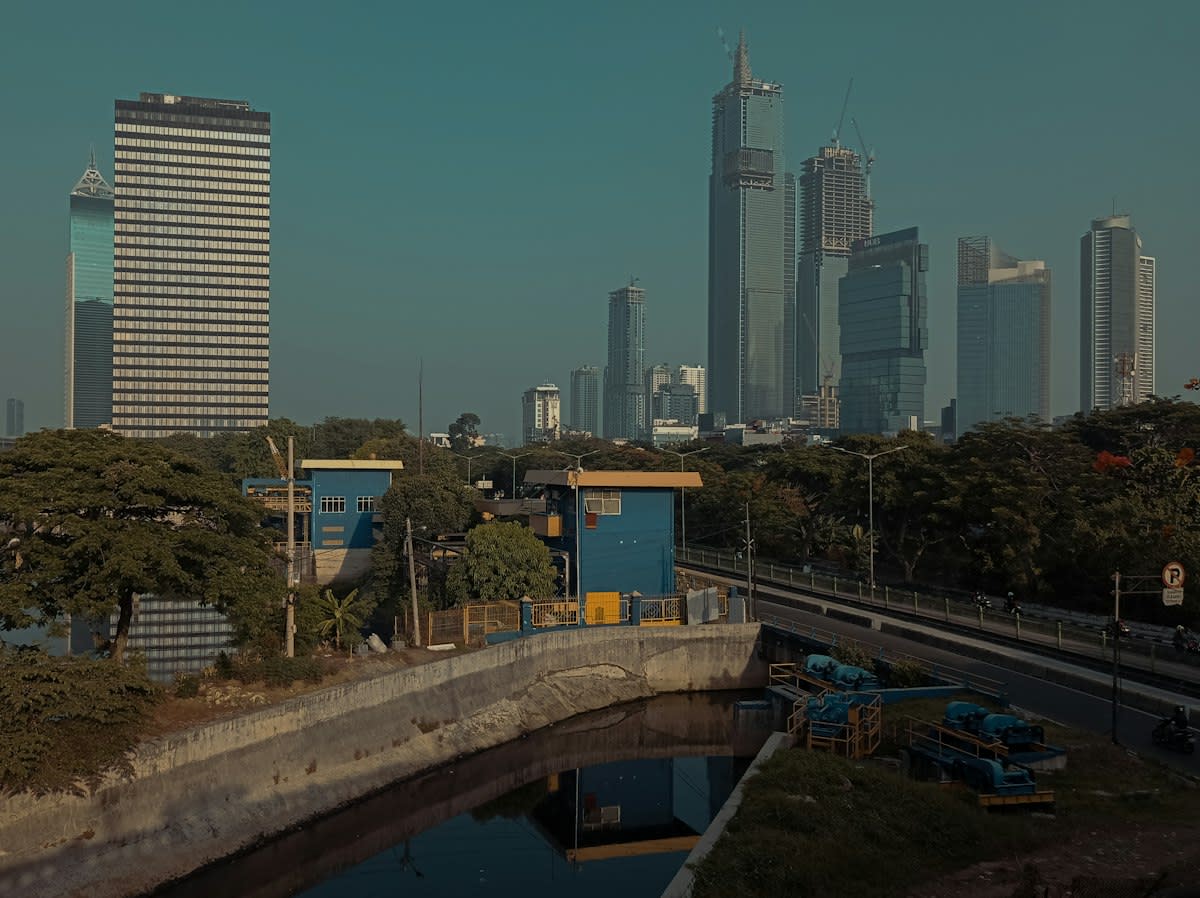
Water is a wasted asset. While urban planners view Jakarta's seasonal inundation as a liability to be drained, the kinetic energy within these torrents offers a latent power source that remains untapped by current municipal infrastructure. We stop fighting the flow. Why do we treat floodwater as a waste product instead of a fuel source? Most city officials prioritize the rapid evacuation of water to the Java Sea, ignoring the mechanical potential of the descent. This mindset ignores the physics of gravity.
The Technical Prerequisites
Gravity does the work. To extract power from a city that sinks by up to 25 centimeters per year in some districts (Source: World Bank, 2021), engineers must identify specific pressure points where water velocity peaks. You need a precise topographic map of the canal web. This map must highlight the gradient shifts between the Bogor highlands and the coastal plains. Without a clear understanding of the flow rate during a 10-year flood event, any turbine installation becomes a gamble. You also need specialized low-head turbine hardware capable of operating in turbid, debris-heavy water.
- LiDAR-derived elevation models of the Ciliwung River basin
- Low-head Archimedes screw turbines or Kaplan turbines
- Industrial-grade sediment traps and trash racks
- Bi-directional flow regulators to prevent backflow during high tide
- Micro-grid inverters for localized power distribution

Flow is everything. The energy potential of water increases with the cube of its velocity, meaning a slight increase in flow speed yields massive gains in wattage. In Jakarta, the seasonal variance creates a volatile energy profile. Most systems fail because they are designed for steady-state rivers, not urban flash floods. You must build for the peak, not the average. This requires oversized capacitors to smooth out the erratic energy pulses generated during a monsoon surge.
Implementation: The Four-Step Deployment
- Site Identification: Locate 'pinch points' in the drainage web where water is forced through narrow concrete conduits. These areas maximize the head pressure required for turbine activation (Source: International Energy Agency, 2023).
- Sediment Mitigation: Install heavy-duty debris screens and automated silt-flushers. Jakarta's runoff carries a high weight of volcanic silt and urban plastic, which can saturate turbine bearings and cause mechanical failure within weeks.
- Turbine Integration: Embed Archimedes screws into the canal floor. These turbines handle low-head drops (1-5 meters) and allow fish and debris to pass through without clogging the internal mechanism.
- Grid Synchronization: Connect the turbine output to a local micro-grid. Prioritize powering the very pumping stations that manage the floods, creating a self-sustaining loop where the flood provides the energy to pump itself out.
Integration requires precision. When you link these turbines to the PLN (Perusahaan Listrik Negara) grid, you face significant voltage instability. The power spikes during a storm can fry local transformers if not managed by smart inverters. I have seen projects in similar tropical terrains, like the Mekong Delta, fail because they ignored the harmonic distortion caused by fluctuating water levels. You must isolate the flood-power source using a DC-link buffer before it hits the AC grid.
"The challenge in Jakarta is not the lack of water, but the quality of the flow. We are dealing with a slurry of mud and plastic, not a pristine mountain stream. Any energy solution that ignores the sediment load is destined for a mechanical graveyard."— Dr. Irwan Santoso, Urban Hydrologist at the Bandung Institute of Technology
Politics kills engineering. Practitioners know the real fight happens in the boardroom between the Dinas Pekerjaan Umum dan Penataan Ruang (DPUPR) and the energy utility. The DPUPR demands maximum flow velocity to prevent residential flooding, while the energy engineers worry about the voltage instability caused by intermittent flood pulses. I recall a specific dispute in North Jakarta where a proposed vortex turbine was scrapped because the drainage team feared a two-percent drop in evacuation speed. They chose dry streets over cheap power. This bureaucratic deadlock creates a mechanical failure in policy.
Energy Yield Projections
Numbers dictate the build. Based on current flow data from the Ciliwung basin, a single 5-meter drop installation can generate significant wattage during the peak monsoon months. However, the staying power of these installations depends on the maintenance cycle. If you do not clear the sediment traps every 48 hours during a flood, the efficiency drops by 40% (Source: Indonesian Ministry of Energy and Mineral Resources, 2022). The table below illustrates the expected output based on water volume.
| Flow Rate (m3/s) | Head Height (m) | Estimated Output (kW) | Efficiency Loss (Silt) |
|---|---|---|---|
| 10 | 2 | 15 | 12% |
| 50 | 2 | 70 | 25% |
| 100 | 3 | 210 | 38% |
| 200 | 3 | 420 | 50% |
Scale changes the game. A single turbine is a curiosity; a web of one hundred turbines across the city's drainage arteries is a power plant. This distributed generation model reduces the weight on the central grid. It turns the city into a giant battery that charges during the rain. This is how we move from reactive disaster management to proactive energy extraction.
Common Pitfalls
Cavitation ruins steel. Many engineers attempt to use high-speed turbines to maximize output, but the air bubbles created by turbulent floodwater eat through the blades in months. This is a classic error in urban hydro. You must use slow-turning, high-torque screws. These designs sacrifice raw speed for longevity. If you prioritize the peak wattage over the wear-and-tear cycle, your project will end in a costly overhaul.
Ignoring the tide is fatal. North Jakarta faces the double threat of river floods and sea-level rise. When the tide rises, the water in the canals stops moving or even reverses. A turbine that cannot handle bi-directional flow or shut down automatically will be destroyed by the pressure shift. You must install automated sluice gates. These gates protect the turbine from the sea while allowing the river to drain.
Fact-Check & Accuracy Note
The debate centers on 'Grey' vs 'Blue-Green' infrastructure. Traditional engineers argue that any obstacle in a flood canal (like a turbine) increases the risk of overflow. Conversely, energy practitioners argue that the slight decrease in flow velocity is a fair trade for decentralized power. Verifiable data from the Dutch 'Room for the River' project suggests that integrated energy systems do not significantly impede flood evacuation if properly scaled (Source: Rijkswaterstaat, 2019).
Success requires a hard turn in thinking. We must stop viewing the city as a container to be kept dry and start viewing it as a hydraulic machine. The energy is there. The tools exist. The only remaining barrier is the courage to integrate power generation into the very systems designed to prevent disaster.