The New Geopolitics of the Periodic Table
For a century, the global order bent to the will of those who controlled the flow of crude oil. Power was measured in barrels and pipeline routes, creating a world where the Middle East sat at the center of every strategic calculation. Today, that gravity is shifting. The new currency of geopolitical leverage is no longer found in liquid carbon, but in the hard, crystalline structures of lithium, cobalt, nickel, and rare earth elements. We are witnessing a fundamental transition from a fuel-intensive energy system to a material-intensive one. This is not a mere change in resource preference; it is a total reconfiguration of how nations project power and secure their futures.
Twelve months ago, the global conversation centered on scarcity and the fear of immediate supply chain collapses. News cycles were dominated by the panic of 'running out' of the materials needed for the green transition. Fast forward to today, and the narrative has evolved. The focus has shifted from desperate procurement to strategic sovereignty. Nations are no longer just asking where they can buy these minerals; they are asking who they can trust to process them. This 'Delta'—the shift from market-driven procurement to security-driven diplomacy—marks the official start of the Mineral Diplomacy era.
The Refining Bottleneck: Where Power Truly Lies
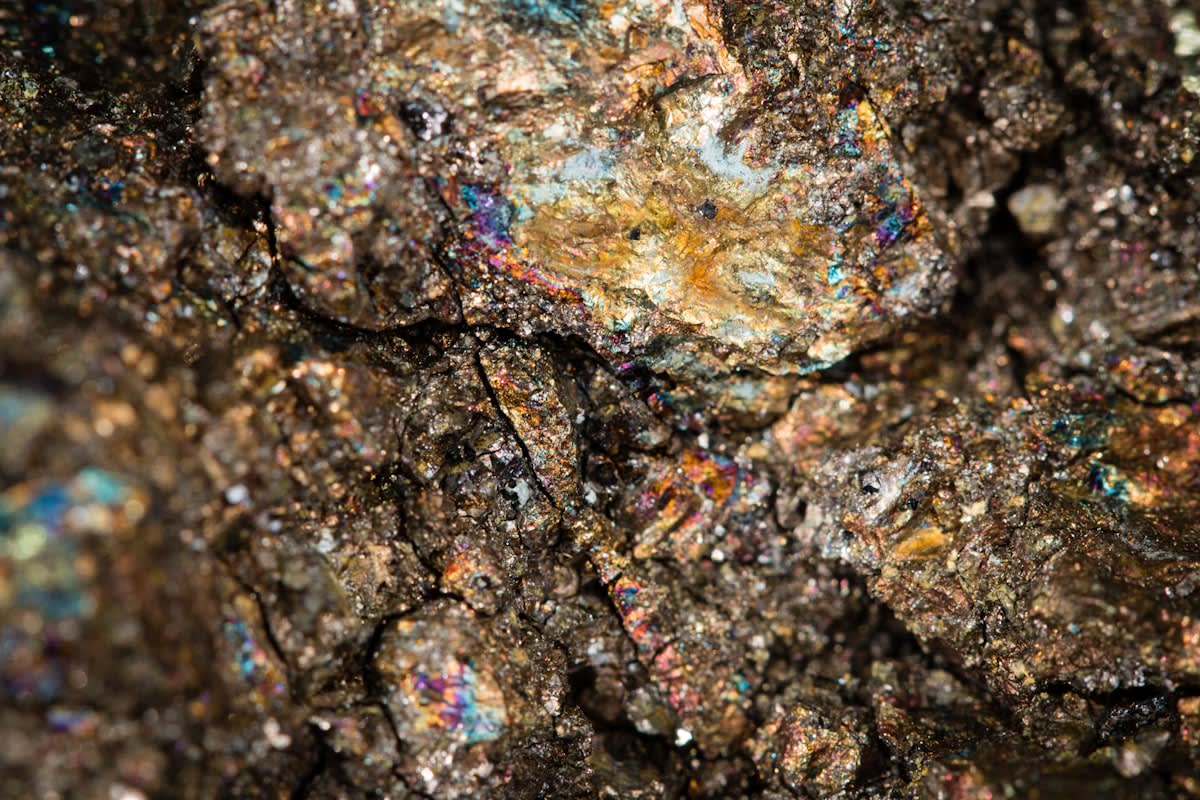
A common misconception persists that the country with the most minerals in the ground wins the race. This is a dangerous oversimplification. The true leverage resides not in extraction, but in processing. Mining a rock is a brute-force industrial task; refining that rock into battery-grade chemicals is a high-tech, chemical-intensive science. Currently, a staggering concentration of this capability exists in a single geography. When one nation controls the vast majority of the world's graphite and rare earth refining, they don't just control a commodity—they control the pace of the global energy transition.
| Mineral | Mining Concentration | Processing Concentration | Strategic Risk Level |
|---|---|---|---|
| Lithium | High (Chile/Australia) | Very High (China) | Critical |
| Cobalt | Extreme (DRC) | Very High (China) | High |
| Rare Earths | Moderate (Global) | Extreme (China) | Critical |
| Graphite | Moderate (Global) | Extreme (China) | High |
Why does this concentration matter now more than it did three years ago? Because the world has realized that the 'invisible' part of the supply chain is the most vulnerable. A disruption in a few specialized refining plants in East Asia can paralyze automotive assembly lines in Germany or electronics manufacturing in the United States. This realization has triggered a frantic rush to build domestic processing hubs. We are seeing a global trend of 'industrial repatriation,' where governments are subsidizing the construction of refineries to ensure that they aren't just importing a finished product, but controlling the chemistry behind it.
"The race is no longer about who owns the mine, but who owns the molecule. If you cannot refine the ore, you are simply a landlord for someone else's industrialization."— Strategic Resource Analyst
Friend-Shoring and the New Alliance Maps
In response to this concentration, a new diplomatic strategy has emerged: 'friend-shoring.' This is the practice of limiting supply chains to countries that share similar political values and strategic interests. The United States has leaned heavily into this via the Inflation Reduction Act, which provides massive incentives for minerals sourced from free-trade partners. Similarly, the European Union's Critical Raw Materials Act seeks to ensure that no single third country provides more than 65% of any strategic raw material by 2030. These aren't just economic policies; they are geopolitical boundary markers.
Defining the Shift
Friend-shoring replaces the 'lowest cost' model of globalization with a 'highest trust' model. It prioritizes resilience and political alignment over immediate profit margins.
This shift is creating a secondary effect: the empowerment of the Global South. Nations like the Democratic Republic of Congo, Indonesia, and Chile are no longer content to be mere exporters of raw dirt. They are leveraging their mineral wealth to demand technology transfers and domestic industrialization. Indonesia's ban on raw nickel exports is a prime example of this new agency. By forcing foreign companies to build smelters on Indonesian soil, Jakarta is effectively rewriting the terms of trade, moving from a colonial-era extraction model to a value-added industrial model.
Can this new diplomacy lead to a more stable world? The risk is the creation of two parallel, incompatible industrial ecosystems—one centered around Western standards and another around East Asian networks. If the world splits into 'mineral blocs,' we risk inefficiency and increased costs for the end consumer. However, the alternative is a precarious dependency that leaves entire economies vulnerable to a single political decision. The current trend suggests that nations are willing to pay a 'security premium' to avoid that vulnerability.
Beyond Extraction: The Resilience Strategy
The ultimate hedge against mineral diplomacy is to reduce the need for the minerals themselves. We are seeing a surge in 'substitution science,' where researchers are racing to develop batteries that don't rely on cobalt or nickel. Sodium-ion batteries, for instance, offer a promising path toward decoupling energy storage from the volatile cobalt markets of Central Africa. This is the silent front of the resource war: the attempt to innovate the problem out of existence.
Parallel to substitution is the rise of 'urban mining.' The minerals already circulating in our landfills and old electronics are a goldmine in their own right. By investing in circular economy infrastructure, nations can create a domestic, sustainable source of critical materials. A year ago, recycling was seen as an environmental nicety; today, it is being reimagined as a national security imperative. The ability to recover 95% of the lithium from a spent battery is now as strategically valuable as discovering a new mine in the Andes.
This transition is not without friction, but it offers a unique opportunity for global resilience. By diversifying sources, investing in circularity, and respecting the agency of mineral-rich nations, the world can move away from the boom-and-bust cycles of the oil era. The map of power is indeed being redrawn, but it is being drawn with a broader palette. The winner of the new resource war won't be the one who hoards the most material, but the one who builds the most flexible and innovative system to use it.