
The Power Paradox of the AI Era
The digital world is hitting a physical wall. For decades, the internet scaled through efficiency and virtualization, but the current explosion of Large Language Models (LLMs) has changed the math. Training a single frontier model now requires energy levels that rival small cities, and the inference phase—where the AI actually answers your questions—is a relentless, 24/7 drain on the electrical grid. We are witnessing a collision between the infinite ambition of silicon and the finite capacity of copper wires. Can the existing grid possibly keep pace with a demand curve that is moving vertically?
The tension is palpable in the boardrooms of the hyperscalers. While wind and solar are essential, their intermittency is a liability for a data center that cannot afford a millisecond of downtime. According to the International Energy Agency (Source: IEA, 2024), data center electricity consumption could double by 2026, reaching levels equivalent to the entire power consumption of Japan. The industry is realizing that 'green energy' is not enough; they need 'firm' energy—power that is carbon-free, constant, and, crucially, independent of a fragile national grid.
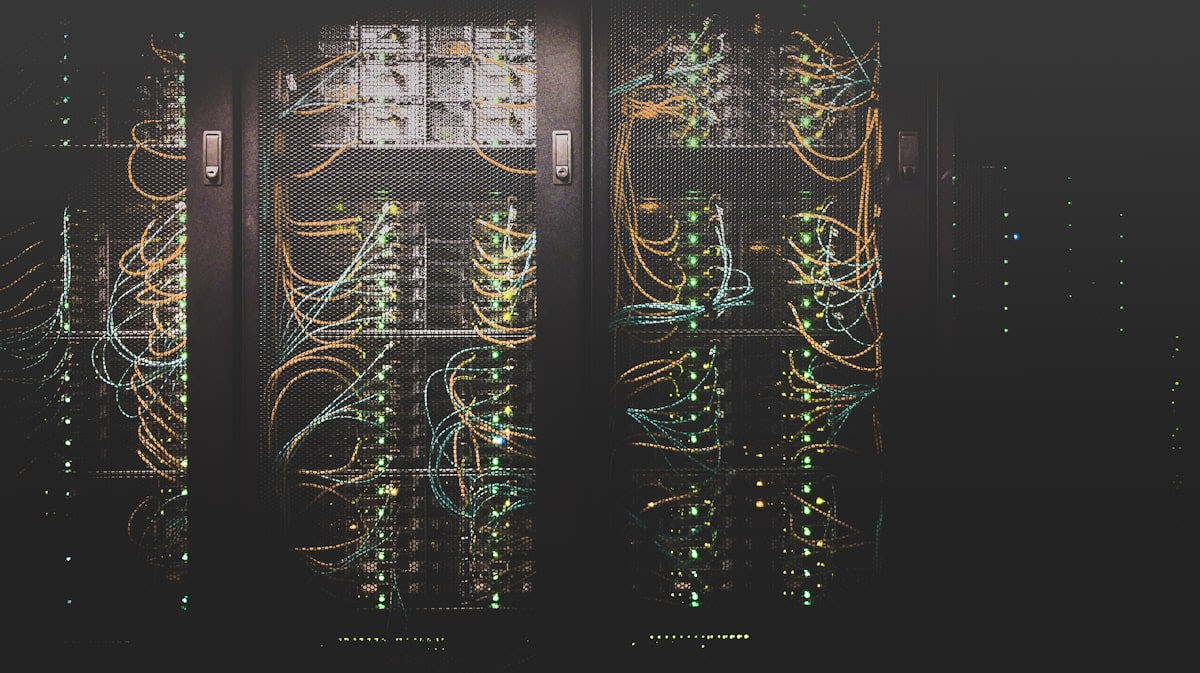
This is where the 'Nuclear Miniature' enters the frame. We are moving away from the era of the monolithic nuclear plant—those multi-billion dollar behemoths that take decades to build—and toward Small Modular Reactors (SMRs). These are factory-built units that can be shipped by truck or rail and deployed directly adjacent to the data centers they power. It is a pivot from centralized utility dependence to decentralized energy sovereignty.
But this isn't just a theoretical shift; the timeline has compressed violently over the last twelve months.
The Delta: From Speculation to Steel
Twelve months ago, SMRs were discussed in the industry as a '2030s solution.' They were the promising prototypes of the future. Today, the conversation has shifted to procurement and site preparation. The delta is driven by the sheer urgency of the AI arms race. We have moved from asking 'if' these reactors will work to 'how fast' they can be licensed. The entry of Big Tech as a direct financier and customer has effectively bypassed the traditional utility slow-walk.
Look at the recent moves: Microsoft's deal with Constellation Energy to restart a reactor at Three Mile Island is a watershed moment (Source: Bloomberg, 2024). Similarly, Amazon's acquisition of a data center campus directly connected to a nuclear plant in Pennsylvania signals a new era of 'behind-the-meter' power. These companies are no longer waiting for the government to upgrade the grid; they are building their own private energy ecosystems.
"The integration of SMRs into the industrial fabric allows for a level of load-following and flexibility that traditional nuclear could never achieve. We are seeing the birth of the 'energy-compute' cluster."— Nuclear Energy Agency, Report on Advanced Nuclear Systems (2023)
| Feature | Traditional Nuclear | Small Modular Reactors (SMR) |
|---|---|---|
| Construction Time | 10-20 Years | 3-5 Years |
| Capital Risk | Extreme (Billions upfront) | Moderate (Modular scaling) |
| Location | Remote/Water-dependent | On-site/Flexible |
| Power Output | 1,000+ MW | 50-300 MW |
A Global Map of Atomic Ambition
This trend is not a North American phenomenon. In China, the deployment of the HTR-PM (High Temperature Gas-Cooled Reactor) has already demonstrated the viability of modular, pebble-bed technology (Source: IAEA, 2023). China is treating SMRs as a strategic export, aiming to provide the energy backbone for the next generation of global digital hubs. They aren't just building reactors; they are building the blueprint for a nuclear-powered internet.
Across Europe, the shift is driven by energy security. Romania and Poland are actively pursuing SMR partnerships to decouple from volatile gas markets while meeting stringent carbon targets. The European approach is more cautious regarding licensing, but the economic pressure is mounting. When a tech giant tells a government that their next $10 billion data center hub will go to a country with stable, nuclear-backed power, the regulatory red tape tends to dissolve quickly.

Yet, for all the high-level excitement, the reality on the ground is far more friction-filled.
The Engineer's Friction: The Ground-Level Reality
If you spend a week talking to the nuclear engineers actually designing these modules, the tone is different. They aren't debating the 'why'—they are fighting the 'how.' The biggest point of contention is the 'factory-built' promise. In theory, you build a reactor in a facility and ship it to the site. In practice, the 'site' still requires massive civil engineering, specialized cooling infrastructure, and a regulatory nightmare of local zoning laws. The debate in the field is currently split: do we push for a few standardized designs to achieve economies of scale, or do we allow for customized 'bespoke' reactors that fit specific site constraints?
There is also the 'fuel gap.' Many of the most promising SMR designs require HALEU (High-Assay Low-Enriched Uranium). For years, the primary commercial supplier of HALEU was Russia. The geopolitical rupture of the last few years has left Western SMR developers in a precarious position, scrambling to build a domestic fuel supply chain. You cannot have a nuclear-powered internet if you cannot source the fuel without crossing a geopolitical minefield.
The Resilience Play
Despite these hurdles, the momentum is irreversible. The shift toward SMRs represents a broader movement toward resilience. By placing power generation at the edge—literally adjacent to the compute—the internet becomes less vulnerable to systemic grid failures. Imagine a world where a regional blackout doesn't take down the AI services that manage a city's traffic or a hospital's diagnostics because the data center is its own power island.
We are moving toward a symbiotic relationship where waste heat from these reactors could potentially be used for district heating or industrial processes, turning the data center from a power sink into a community energy hub. The 'Nuclear Miniature' isn't just about keeping the servers running; it's about redefining the relationship between energy, geography, and information.
Fact-Check & Accuracy Note
Key claims regarding data center energy growth are sourced from the IEA's 2024 Electricity report. Details on SMR deployment in China are based on IAEA 2023 technical summaries. The Microsoft/Constellation Energy deal is a matter of public record as of 2024. Ongoing debates regarding HALEU fuel availability are widely documented in nuclear industry trade publications and governmental energy security briefs.