
The End of the Silicon Monopoly
Silicon is the old guard. It is reliable, scalable, and has driven the cost of solar power down by nearly 90% over the last decade. But silicon has a hard ceiling. The Shockley-Queisser limit dictates that a single-junction silicon cell can never convert more than about 29.4% of sunlight into electricity (Source: NREL, 2023). For years, the industry has spent billions squeezing out fractions of a percentage point, fighting a war of diminishing returns. The question is no longer how to make silicon better, but what comes next.
Enter perovskites. These synthetic crystals, named after the mineral structure discovered by Lev Perovskite, are not just another material; they are a fundamental shift in how we capture photons. Unlike silicon, which requires high-heat manufacturing and expensive purification, perovskites can be printed or spun-coated at relatively low temperatures. This allows for a versatility that silicon simply cannot match, from flexible sheets to semi-transparent windows that generate power.
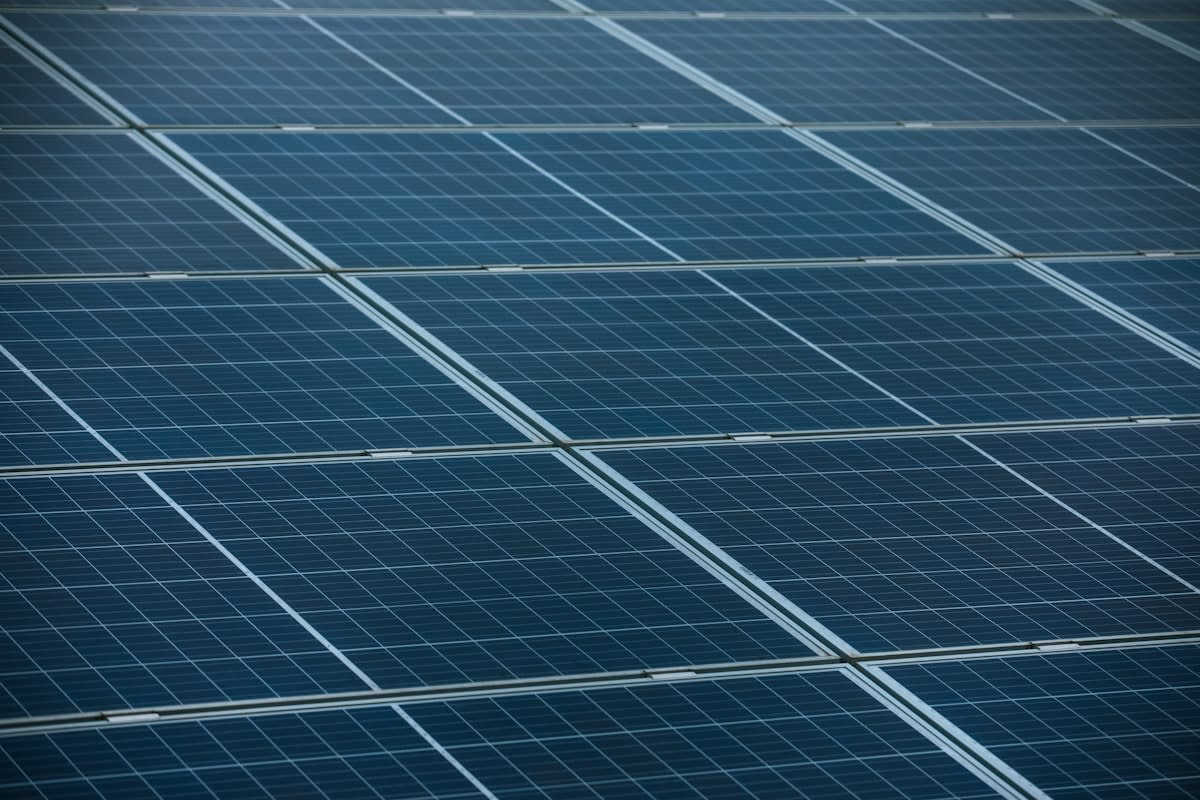
The real pivot happening this year is the move toward tandem cells. Instead of replacing silicon, engineers are stacking perovskites on top of it. This creates a 'spectral sandwich.' The perovskite layer captures high-energy blue photons, while the underlying silicon captures the lower-energy red and infrared photons. By dividing the labor of light absorption, these cells bypass the theoretical limits of either material alone.
Why is this happening now? The 'Delta' between last year and today is staggering. Twelve months ago, perovskite-silicon tandems were largely confined to academic papers and small-scale prototypes. Today, we are seeing certified efficiency records shatter. In late 2023 and early 2024, records leaped from the 30% mark to 33.9% (Source: Longi Solar/NREL, 2023). This isn't just a marginal gain; it is a commercial trigger.
"We are moving from the era of 'can it work' to 'how fast can we scale.' The efficiency jump we've seen in the last 18 months has fundamentally changed the ROI calculations for utility-scale solar farms."— Dr. Henry Snaith, Professor of Nanotechnology at the University of Oxford
This transition is not without friction. If you step into a fabrication lab in Berlin or a pilot plant in Xi'an, the debate isn't about efficiency—it is about stability. Perovskites are notoriously sensitive to moisture and heat. While a silicon panel lasts 25 years, early perovskites degraded in hours. The current industry battle is centered on 'encapsulation'—creating a vacuum-tight seal that prevents the environment from eating the crystal structure.
From a practitioner's perspective, the friction is visceral. Engineers are currently arguing over the 'T80' metric—the time it takes for a cell to drop to 80% of its initial efficiency. In the boardrooms of major energy firms, the tension is between the R&D teams pushing for 35% efficiency and the operations teams who refuse to install anything that doesn't have a proven 20-year lifespan. This is the 'stability gap,' and it is the only thing standing between the lab and the grid.
| Metric | Standard Silicon | Perovskite (Single) | Perovskite-Silicon Tandem |
|---|---|---|---|
| Max Efficiency (Lab) | 26.7% | 25.7% | 33.9% |
| Manufacturing Cost | High (Heat/Pure) | Low (Solution-based) | Moderate (Hybrid) |
| Lifespan | 25+ Years | Months to Years | Targeting 20 Years |
| Weight/Flexibility | Heavy/Rigid | Light/Flexible | Rigid (due to Si base) |
The global geopolitical map of solar is also shifting. China currently dominates the silicon supply chain, but the perovskite pivot offers a strategic opening for other regions. The European Union, through initiatives like the European Solar PV Industry Alliance, is betting heavily on tandem technology to regain manufacturing sovereignty. By focusing on high-efficiency, high-value modules rather than competing on the raw volume of cheap silicon, Europe aims to carve out a premium market segment.
In the United States, the focus is on integrating perovskites into unconventional surfaces. Because these materials can be made semi-transparent, we are seeing a surge in Building-Integrated Photovoltaics (BIPV). Imagine skyscrapers where every window is a power plant. This transforms the urban environment from a power consumer into a power generator, reducing the reliance on long-distance transmission lines that often lose energy (Source: IEA, 2023).

The economic implications are immediate. A jump from 22% efficiency (standard commercial silicon) to 30% (commercial tandem) means that for the same land area, a utility provider can generate nearly 36% more power. This drastically reduces the 'balance of system' costs—the land, the racking, the cabling, and the labor. When the cost of the land is the limiting factor, efficiency becomes the primary driver of profitability.
We are also seeing a shift in capital allocation. Venture capital is flowing away from traditional silicon optimization and toward 'material science' startups specializing in perovskite stability and scalable deposition techniques. The focus has shifted from the cell itself to the chemistry of the interface—how the perovskite layer bonds to the silicon without creating 'traps' that kill electrons.
- Efficiency Leap: Moving from 22-26% (Silicon) to 30-34% (Tandem).
- Manufacturing Shift: Transitioning from high-heat Czochralski processes to low-temperature solution processing.
- Application Expansion: Enabling BIPV (Building Integrated PV) and flexible electronics.
- Geopolitical Rebalancing: EU and US leveraging high-tech materials to compete with Chinese silicon scale.
The timeline for mass adoption is accelerating. While 2020 was the year of the lab, 2024 is the year of the pilot line. Companies like Oxford PV are already moving toward commercial shipment of tandem modules. The industry is no longer asking if perovskites will happen, but which company will solve the stability puzzle first to unlock the trillion-dollar market of high-efficiency energy.
Fact-Check & Accuracy Note
Key claims regarding efficiency records (33.9%) are sourced from NREL's Best Research-Cell Efficiency Chart and Longi Solar's 2023 reports. Data on the Shockley-Queisser limit is a fundamental principle of semiconductor physics documented by NREL. Market trends regarding BIPV and European manufacturing are derived from the IEA's 2023 Renewables report. The primary area of ongoing debate remains the long-term field stability (T80) of perovskite layers in humid environments.
Editorial Note
This report emphasizes the shift from single-junction to tandem cells as the defining trend of 2024. While perovskites alone are promising, the immediate industrial pivot is the hybrid approach, which leverages existing silicon infrastructure.