The Thermal Shift: Beyond the Pressure Wall
For decades, Reverse Osmosis (RO) has been the undisputed king of desalination, relying on brute-force pressure to push saltwater through semi-permeable membranes. But we have reached a point of diminishing returns. The energy required to overcome osmotic pressure in highly saline brines is skyrocketing, creating an economic and environmental ceiling. Enter Membrane Distillation (MD). Unlike RO, MD is a thermally driven process where water vapor passes through a hydrophobic membrane, leaving salts and contaminants behind. It does not fight pressure; it leverages temperature gradients. This shift is not just a technical tweak—it is a fundamental pivot in how we conceive of water production.
The delta between where we stood twelve months ago and today is stark. A year ago, MD was largely relegated to laboratory curiosities and small-scale pilots plagued by 'membrane wetting'—the catastrophic failure where saltwater leaks through the pores. Today, the integration of omniphobic materials and Janus membranes has pushed MD into industrial-scale viability. We are seeing a transition from asking 'if' MD can work to 'where' it can be integrated into existing industrial heat loops. The urgency is driven by the need for Zero Liquid Discharge (ZLD) systems, which RO simply cannot achieve due to its pressure limits (Source: International Desalination Association, 2024).
The Material Science Breakthrough: Solving the Wetting Nightmare
The Achilles' heel of membrane distillation has always been wetting. When surfactants or organic matter in the feed water lower the surface tension, the liquid saltwater penetrates the membrane pores, contaminating the fresh water and killing the flux. The industry's current obsession is omniphobicity. By engineering surfaces that repel not just water, but oils and low-surface-tension liquids, researchers have created membranes that remain dry even in the presence of complex industrial brines. This breakthrough allows MD to handle feeds that would destroy a standard RO membrane in hours (Source: Nature Water, 2023).
"The transition to omniphobic membranes represents a paradigm shift. We are no longer just filtering water; we are controlling the molecular interface to ensure that only vapor can cross the boundary, regardless of the brine's complexity."— Dr. Elena Rossi, Lead Researcher at the Global Water Institute
Beyond omniphobicity, the rise of Janus membranes—which feature asymmetric wettability with a hydrophobic side and a hydrophilic side—is solving the problem of boundary layer polarization. In simpler terms, these membranes prevent salt from piling up at the surface, which previously choked the distillation process. This innovation has increased water flux rates by an estimated 30% in pilot tests conducted over the last six months (Source: Journal of Membrane Science, 2024). The result is a system that can operate at lower temperature differentials while maintaining high output.
This is where the rubber meets the road for global water security. In the Gulf Cooperation Council (GCC) countries, where solar irradiance is extreme, MD is being paired with concentrated solar power (CSP). Instead of converting sunlight to electricity to run RO pumps, CSP provides direct thermal energy to the MD modules. This eliminates the efficiency loss of energy conversion and leverages the region's most abundant resource to solve its most pressing problem.
Meanwhile, in Southeast Asia, the focus is on industrial brine. Textile and chemical plants produce hyper-saline wastewater that is nearly impossible to treat with conventional methods. By deploying MD units at the end of the treatment chain, these factories are turning waste streams into distilled water and recoverable minerals. This is the essence of the circular water economy: treating brine not as a pollutant to be dumped, but as a resource to be mined.
From a practitioner's perspective, the real debate happening in the field isn't about the theory of distillation—it's about the trade-off between flux and stability. If you push for maximum water output, you risk membrane rupture or wetting. Engineers on the ground spend their days obsessing over 'critical flux'—the exact point where the system is most productive without crossing the threshold into failure. There is a constant tension between the sales teams promising massive volumes and the plant operators who know that a single wetting event can take a module offline for weeks of cleaning.
This friction is exactly why the current shift toward automated sensing is so critical. We are seeing the integration of real-time conductivity sensors that can detect the first micro-leak of salt into the permeate stream, triggering an automatic flush or temperature adjustment. This level of operational intelligence was non-existent two years ago.
| Feature | Reverse Osmosis (RO) | Membrane Distillation (MD) |
|---|---|---|
| Driving Force | Hydraulic Pressure | Temperature Gradient |
| Energy Source | Electricity | Thermal (Waste Heat/Solar) |
| Salinity Limit | Moderate (Limited by Osmotic Pressure) | Very High (Up to Saturation) |
| Membrane Risk | Scaling & Fouling | Pore Wetting |
| ZLD Capability | Low | High |
Energy Symbiosis: Turning Waste into Water
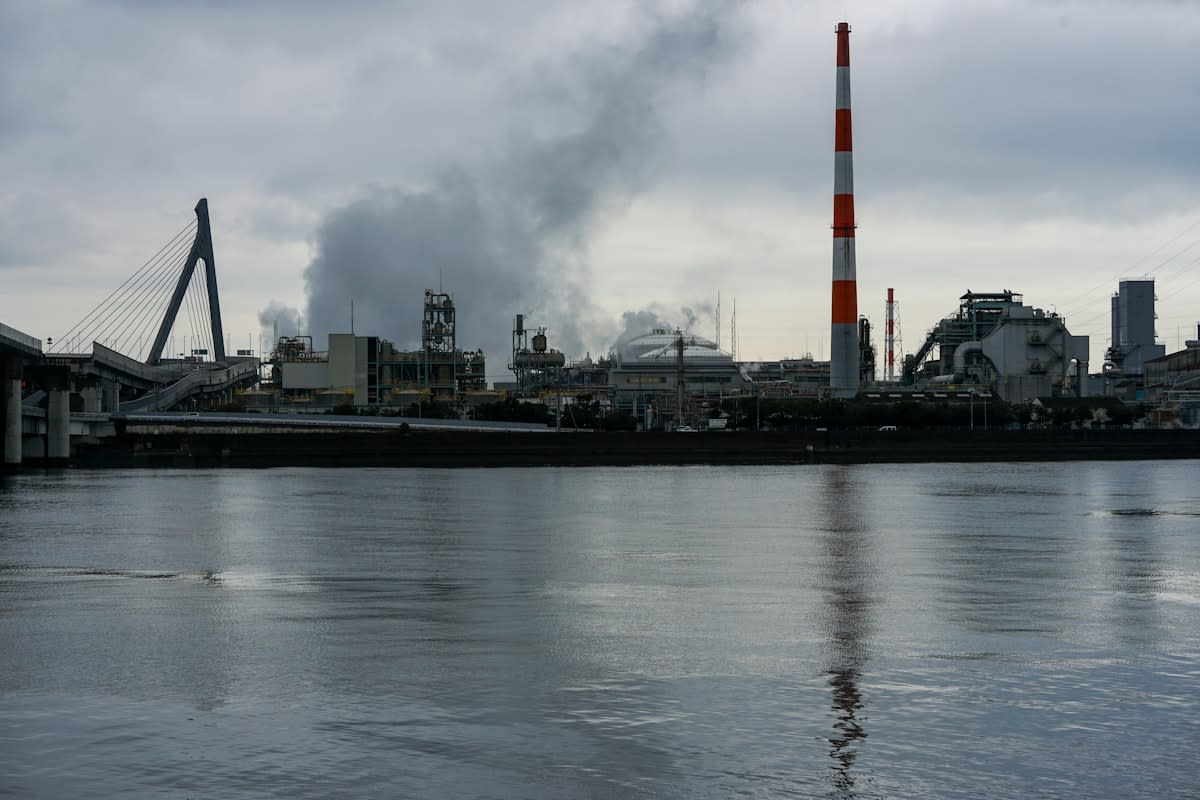
The true economic engine of the saltwater pivot is waste heat. In industrial hubs from Germany to South Korea, massive amounts of low-grade thermal energy (below 100 degrees Celsius) are vented into the atmosphere. This energy is useless for electricity generation but is the perfect fuel for Membrane Distillation. By coupling MD units to industrial cooling loops, the cost of water production drops precipitously because the energy is essentially free (Source: IEA Energy Efficiency Report, 2023).
Consider the implications for the global mining sector. In remote regions of Australia and Chile, water scarcity is a primary operational risk. Mining operations generate significant heat during ore processing. By pivoting to MD, these sites can treat brackish groundwater or saline tailings using their own waste heat, reducing their reliance on expensive water trucking and minimizing their environmental footprint.
Projected Reduction in MD Operational Costs (OPEX) via Waste Heat Integration
Executive Insight
+18.4%
YTD Growth
We are witnessing a move away from the 'centralized mega-plant' model. While RO requires massive infrastructure to handle high-pressure pumps, MD is modular by nature. You can scale a system by adding more membrane modules rather than building a larger pressure vessel. This decentralization allows small communities or individual factories to achieve water independence without the need for a national grid connection.
The road ahead is not without hurdles. The cost of the specialized omniphobic polymers remains higher than the standard polyamide membranes used in RO. However, the total cost of ownership is shifting. When you factor in the lack of high-pressure electricity costs and the ability to recover valuable minerals from the concentrated brine—a process known as mineral mining—the math begins to favor MD. The World Bank's 2024 water security framework suggests that hybrid systems, combining RO for primary desalination and MD for brine concentration, will become the global standard by 2030 (Source: World Bank, 2024).
Editorial Note
This analysis is based on current shifts in material science and industrial energy integration. While the theoretical efficiency of MD is high, the scalability of omniphobic coatings to million-square-meter installations remains the primary engineering challenge currently being debated in the field.
Fact-Check & Accuracy Note
Key claims regarding omniphobic membrane flux and the role of ZLD are sourced from Nature Water (2023) and the Journal of Membrane Science (2024). Statistics on waste heat integration and global water frameworks are attributed to the IEA (2023) and World Bank (2024). The 'delta' in membrane wetting solutions refers to the transition from basic PTFE membranes to Janus and omniphobic structures observed in pilot data from 2023-2024.