
The Great Chemistry Diversification
The energy sector has spent a decade treating lithium-ion as the singular answer to the decarbonization puzzle. That era of monotony is ending. As we move through the latter half of 2026, the industry is pivoting toward a multi-chemistry strategy where sodium-ion batteries are no longer theoretical curiosities but strategic assets. This shift isn't just about finding a cheaper alternative to lithium; it is about decoupling the global energy transition from a fragile, concentrated supply chain that has left many nations vulnerable to geopolitical volatility.
We are seeing this play out in real-time across diverse geographies. In Canada, the automotive landscape is shifting as the country manages complex trade dynamics, including the reset of import quotas on September 1, 2026, which opened the door for another 24,500 China-made electrified vehicles (Source: Automotive News, 2026). Amidst this trade friction, a technical shift is occurring: automakers are increasingly integrating sodium-ion batteries into low-voltage auxiliary systems (Source: Automotive News, 2026). By offloading non-critical power needs to sodium-ion, manufacturers can preserve expensive lithium for the main traction battery, optimizing cost without sacrificing vehicle range.
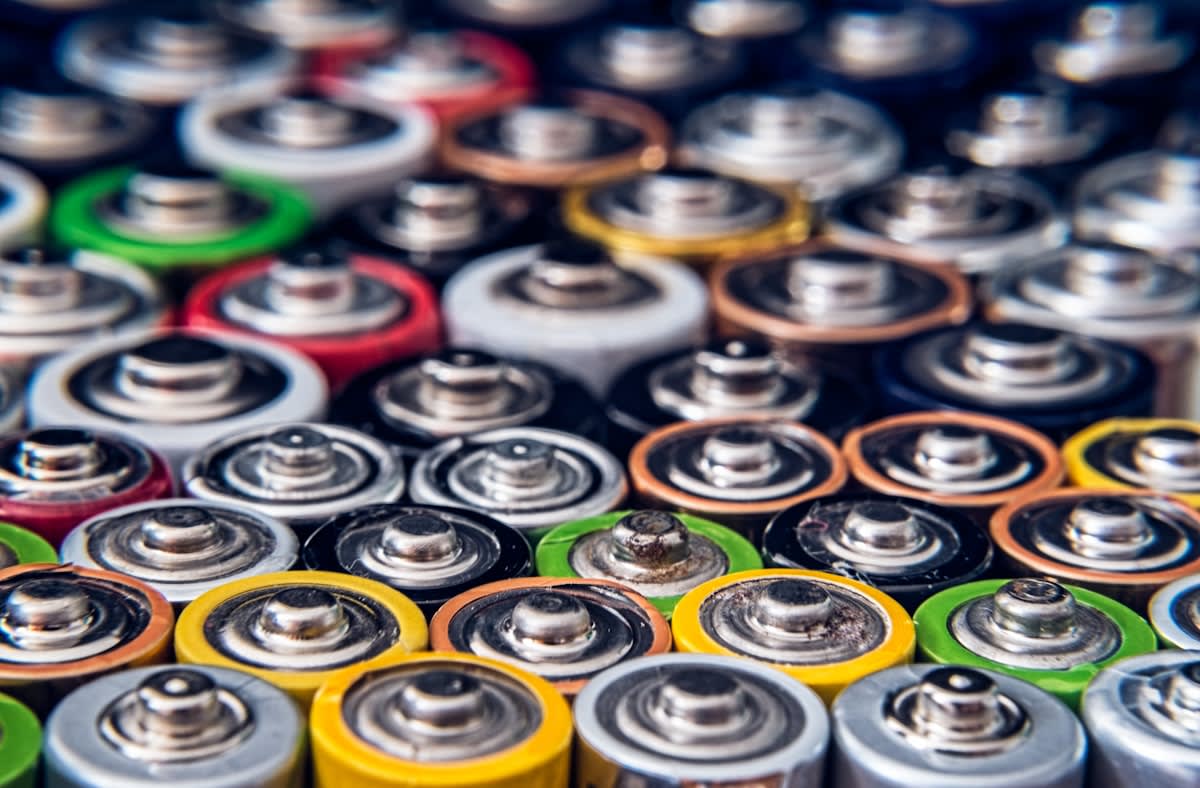
Why now? The urgency stems from the sheer scale of the projected rollout. When you look at the requirements for hyperscale computing and the AI revolution, the demand for energy storage is outstripping the pace of lithium mining. The industry is realizing that relying on a single mineral is a systemic risk. Sodium, available essentially everywhere in the form of salt, offers a path toward energy sovereignty that lithium simply cannot provide.
While North American markets focus on auxiliary integration, the Global South is viewing sodium-ion as a vehicle for total industrial leapfrogging.
India's Strategic Leap: Beyond Replication
India is currently the primary laboratory for this decentralization. Rather than attempting to replicate the existing lithium-ion supply chain—which is heavily dominated by established players—Indian industry leaders are pushing for a differentiated approach. The goal is to build a competitive advantage by advancing next-generation chemistries that leverage domestic strengths. This isn't just a technical preference; it is an economic imperative to ensure that the transition to electric mobility creates local wealth rather than continuing a cycle of import dependency.
"True localisation of battery cells and cell chemistry will require sustained investment in R&D alongside manufacturing. Rather than simply replicating the global lithium-ion supply chain, India has an opportunity to build a differentiated competitive advantage by advancing next-generation chemistries such as sodium-ion and other emerging technologies that leverage the country's strengths."— Suman Nag, Head of Commercial & Contracts International Division at Envision Energy India
The scale of this ambition is reflected in the rapid deployment of Battery Energy Storage Systems (BESS). We are seeing a surge in Giga-factory announcements across the subcontinent. For instance, INVERGY India has inaugurated a 3 GWh BESS Giga Factory in Dasna, Uttar Pradesh, with an investment exceeding INR 200 crore (Source: Energetica India, 2026). Simultaneously, Feston SEV has entered the BESS segment with a planned annual manufacturing capacity of 3 GWh (Source: Energetica India, 2026). These are not small-scale pilots; they are industrial-scale bets on the future of the grid.
| Company | Project/Capacity | Focus Area | Source |
|---|---|---|---|
| INVERGY India | 3 GWh Giga Factory | BESS Production | Energetica India, 2026 |
| Feston SEV | 3 GWh Annual Capacity | BESS Segment | Energetica India, 2026 |
| Cosmic PV Power | 2 GW Production Line | LFP for BESS | Energetica India, 2026 |
This industrialization has massive implications for the labor market. The transition to electric vehicles is no longer just about the cars themselves, but about the ecosystem that supports them. According to the International Council on Clean Transportation, under a pathway aligned with Viksit Bharat, direct employment in core EV manufacturing could surge from 90,000 jobs in 2024 to 4.3 million jobs by 2040, assuming negligible battery localization (Source: ICCT, 2026). However, if India achieves full domestic battery manufacturing, that number could soar to more than 7 million jobs (Source: ICCT, 2026). The delta between these two numbers—nearly 3 million jobs—represents the true value of the sodium-ion and localized battery race.
While the workforce prepares for this shift, the immediate pressure is mounting in the world's most power-hungry sectors: AI and data centers.
Powering the AI Engine: BESS and the Grid
The surge in AI-driven computing has created a new crisis of volatility for the electrical grid. Hyperscale data centers require an immense amount of power, but their load fluctuations are erratic and intense. This is where Battery Energy Storage Systems (BESS) become the critical buffer. We are seeing a move toward massive, integrated solutions that can bridge the gap between the grid and backup power sources, reducing the reliance on noisy and polluting diesel generators.
A prime example is Cummins Inc., which recently secured its largest BESS contract to date for a major U.S. data center project (Source: Battery Tech Online, 2026). This specific deployment utilizes a 5MWh lithium iron phosphate (LFP) system designed to manage AI-driven load fluctuations (Source: Battery Tech Online, 2026). While LFP remains the current standard for these high-capacity stationary projects due to its stability and safety, the door is wide open for sodium-ion. For stationary storage, where the weight and volume of the battery are less critical than they are in a vehicle, sodium-ion's lower energy density is a negligible trade-off for its significantly lower cost and superior safety profile.
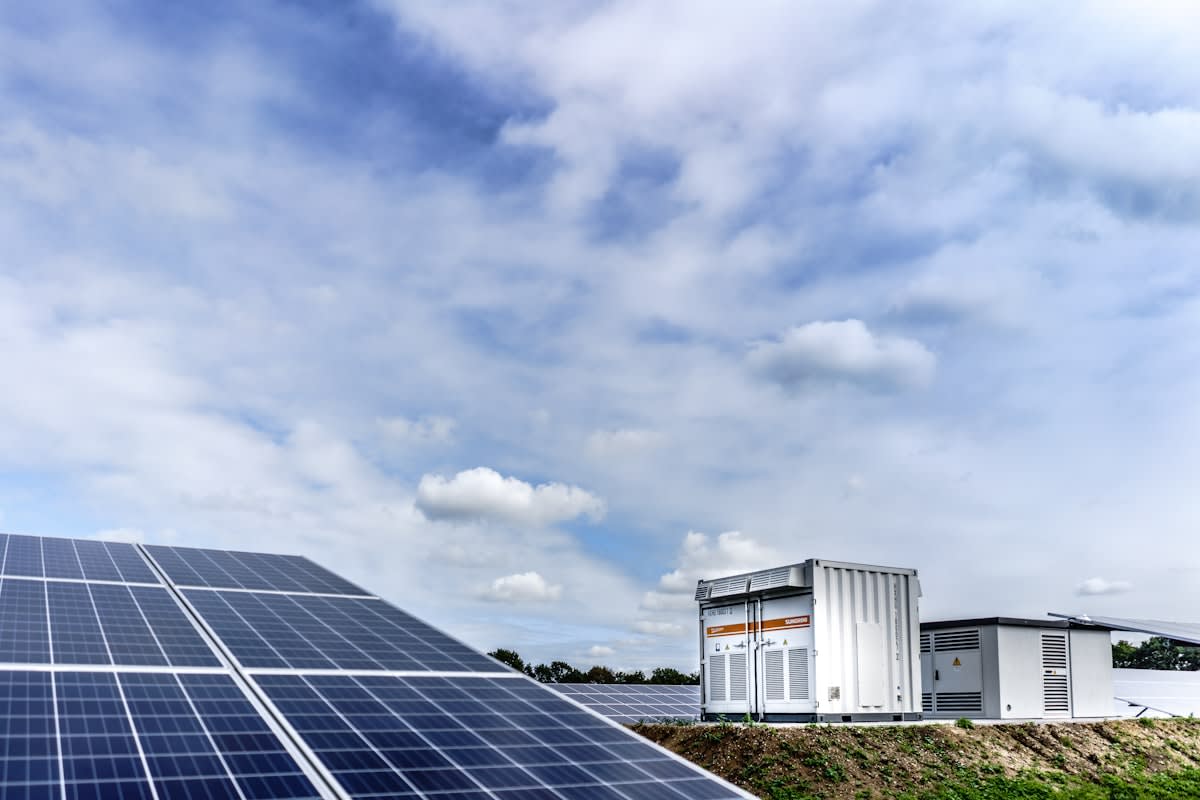
The integration of these systems is becoming more sophisticated. Modern BESS architectures are now incorporating flexible DC blocks compatible with multiple power conversion systems (PCS) and energy management systems (EMS), allowing them to be bridge-to-grid ready (Source: Battery Tech Online, 2026). This flexibility is essential for a decentralized grid where energy is not just flowing from a central plant to a consumer, but is being stored and traded locally in micro-grids.
The Practitioner's Reality: Friction and Trade-offs
On the factory floor and in the engineering bays, the debate isn't about whether sodium-ion will happen, but how to handle its specific quirks. Practitioners are currently wrestling with the energy density gap. Lithium-ion is the undisputed king of energy per kilogram, which is why it still dominates the main drive units of long-range EVs. Sodium-ion, by contrast, is heavier and bulkier for the same amount of energy. In internal engineering meetings, the friction usually centers on the 'packaging penalty'—how much extra space a sodium-ion battery takes up in a chassis.
However, the conversation shifts when you talk about thermal runaway and safety. Sodium-ion is inherently more stable, which reduces the complexity and cost of the cooling systems. Engineers are beginning to realize that by simplifying the thermal management, they can recoup some of the space lost to the battery's lower density. This is the real-world optimization currently happening: a trade-off between raw chemistry performance and overall system simplicity.
There is also the issue of cycle life. While early sodium-ion prototypes struggled to match the longevity of LFP, the latest iterations are closing the gap. The internal industry consensus is moving toward a tiered storage model: lithium for high-performance mobility, sodium for stationary storage and entry-level urban vehicles, and LFP for heavy-duty industrial applications. This tiered approach allows for a more resilient grid that isn't beholden to a single mineral's price spikes.
Fact-Check & Accuracy Note
The key claims regarding Canada's EV import quotas (Sept 1, 2026) and the use of sodium-ion in auxiliary systems are sourced from Automotive News. Employment projections for India (4.3M to 7M jobs by 2040) are attributed to the International Council on Clean Transportation (ICCT). Data regarding BESS capacity in India and the Cummins 5MWh project are sourced from Energetica India and Battery Tech Online, respectively. A primary area of ongoing debate remains the exact commercial viability of sodium-ion cycle life compared to LFP in extreme climates.