
The volatility of the Middle East has always been a catalyst for energy innovation, but the recent resumption of hostilities between the U.S. and Iran has accelerated a specific, pragmatic realization. When oil and gasoline prices spike due to geopolitical instability, the risk of relying on imported fossil fuels becomes an intolerable liability for Europe, Asia, and Africa. This pressure is not merely pushing the world toward renewables; it is forcing a brutal interrogation of the materials used to store that energy. If the world replaces a dependence on Iranian oil with a dependence on a handful of lithium-rich territories, has it actually achieved energy security, or has it simply traded one master for another?
This tension reveals the fragility of the current battery hegemony. Lithium-ion dominance relies on a precarious supply chain that is increasingly under scrutiny, both environmentally and politically. Consider the current struggle of Graphite One in the United States. The U.S. Army Corps of Engineers recently informed the company that a more thorough Environmental Impact Statement is required, rather than a simpler Environmental Assessment, effectively adding a year to the timeline for producing millions of tons of raw graphite. When the very agencies tasked with overseeing the transition to clean energy create bureaucratic bottlenecks for critical minerals, the industry is forced to look for alternatives that do not require such invasive extraction.
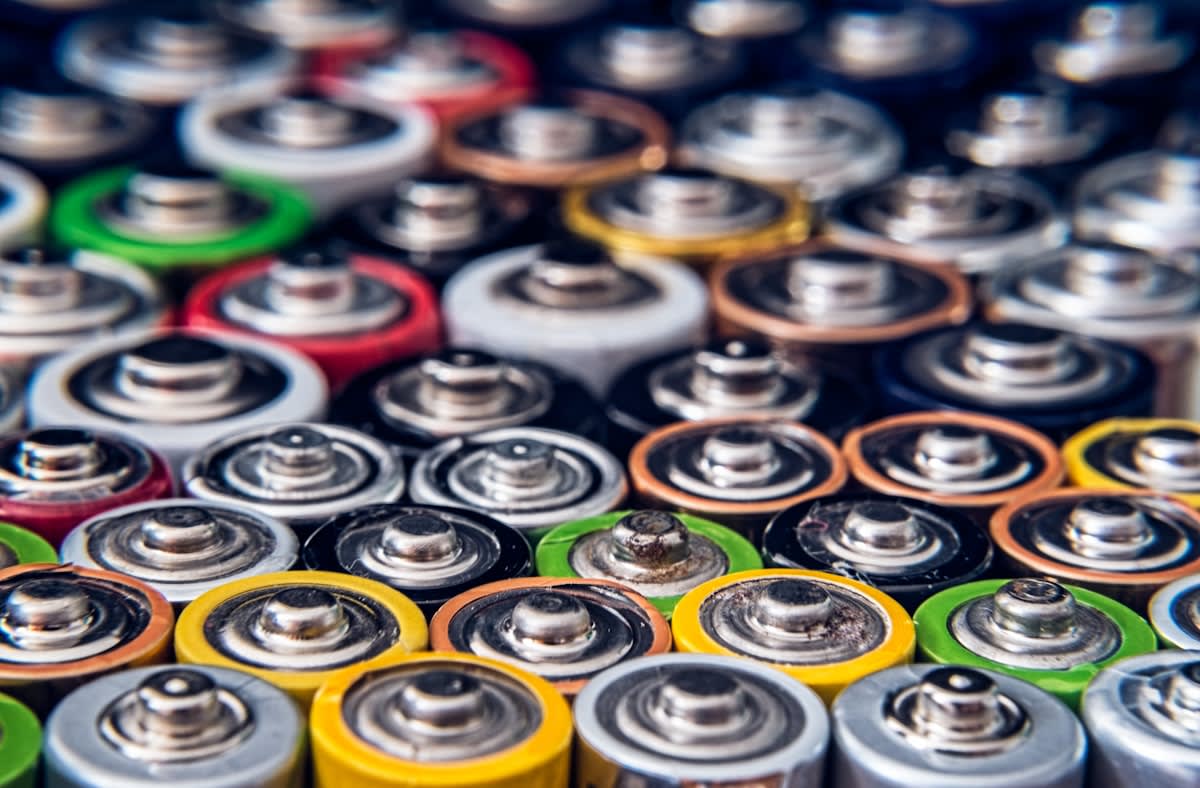
Enter the sodium-ion battery. Unlike lithium, which is concentrated in the 'Lithium Triangle' of South America and specific regions of Australia, sodium is ubiquitous. It is the primary component of common salt, available in virtually every coastal region on earth. The strategic advantage here is not necessarily superior performance—sodium-ion cells generally offer lower energy density than their lithium counterparts—but rather an absolute collapse of the supply chain risk. Why fight a decade-long legal battle over a graphite mine when the raw material for your battery can be sourced from a salt flat or an ocean?
The Rise of the Modular Grid
The transition is manifesting in the utility sector through modularity. ESS Tech recently launched a 1.2-MWh sodium-ion building-block system designed for utility, commercial, and industrial customers. This is not a bespoke, fragile experiment; it is a scalable product. Their ESS Bridge system can be stacked to deliver up to 4.8 MWh of energy within a standard 20-foot battery container. This capacity mirrors the latest iterations of Tesla’s Megapack, meaning sodium is no longer a theoretical curiosity—it is now a direct competitor to the most popular grid-scale storage systems on the market.
The economic signals are already screaming. ESS Tech reports attracting over $1 billion in early-stage customer opportunities since April 2026. This financial momentum is backed by a massive procurement strategy, with the company securing 8.5 GWh of sodium-ion battery cells and modules from Alsym Energy. When the scale of procurement reaches the gigawatt-hour level, the industry is no longer testing a hypothesis; it is deploying an infrastructure. This shift is particularly potent for data centers, where Peak Energy is already planning sodium-ion installations to feed the insatiable power demands of AI workloads.
| Metric | Lithium-Ion (LFP/NMC) | Sodium-Ion (Grid-Scale) | Solid-State (Future) |
|---|---|---|---|
| Material Availability | Geographically Concentrated | Ubiquitous (Global) | Concentrated/Specialized |
| Energy Density | High | Moderate | Very High |
| Supply Chain Risk | High (Mining/Permitting) | Very Low | Moderate to High |
| Primary Use Case | EVs / Consumer Electronics | Grid Storage / Data Centers | High-End EVs / Robotics |
| Commercial Status | Mature | Scaling (2026+) | Mass Production (2027-2028) |
Is the industry abandoning lithium entirely? Hardly. But it is bifurcating the market. Lithium is being pushed toward applications where energy density is the non-negotiable priority—such as high-performance electric vehicles and aerospace. Meanwhile, sodium is claiming the grid. For a utility company or a data center operator, the weight of the battery is irrelevant because the system doesn't move. What matters is the cost per kilowatt-hour and the reliability of the supply chain. In this arena, sodium's lower density is a negligible trade-off for its abundance.
The Permitting Paradox
The shift toward sodium is a hedge against the 'permitting paradox.' As seen with Graphite One, the more a nation tries to secure its green supply chain through domestic mining, the more it clashes with the environmental regulations that the green transition is supposed to uphold.
The Solid-State Distraction
While the grid prepares for sodium, the luxury and robotics sectors are obsessed with the 'holy grail' of solid-state batteries. Samsung SDI, Toyota, and CATL are all targeting 2027 or 2028 for mass production. Samsung SDI has already unveiled solid-state batteries specifically for robotic applications, promising higher energy density and enhanced safety. But these timelines are a luxury the current energy crisis cannot afford. A battery that arrives in 2028 does nothing to stabilize a grid in 2026 or protect a data center from a sudden energy price spike caused by a conflict in the Persian Gulf.
The obsession with solid-state technology often masks a failure to recognize that 'perfect' is the enemy of 'deployed.' Solid-state requires an entirely new manufacturing ecosystem, involving specialized materials suppliers and equipment makers to improve production efficiency. Sodium-ion, by contrast, leverages much of the existing lithium-ion manufacturing infrastructure. This allows for a rapid deployment that solid-state cannot match, turning sodium into the pragmatic bridge that allows the world to decouple from fossil fuels without waiting for a laboratory miracle.

This brings us back to the geopolitical reality. When the U.S. exports 2 million EVs in the first five months of the year—with a surge in April and May coinciding with renewed Iran fighting—it highlights a desperate global appetite for energy independence. However, if those EVs rely on minerals that are subject to the whims of a few nations or the slow pace of the U.S. Army Corps of Engineers, that independence is an illusion. Sodium-ion technology provides a genuine exit ramp from this vulnerability.
The quiet shift away from the Lithium Triangle is not a sudden collapse, but a calculated diversion. By deploying GWh-scale sodium systems for the grid and data centers, the world is effectively insulating its most critical infrastructure from the mineral wars of the future. The power is shifting not to a new geography, but to a new chemistry—one that is available to anyone with access to the sea.
Sodium-Ion Commercial Momentum (Estimated Customer Opportunity)
Executive Insight
+18.4%
YTD Growth
Ultimately, the success of sodium-ion will be measured by its ability to absorb the shocks of the next decade. Whether it is a diplomatic breakdown in the Middle East or a regulatory freeze on domestic mining, the ability to scale energy storage without relying on rare-earth minerals is the ultimate strategic advantage. The 'holy grail' of solid-state may eventually win the race for the smartphone or the luxury sedan, but the salt-based battery is winning the war for the world's power.