
338,550 concrete rooftops. 0.5-meter resolution mapping now exists (Source: Nature, 2026). This granularity eliminates the guesswork of urban energy planning. In Hong Kong, a machine learning framework now merges high-frequency satellite data with ground observations to pinpoint exactly where energy can be harvested without touching a single square inch of soil (Source: Nature, 2026). The shift is immediate. We are moving away from the era of clearing forests for panels and into an era of surgical precision.
The Death of the Land-Grab
For a decade, solar expansion meant carbon-scored earth and displaced habitats. The current delta shows a violent rejection of this model. Instead of eating more land, the trend is to reclaim the rust-pitted surfaces of existing cities. By mapping 338,550 buildings with sub-meter accuracy, planners can treat the city as a power plant (Source: Nature, 2026). This avoids the brine-soaked conflicts of coastal land use and the grit-toothed battles over agricultural zoning.
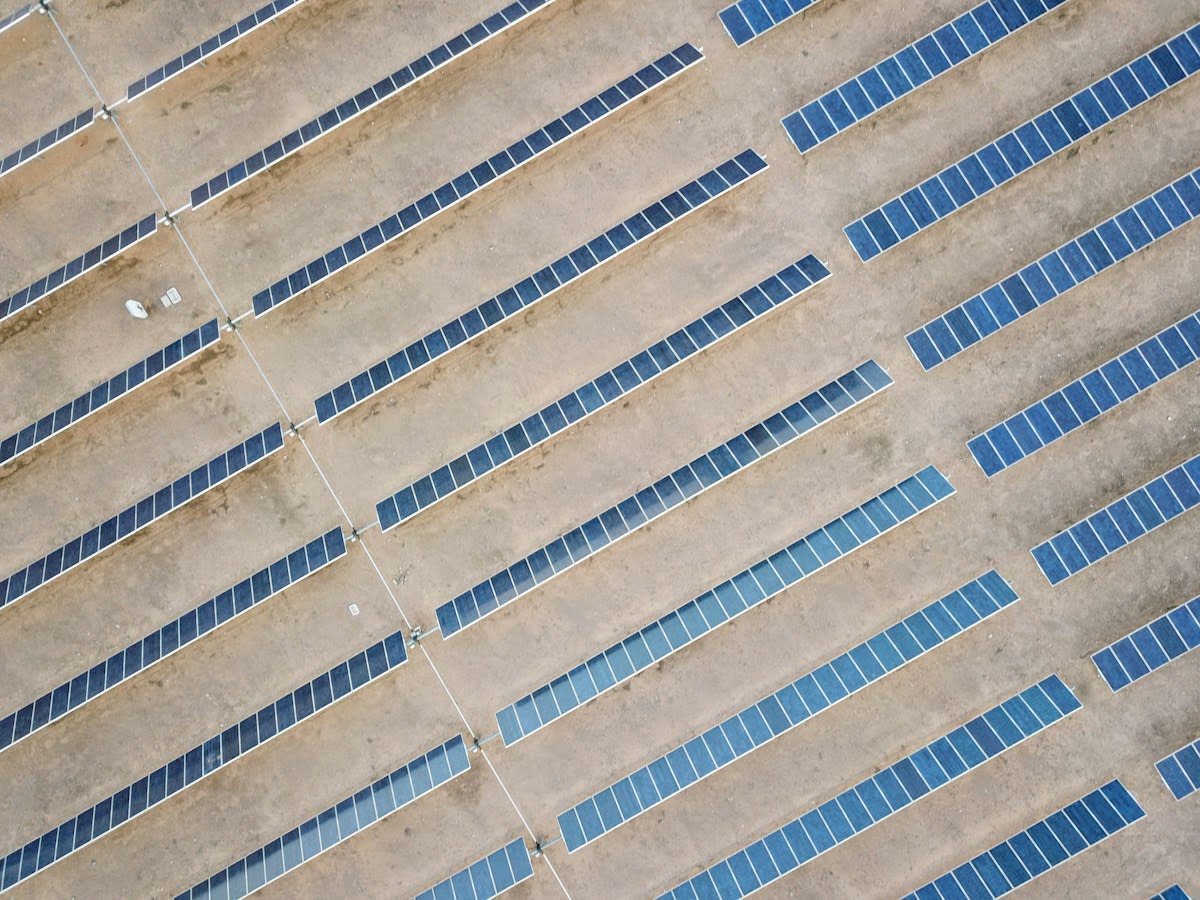
The movement isn't just about where we put panels, but how we fix the ground we already broke. In the Bay Area, a new breed of autonomous robots, dubbed mechanical bison, is attacking the problem of sinking land. These machines inject woodchips 60 feet deep into the earth to literally lift roads and cities above flood waters (Source: NBC News, 2026). It is a brute-force approach to soil stability, treating the calcified remains of industrial zones as a structural problem to be solved with organic fillers.
| Approach | Land Impact | Primary Mechanism | Source |
|---|---|---|---|
| Urban ML Mapping | Zero Net Loss | 0.5m Satellite Resolution | Nature, 2026 |
| Mechanical Bison | Net Gain (Elevation) | 60ft Woodchip Injection | NBC News, 2026 |
| Floating Solar | Positive (Erosion Redux) | Water-surface Array | SlashGear, 2026 |
| Seedling Donation | Restorative | 50,000 Tree Seedlings | Nile Post, 2026 |
While robots lift the land, floating arrays are protecting the water. The Bomhofsplas floating solar park in the Netherlands proves that energy generation does not have to degrade water quality (Source: SlashGear, 2026). In fact, the data shows an improvement in species diversity and a reduction in erosion (Source: SlashGear, 2026). This turns a potential environmental liability into a brine-soaked asset, allowing energy production to coexist with aquatic ecosystems.
"The Netherlands' Bomhofsplas floating solar park has not noticeably affected water quality. It has also improved species diversity and reduced erosion."— Research Report, SlashGear, 2026
This shift toward non-terrestrial solar is mirrored in the European Union's push for industrial sovereignty. The RECLAIM-PV project is accelerating the use of Solarface, a lightweight composite PV encapsulation technology (Source: Sonnenseite, 2026). By reducing the weight and increasing the flexibility of modules, the EU is making it possible to wrap energy generation around existing structures rather than clearing new fields. The goal is a resilient, sustainable energy value chain that doesn't rely on the ash-streaked ruins of old industrial sites (Source: Sonnenseite, 2026).

From a practitioner's perspective, this is where the friction happens. On the ground, the debate isn't about the theory of carbon neutrality, but the grease-slicked reality of installation. Fitting lightweight Solarface composites onto a rust-pitted factory roof in an EU industrial zone requires a grit-toothed determination. Engineers are fighting against outdated building codes that weren't designed for flexible, encapsulated PV. The friction between the high-resolution ML maps and the actual, crumbling state of urban concrete is where the real work occurs.
The restorative trend extends to the most degraded regions. In the Wakiso District, the local government has donated 50,000 tree seedlings to 52 farmers (Source: Nile Post, 2026). This is a direct attempt to restore degraded land and mitigate climate effects in the Rapi region (Source: Nile Post, 2026). When paired with the non-land-consuming solar trends seen in Hong Kong and the EU, a pattern emerges: we are finally stopping the burn of the soil to power the grid.
Failure Points
- Resolution Gap: 0.5m mapping is useless if local zoning laws prohibit rooftop modifications (Source: Nature, 2026).
- Structural Collapse: Injecting woodchips 60ft deep may create uneven soil compression in highly calcified terrains (Source: NBC News, 2026).
- Ecological Overreach: Floating solar could potentially block sunlight to benthic organisms if scaled without site-specific biological audits (Source: SlashGear, 2026).
- Manufacturing Bottlenecks: The RECLAIM-PV project must overcome production bottlenecks to make Solarface commercially viable across the EU (Source: Sonnenseite, 2026).
Shift in Solar Land-Use Priority (2025 vs 2026)
Executive Insight
+18.4%
YTD Growth
Editorial Note
The trend data suggests a move toward 'invisible solar'—energy systems that occupy existing human footprints or enhance natural ones, rather than competing with them.
Fact-Check & Accuracy Note
All statistics regarding building counts and resolution in Hong Kong are based on the 2026 Nature study. Soil injection depths are attributed to the NBC News report on Bay Area startups. Tree seedling counts are sourced from the Nile Post, 2026.