The Great Decoupling of Energy and Time
For a decade, the electric vehicle (EV) narrative has been held hostage by the charging stop. We have optimized the software and expanded the grids, but the fundamental chemistry—the flammable liquid electrolyte—has remained a stubborn bottleneck. Now, the conversation is shifting. Solid-state electrolytes are no longer just a white-paper fantasy; they are entering a volatile phase of vehicle validation and industrial scaling. The promise is simple but transformative: higher energy density, near-instant charging, and the elimination of the thermal runaway risks that make current lithium-ion packs a liability in a crash.
The delta between where we were twelve months ago and where we stand today is measured in commercial timelines. A year ago, the industry spoke in vague decades. Today, we have specific dates. Chery Auto has moved the goalposts, targeting the fourth quarter of 2026 for the installation of solid-liquid hybrid batteries and full vehicle validation of all-solid-state batteries by 2027 (Source: CNEVPost, 2026). This isn't just an incremental update; it is an attempt to rewrite the utility of the automobile.
Why does this shift matter now? Because we have hit the ceiling of liquid electrolytes. To get more range, we traditionally added more batteries, which added more weight, which diminished efficiency. Solid-state technology breaks this cycle. By replacing the liquid with a solid barrier, manufacturers can utilize high-nickel ternary cathodes and sulfide-based electrolytes to push energy densities far beyond current limits. Chery's Rhino S series, for instance, boasts a 60-Ah cell with an energy density of 400 Wh/kg, while their polymer-based prototypes have hit 600 Wh/kg, potentially enabling ranges exceeding 1,500 kilometers (Source: CNEVPost, 2026).
The Manufacturing Wall: Lab Success vs. Factory Failure
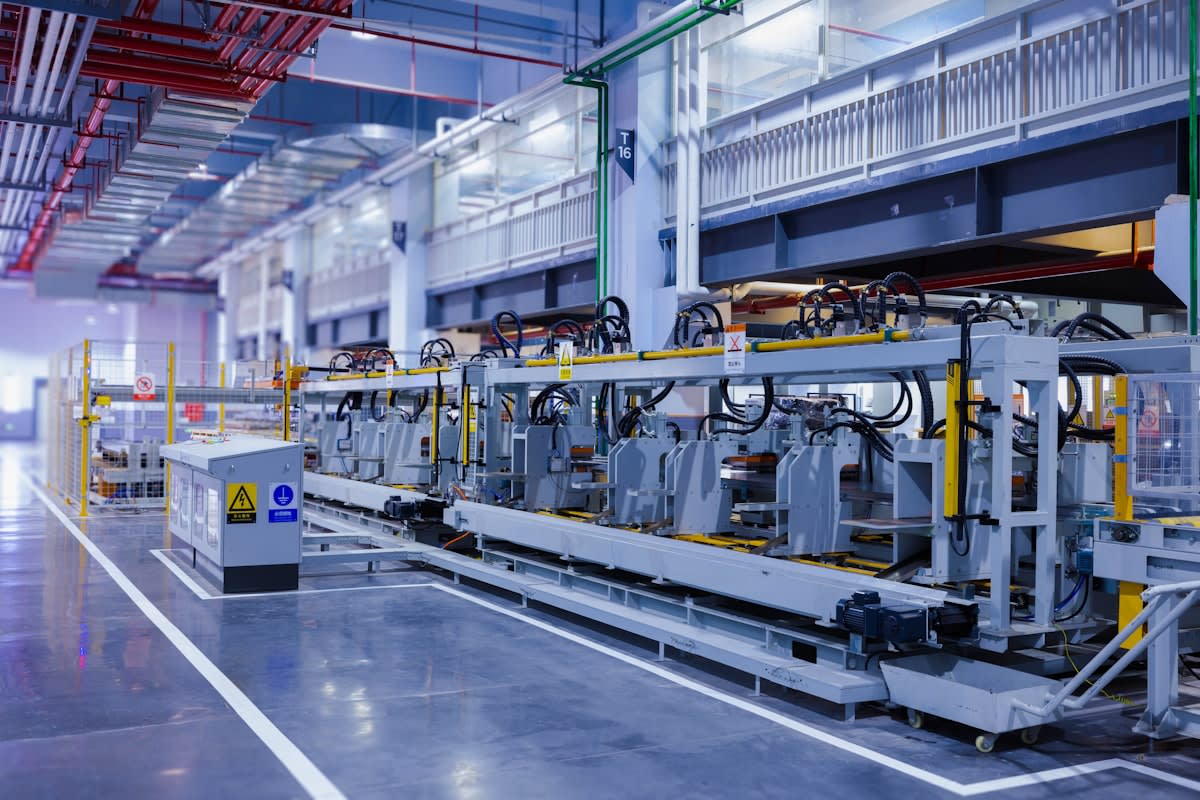
There is a recurring tragedy in energy tech: the gap between a coin cell in a cleanroom and a GWh-scale factory. This is the 'Manufacturing Wall.' While the chemistry works, the process of creating a defect-free solid electrolyte layer at scale is an operational nightmare. If a single microscopic crack forms in the solid electrolyte, dendrites—spiky lithium growths—can pierce through, causing a short circuit. This is the exact friction point that has humbled some of the most hyped companies in the sector.
"The industry will need more time to develop lower-cost manufacturing processes and achieve economies of scale... The material and manufacturing costs of all-solid-state batteries in 2027 are expected to be several times those of conventional ternary lithium-ion cells."— Yang Hongxin, Chairman and CEO of Svolt Energy
The market's reaction to this manufacturing struggle has been ruthless. QuantumScape, once the poster child for the US solid-state movement, has seen its stock plummet roughly 96% from its peak to approximately $5 per share (Source: Foreign Policy Journal, 2026). Their commercial launch, once projected for 2024, has slipped to 2029 (Source: Foreign Policy Journal, 2026). This trajectory serves as a warning: in the world of energy transition, a great prototype is worthless without a viable assembly line.
| Metric | Conventional Li-ion | Solid-State (Chery Target) | Solid-State (Polymer Prototype) |
|---|---|---|---|
| Energy Density | ~250-300 Wh/kg | 400 Wh/kg | 600 Wh/kg |
| Electrolyte State | Flammable Liquid | Sulfide Solid | Polymer Solid |
| Target Range | 400-700 km | 800-1,000 km | 1,500+ km |
| Commercial Window | Mature | 2027 (Validation) | Research Stage |
This is where the practitioner's debate gets heated. On the factory floor, the argument isn't about energy density—it is about 'interfacial resistance.' Engineers are fighting over how to keep the solid electrolyte in perfect contact with the electrodes as the battery expands and contracts during charge cycles. In a liquid system, the fluid fills the gaps. In a solid system, you are essentially trying to glue two hard surfaces together and expecting them to stay bonded through thousands of thermal cycles. Those of us watching the production lines know that the winner won't be the company with the best chemistry, but the one with the best precision stamping and coating equipment.
The Geopolitical Chessboard: Decoupling the Supply Chain
The race for solid-state isn't just about range; it is about sovereignty. For years, the battery supply chain has been heavily centralized in Asia. The US is now attempting a desperate pivot to create a 'China-free' ecosystem. A prime example is the groundbreaking of a new plant in Kentucky designed to produce solid-state battery electrolytes for 300,000 EVs (Source: The Cooldown, 2026). This move is specifically aimed at bypassing Foreign Entity of Concern (FEOC) restrictions and securing a domestic source of critical materials.
Meanwhile, China is not idling. Beyond the vehicle manufacturers, the state is moving to standardize the technology. China is currently drafting rules on solid-state batteries to ensure safety and interoperability before they hit the mass market (Source: China Daily, 2026). By setting the regulatory framework now, they are positioning themselves to dictate the global standards for the next generation of energy storage.
The implications extend far beyond the driveway. We are seeing an expansion of the target market. EcoPro BM has formed an industry-academia-research coalition to accelerate commercialization, noting that solid-state power is critical not only for EVs but for humanoid robots (Source: BigGo Finance, 2026). Robots require high power output and extreme safety—since a battery fire in a humanoid robot inside a home or factory would be catastrophic. The move to solid electrolytes is the prerequisite for the robotics revolution.
Estimated Commercialization Timelines for All-Solid-State Batteries
Executive Insight
+18.4%
YTD Growth
Is the 'charging stop' truly dead? Not yet. The transition will likely be hybrid. We will see 'semi-solid' or 'solid-liquid hybrid' batteries—like the ones Chery plans for late 2026—act as a bridge (Source: CNEVPost, 2026). These hybrids offer a compromise: some of the safety and density of solids with the easier manufacturing of liquids. It is a pragmatic middle ground for an industry that cannot afford to wait until 2030 for a breakthrough.
Editorial Note: The Cost Barrier
The tension in the industry currently centers on the 'Cost-Performance Trade-off.' While 600 Wh/kg is technically possible, the cost of producing those cells in 2027 will be several times higher than current ternary lithium-ion cells (Source: China Daily, 2026). The question for consumers will be: will you pay a 3x premium for a 1,500km range?
Fact-Check & Accuracy Note
Key claims regarding Chery's 2026/2027 timeline and 400-600 Wh/kg density are sourced from CNEVPost (2026). QuantumScape's valuation and timeline shifts are sourced from the Foreign Policy Journal (2026). Supply chain efforts in Kentucky are sourced from The Cooldown (2026). Areas of ongoing debate include the exact date of 'large-scale' commercialization, with estimates ranging from 2027 (Chery) to post-2030 (Svolt).