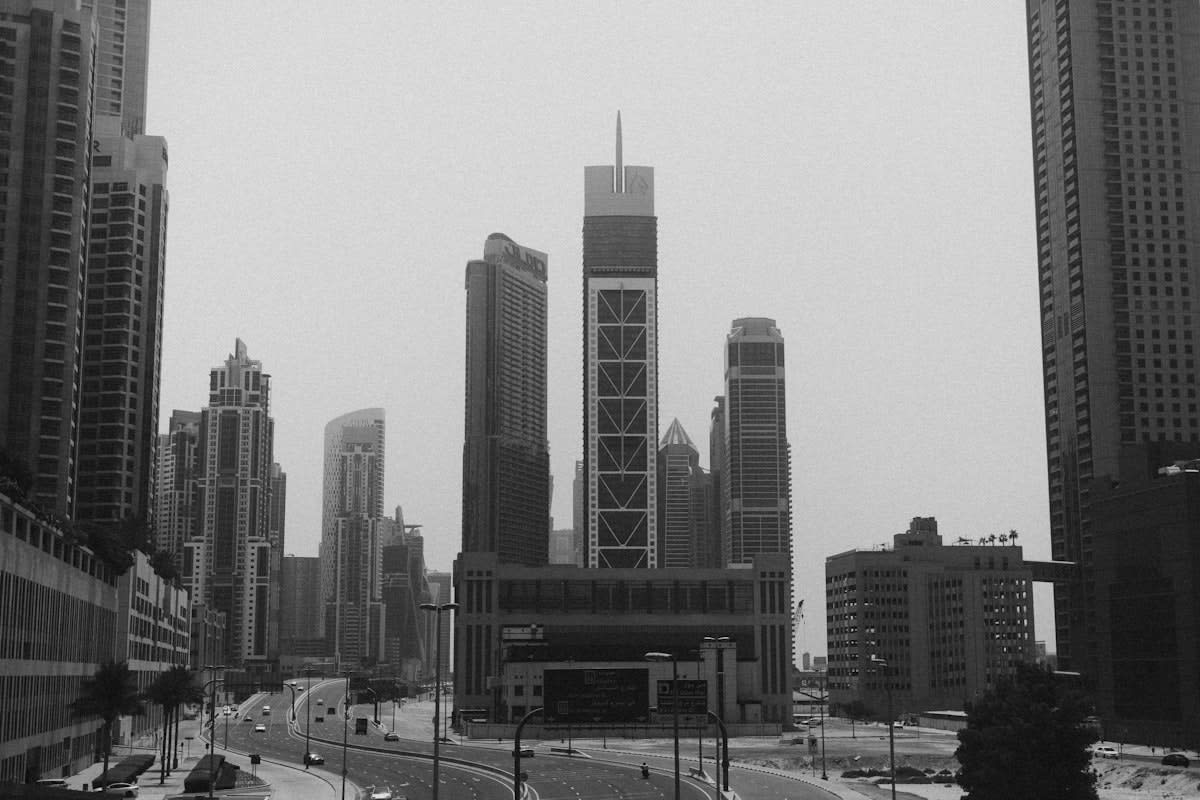
The End of the Inert Wall
For a century, we viewed concrete as a static, dead weight. It was the grey canvas of urbanization, prized for its strength but loathed for its environmental cost. The math was simple and devastating: cement production alone accounts for roughly 8% of global CO2 emissions. We built the modern world on a foundation of atmospheric debt. But the narrative is shifting. We are no longer talking about making concrete less bad; we are talking about making it fundamentally good. The pivot is here, and it is transforming the skyscraper from a carbon emitter into a carbon sponge.
This is not a gradual evolution. It is a technological leap. The emergence of carbon-sequestering concrete—materials that actually absorb CO2 during their curing process or throughout their lifespan—represents a systemic inversion of the construction cycle. Why settle for net-zero when the building itself can act as a carbon capture plant? This shift marks the transition from passive sustainability to active regeneration. The buildings of tomorrow will not just house people; they will scrub the air.
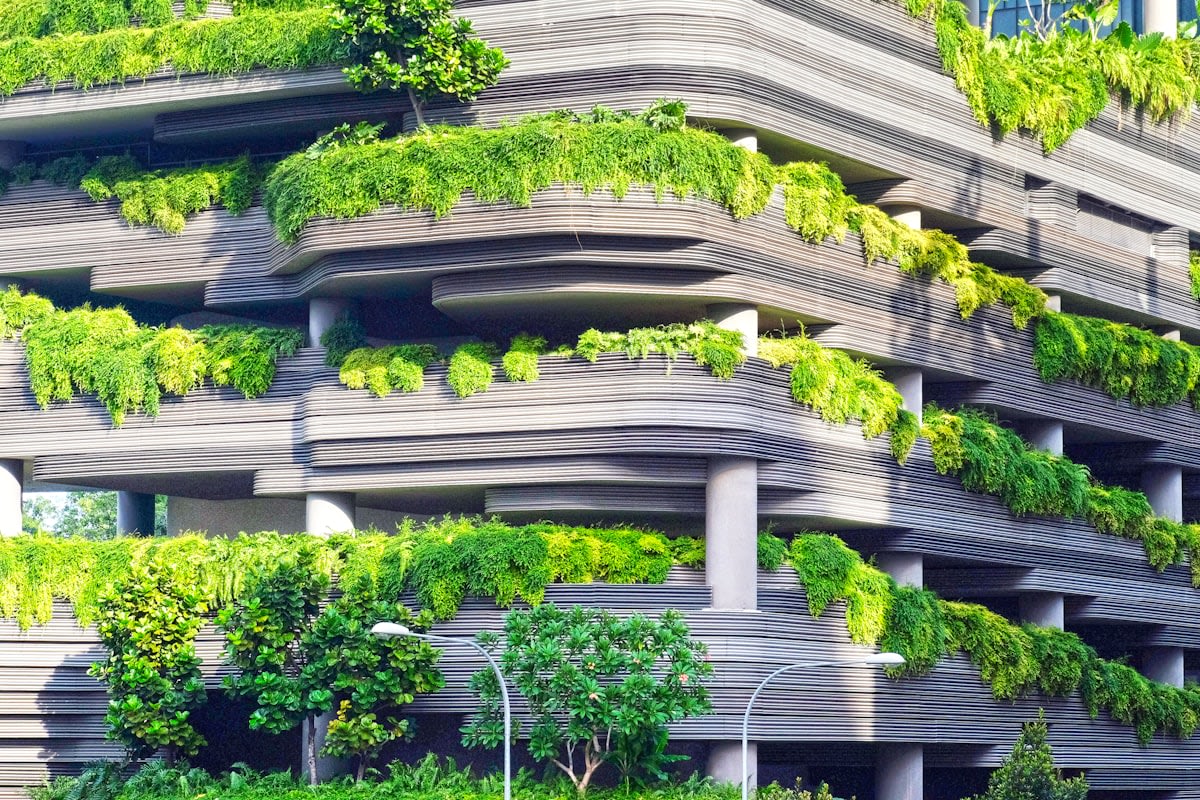
The Mineralization Breakthrough
The core of this pivot lies in carbon mineralization. By injecting recycled CO2 into the concrete mix during the batching process, companies are effectively turning a waste gas into a mineral. This CO2 chemically reacts with calcium ions to form nano-sized limestone crystals. These crystals don't just lock away the carbon forever; they actually increase the compressive strength of the concrete. It is a rare win-win in engineering: a stronger material that costs the planet less. We are seeing this deployed in everything from pre-cast pavers in North America to massive infrastructure projects in the Middle East.
But the innovation does not stop at the mixing plant. New 'living' concretes are incorporating calcifying bacteria. These microorganisms, when triggered by water or air, produce limestone to heal cracks and absorb carbon from the surrounding atmosphere. Imagine a bridge that heals its own fractures while simultaneously cleaning the air for the commuters crossing it. This moves us away from the 'build-decay-replace' cycle and toward a biological model of urban maintenance. The city becomes an organism.
"We are moving from an era of extractive architecture to an era of additive architecture. The goal is no longer to do less harm, but to leave the atmosphere better than we found it."— Lead Engineer, Global Sustainable Materials Initiative
The scale of this shift is staggering when viewed through a global lens. In Singapore, the push for 'biophilic' cities is driving the adoption of these materials to combat the urban heat island effect. In Scandinavia, the integration of carbon-negative concrete with mass timber is creating hybrid structures that act as massive carbon vaults. The geography of innovation is no longer centered in a single hub; it is a distributed network of laboratories and construction sites across every continent, each adapting the technology to local climates and regulatory frameworks.
The Economic Driver
The transition is driven by the 'Carbon Delta'—the gap between traditional cement's emissions and the sequestration potential of new mineralized alternatives. This gap is widening as the cost of carbon capture technology plummets.
The Delta: 2023 vs. 2024
Twelve months ago, the industry conversation was dominated by 'low-carbon' alternatives—essentially trying to find a slightly less dirty way to make cement. The focus was on efficiency and marginal gains. Fast forward to today, and the dialogue has pivoted to 'carbon-negative' outcomes. The urgency has shifted from mitigation to removal. We have moved from asking 'How do we reduce the footprint?' to 'How do we create a handprint?'
This shift is reflected in the investment data. Venture capital is no longer flowing solely into energy-efficient HVAC systems; it is pouring into the chemistry of the walls themselves. The delta is clear: the industry has realized that the most efficient way to handle carbon is to lock it into the very infrastructure we were already planning to build. Why build a separate carbon capture plant when your entire office building can perform the same function?
| Metric | Traditional Concrete (2023) | Living/Carbon-Negative (2024) |
|---|---|---|
| Net Carbon Impact | High Emission (+) | Net Sequestration (-) |
| Material Lifespan | Fixed / Degrading | Self-Healing / Adaptive |
| Primary Value | Structural Strength | Structural + Environmental Service |
| Market Adoption | Universal Standard | Rapidly Scaling Pilot Phase |
This evolution is not without its friction. The construction industry is notoriously risk-averse. Engineers are hesitant to trust a material that 'breathes' or 'heals' when the safety of thousands of lives depends on the structural integrity of a beam. However, the regulatory tide is turning. New building codes in the EU and parts of Asia are beginning to incentivize carbon-negative materials through tax breaks and fast-tracked permitting. The risk of inaction is now outweighing the risk of innovation.

Scaling the Living City
To reach a global tipping point, these materials must move from boutique architectural projects to the mass market. This requires a complete overhaul of the supply chain. We need carbon-capture hubs integrated directly into cement plants, turning the source of the problem into the source of the solution. The goal is a circular carbon economy where the CO2 emitted by a factory in one region becomes the structural reinforcement for a housing project in another.
What happens when the city becomes a forest of stone? The psychological impact of living in 'breathing' buildings cannot be overstated. We are moving away from the sterile, oppressive nature of concrete jungles toward an urban environment that feels biologically aligned. This is not just about chemistry; it is about the human experience of space. When our buildings contribute to the health of the planet, the residents feel a renewed connection to their environment.
- Carbon Mineralization: Converting CO2 gas into solid limestone crystals.
- Bio-calcification: Using bacteria to heal cracks and absorb carbon.
- Circular Sourcing: Utilizing industrial waste and captured emissions as raw materials.
- Hybrid Integration: Combining mass timber with carbon-negative concrete for maximum sequestration.
The final hurdle is the valuation of carbon. For the Concrete Pivot to accelerate, the market must accurately price the carbon sequestered within a wall. If a building can be certified as a carbon sink, it becomes a financial asset in the carbon credit market. This transforms the building from a liability into a revenue stream. The developer is no longer just selling square footage; they are selling atmospheric restoration.
We are standing at the edge of a new architectural epoch. The grey age is ending, and the living age is beginning. The tools are ready, the chemistry is proven, and the economic incentives are aligning. The question is no longer whether we can build cities that breathe, but how fast we can replace the dead stone of the past with the living lungs of the future. The pivot has begun.