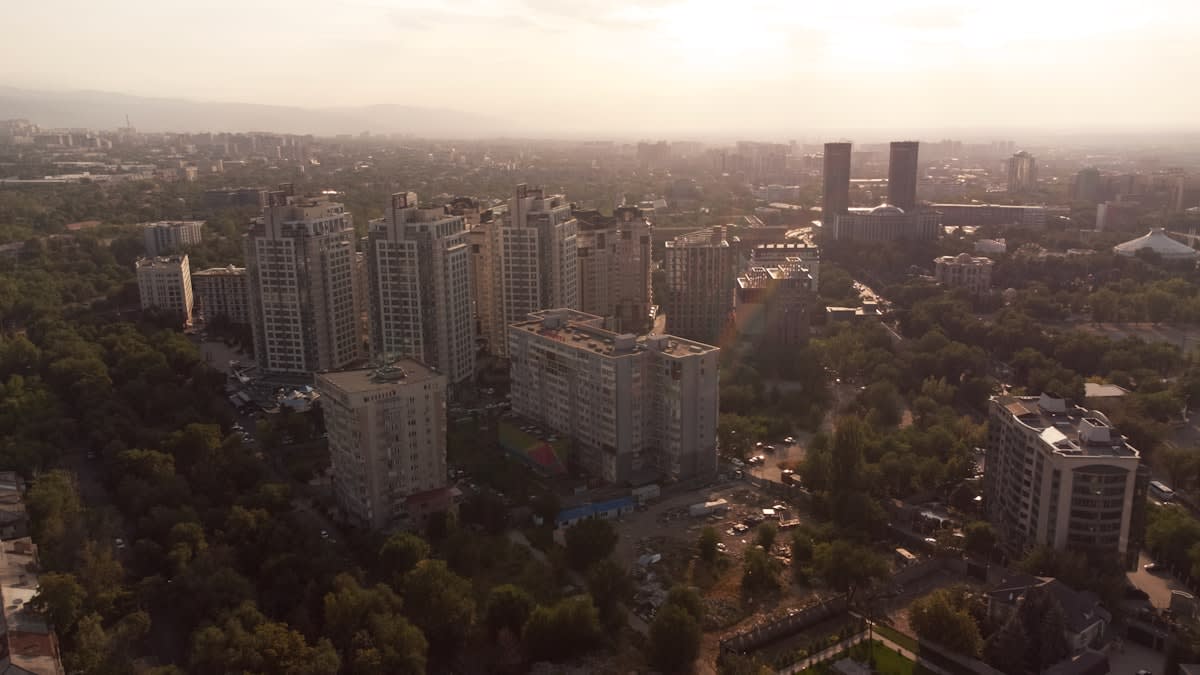
The Invisible Architecture of Heat
We tend to treat urban heat as a seasonal inconvenience, a spike on a thermometer that fades when the breeze picks up. But for those of us who have analyzed urban systems for over a decade, heat is an invisible architecture. It defines who can walk to work, who can afford to sleep, and who survives the summer. This is not a climate crisis in the abstract; it is a spatial redistribution of risk. When we talk about Urban Heat Islands (UHIs), we are actually talking about the physical manifestation of social neglect, where concrete density and a lack of canopy cover create thermal traps in the most vulnerable neighborhoods.
The most dangerous aspect of this divide is that it remains numerically invisible. Official statistics are notoriously conservative, failing to capture the cascading failures of the human body under prolonged thermal stress. In the United States, an investigation revealed that the official tally of heat-related deaths is a fraction of the reality. Between 2018 and 2025, estimates suggest that approximately 9,000 deaths per year were impacted by heat, a figure that is five times higher than what official records show (Source: NPR, 2026).
"An accurate assessment of the true scope — as well as understanding who is affected, where and why — is critical for developing lifesaving solutions."— Quinn Adams, Research Scientist at Boston University's Center for Climate and Health
Why is the undercount so severe? Because heat rarely kills in a vacuum. It triggers cardiovascular failure or exacerbates respiratory distress, and the death certificate often lists the symptom, not the catalyst. This data gap creates a lethal feedback loop: if the deaths aren't recorded, the urgency for infrastructure investment vanishes, and the most heat-stressed zones remain concrete ovens.

The Intelligence Paradox: Digital Capability vs. Physical Survival
There is a growing divergence between a city's 'intelligence'—its AI and digital capabilities—and its basic biological resilience. We see cities racing to implement smart grids and digital twins while their citizens are literally sweltering in the streets. The Boston Consulting Group's (BCG) 2026 Intelligent City index highlights this disparity. While London leads the pack, other major hubs are lagging in their ability to use digital tools to actually improve living conditions (Source: BCG, 2026).
| City | BCG Intelligent City Rank (2026) | Status Category | Primary Focus Area |
|---|---|---|---|
| London | 1 | Leader | Integrated Digital Capabilities |
| Sydney | 30 | Accelerating | AI Adoption & Enablers |
| Melbourne | 42 | Emerging | Strategy & Outcomes |
| Jakarta | Above 42 | Varies | Urban Digitalization |
| Delhi | Below 42 | Varies | Infrastructure Scaling |
The data suggests a fragmented approach to urban evolution. Sydney's 'accelerating' status compared to Melbourne's 'emerging' status in the BCG index isn't just about software; it's about the capacity to deploy technology to solve tangible resident problems (Source: BCG, 2026). If a city is 'intelligent' but cannot mitigate a 40-degree heatwave for its most vulnerable residents, is it actually intelligent? The systemic shift we need is the integration of thermal mapping into the very core of digital city governance.
This disconnect is visible even in the most affluent regions. In Western Europe, the 'Euro summer' has shifted from a glamorous tourist draw to a survival exercise. Tourists and residents alike are forced into air-conditioned shopping centers to avoid heatstroke, paying a premium for cooling that is fundamentally inaccessible to the urban poor (Source: The Guardian, 2026). This creates a tiered citizenship: those who can buy their way out of the heat and those who are trapped by the geography of their zip code.
The Generational Debt of Heat Stress
While the adults struggle with infrastructure, the biological toll on the next generation is staggering. We are witnessing a global phenomenon where children are being exposed to dangerous heat levels for longer periods than ever before. A study from the University of Eastern Finland reveals that 560 million children worldwide are now enduring an additional month of dangerous heat stress solely due to climate change (Source: University of Eastern Finland, 2026).
This is not just a health issue; it is a cognitive and developmental one. Heat stress in childhood impairs learning, reduces school attendance, and creates long-term physiological vulnerability. When we map these 560 million children, we find they are concentrated in the same 'grey zones' identified in the UHI effect. The cooling divide is effectively a developmental divide, ensuring that the children of the thermal poor start their lives at a biological disadvantage.

The Practitioner's Friction: Why Solutions Stall
On the ground, the debate among urban planners and resilience officers isn't about the existence of heat—it's about the friction between 'green' and 'grey' infrastructure. I have sat in those rooms. The tension is always the same: do we spend the budget on high-tech, energy-intensive cooling centers (grey) or on long-term urban reforestation and permeable pavements (green)? The 'grey' solutions are fast and visible, which politicians love. The 'green' solutions take a decade to mature, which means they rarely survive a four-year election cycle.
There is also a fierce internal debate regarding 'cooling gentrification.' When a city plants a massive urban forest in a heat-stressed neighborhood, property values spike, and the very people the project was meant to protect are priced out and pushed back into another concrete heat trap. Practitioners are now grappling with how to implement thermal resilience without triggering displacement. It's a complex socio-economic puzzle that no AI in the BCG index has solved yet.
Beyond the AC: A New Model for Thermal Resilience
The path forward requires moving beyond the 'premium' model of cooling. Relying on air conditioning is a maladaptation; it cools the interior while pumping more heat into the streets, further intensifying the UHI effect for those outside. We need a systemic shift toward passive cooling and 'intelligent' urban design that prioritizes thermal equity over digital aesthetics.
- Implementing thermal zoning laws that mandate minimum canopy cover in high-density residential areas.
- Integrating real-time heat-death tracking into public health systems to eliminate the 5x undercount (Source: NPR, 2026).
- Shifting 'Intelligent City' metrics from AI adoption to biological outcomes, such as reduction in childhood heat stress (Source: University of Eastern Finland, 2026).
- Investing in 'cool roofs' and permeable materials to break the concrete heat-sink cycle.
The cooling divide is a mirror reflecting every other inequality in our cities. If we continue to treat heat as a series of isolated weather events rather than a systemic failure of urban design, we are simply managing the decline. The opportunity lies in redefining what it means for a city to be 'intelligent.' A truly smart city is not one with the fastest 6G network, but one where a child's zip code doesn't determine their biological vulnerability to the sun.
Fact-Check & Accuracy Note
Key claims regarding the 5x undercount of heat deaths are sourced from the joint NPR and Boston University investigation (2026). Data on city intelligence rankings are derived from the Boston Consulting Group (BCG) 2026 index. The statistics on childhood heat stress are attributed to the University of Eastern Finland (2026). There remains an ongoing debate in the field regarding the precise correlation between 'intelligent city' digital frameworks and physical thermal outcomes, as the BCG index focuses on capabilities rather than biological resilience.