The HVAC Paradox
For decades, the global response to rising temperatures has been a blunt instrument: the air conditioner. We treated heat as an enemy to be exiled from the interior, oblivious to the fact that every BTU of heat pumped out of a bedroom is dumped directly into the street. This created a vicious thermal feedback loop. As cities became more reliant on mechanical cooling, the external ambient temperature rose, forcing the machines to work harder and consume more energy. We didn't solve the heat problem; we simply relocated it.
The shift occurring right now is a rejection of this linear logic. Over the last twelve months, a noticeable pivot has emerged in urban planning from the Gulf States to Southeast Asia. Architects are no longer asking how to power a cooling system, but how to eliminate the need for one entirely. This isn't a retreat into the primitive, but a sophisticated integration of ancient thermodynamics with modern materials. The goal is resilience, moving away from fragile, energy-dependent grids toward buildings that breathe on their own.
The Resurrection of the Wind Catcher
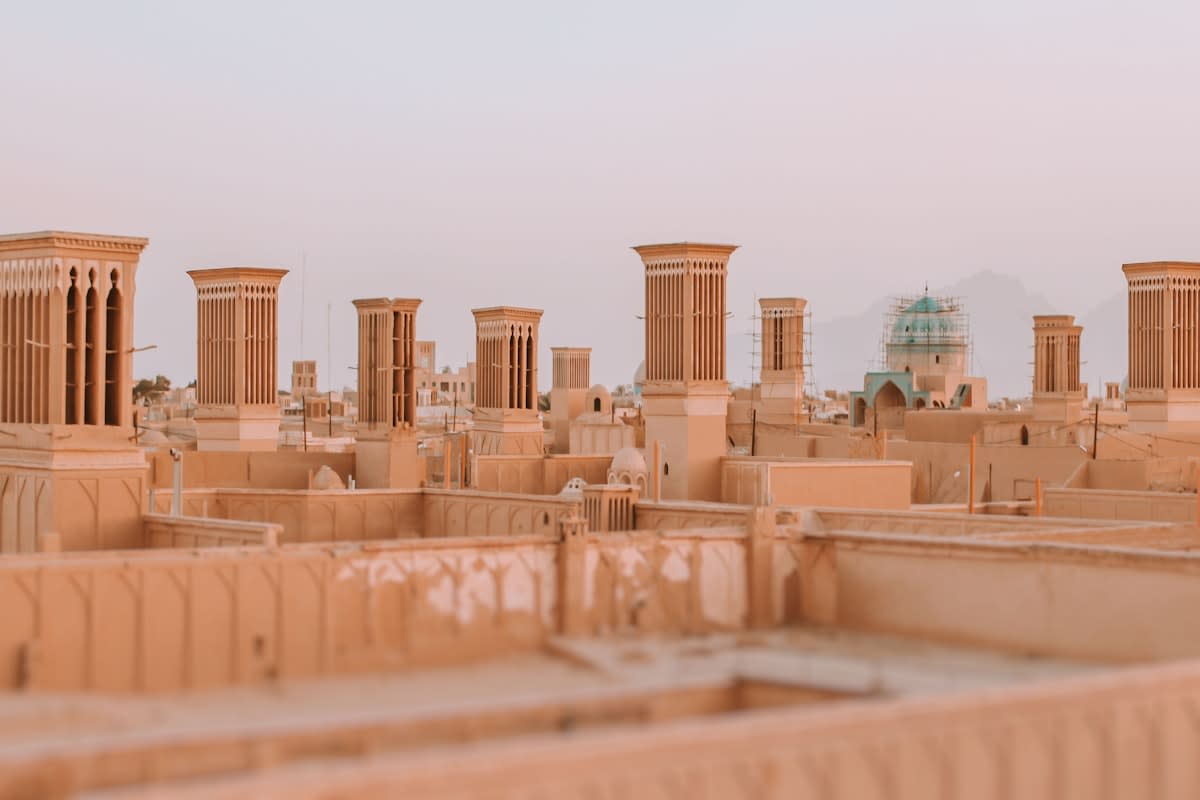
In the arid landscapes of Iran and the UAE, the Badgir—or wind tower—is making a high-tech comeback. These structures work by capturing high-altitude breezes and channeling them downward into the living spaces, often passing the air over underground water channels to provide evaporative cooling. While these were once seen as relics of a pre-electric age, new simulations show they can reduce indoor temperatures by up to 10 degrees Celsius without a single watt of electricity. Modern iterations now use smart sensors to adjust vents based on wind direction and humidity.
"The most sustainable energy is the energy we never use. By leveraging the pressure differentials of the atmosphere, we can turn a building from a sealed box into a living lung."— Lead Architect, Urban Resilience Initiative
Why the sudden urgency? The delta between last year's energy costs and today's has made the 'active cooling' model economically unsustainable for many developing metropolises. When a city's grid faces rolling blackouts during a heatwave, a building that relies solely on HVAC becomes a kiln. Passive systems provide a critical safety net. They ensure that even during a total power failure, the internal environment remains habitable, shifting the narrative from luxury comfort to basic survival.
This return to form is not limited to the Middle East. We are seeing similar logic applied in the design of new public squares and government buildings in India and Mexico. By prioritizing the movement of air over the refrigeration of air, these cities are tackling the urban heat island effect at its source. The result is a city that feels cooler not because of a machine, but because of its geometry.
The Physics of Mass
Passive cooling isn't just about wind; it's about thermal mass. Using materials like rammed earth or thick stone allows a building to absorb heat during the day and release it slowly at night, flattening the temperature curve of the interior.
Porosity and the Art of the Screen
Across North Africa, the Mashrabiya—the intricate carved wood latticework—is being reimagined for the 21st century. These screens do more than provide privacy; they are precision instruments for light and air. By breaking up direct sunlight before it hits the glass, they prevent the greenhouse effect inside the building. Simultaneously, the narrow openings increase the velocity of the air passing through, creating a natural cooling effect through the Venturi principle.
Modern architects are now using parametric design to optimize these patterns. Instead of a uniform grid, the screens are now 'tuned' to the specific path of the sun relative to the building's orientation. This allows for maximum natural light while maintaining a strict thermal barrier. It is a marriage of algorithmic precision and ancestral intuition, proving that the most advanced solutions are often the oldest.

The impact is measurable. Buildings utilizing these porous facades report a significant drop in peak cooling loads. By reducing the amount of solar gain that ever enters the building envelope, the reliance on mechanical backup is slashed. We are seeing a transition where the facade is no longer a static wall, but a dynamic filter that manages the exchange of energy between the interior and the exterior.
This approach challenges the Western architectural obsession with the 'glass box.' The glass tower is a thermal nightmare in a hot climate, requiring massive amounts of energy to counteract the heat it traps. The return to porosity is a return to sanity, acknowledging that in the hottest parts of the world, the wall must be a breathable membrane, not a transparent seal.
The Economic Shift: CapEx vs. OpEx
For years, the industry favored active cooling because the upfront cost (CapEx) was lower. It was cheaper to build a cheap box and plug in a powerful AC unit than to invest in high-quality thermal mass or complex wind-catching architecture. However, the operational expenditure (OpEx) of the AC model is a permanent tax on the owner and the environment. As energy prices volatilely climb, the financial math has flipped.
| Feature | Active Cooling (HVAC) | Passive Cooling (Ancient/Hybrid) |
|---|---|---|
| Energy Source | Grid Electricity | Natural Airflow/Thermal Mass |
| External Impact | Heat Waste Dumping | Neutral/Cooling Effect |
| Maintenance | High (Mechanical Wear) | Low (Structural) |
| Resilience | Fails during Blackouts | Always Operational |
Investors are now recognizing that passive-first buildings hold their value longer. They are less susceptible to energy shocks and more attractive to a growing demographic of climate-conscious tenants. We are witnessing the birth of 'thermal equity,' where the quality of a building's passive design determines its long-term viability. The cost of the stone or the specialized lattice is a one-time investment; the cost of electricity is a lifelong liability.
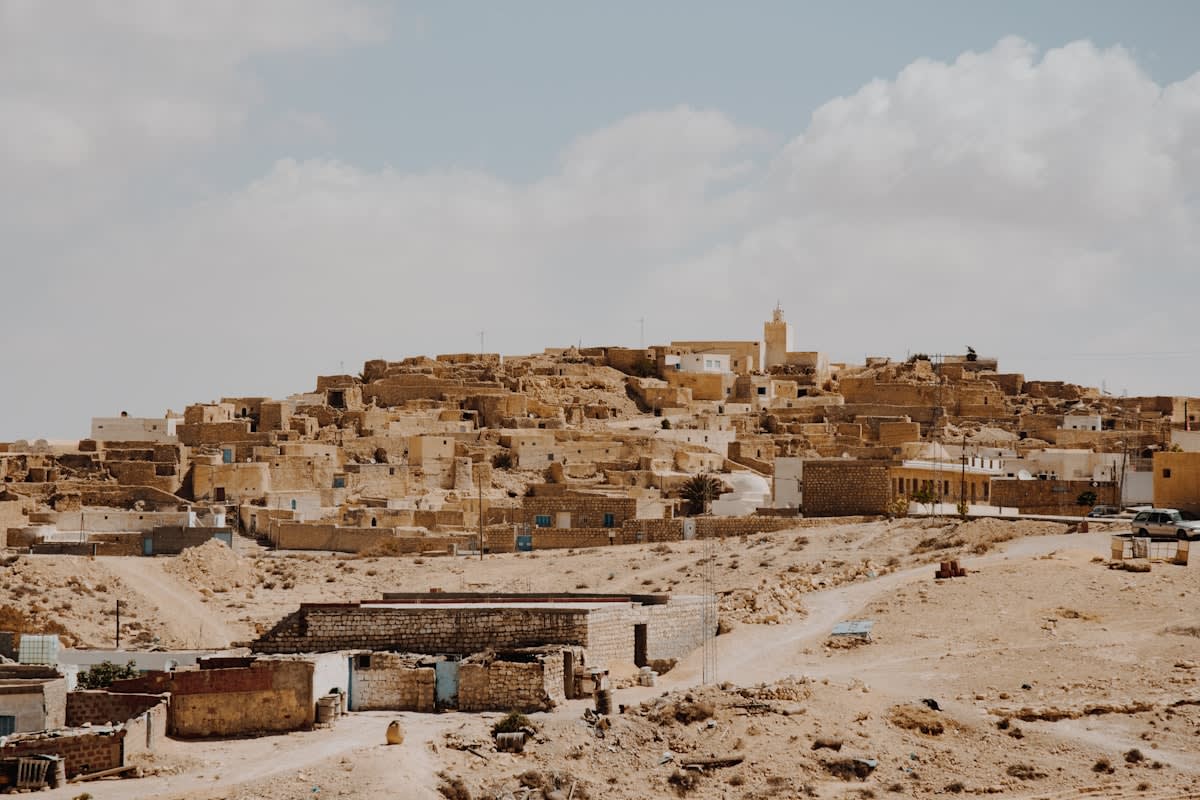
This shift is also driving a revival in local materials. Concrete is a thermal disaster—it absorbs heat and holds onto it, contributing to the nighttime warmth of cities. In contrast, materials like lime-plaster, rammed earth, and terracotta are being reintroduced. These materials don't just look traditional; they possess the specific heat capacity required to regulate indoor temperatures naturally.
Scaling the Wisdom: From Houses to Cities
The final frontier is scaling these individual building strategies into a city-wide logic. The ancient city of Yazd wasn't just a collection of wind towers; it was a network of narrow, shaded alleys that channeled cool air through the entire urban fabric. Modern urban planners are now studying these 'cool corridors' to redesign street widths and orientations. By aligning streets with prevailing winds and integrating greenery, cities can create a macro-scale passive cooling system.
Projected Cooling Energy Demand Reduction via Passive Integration
Executive Insight
+18.4%
YTD Growth
We are seeing the emergence of 'sponge cities' that use water not just for drainage, but for cooling. By integrating canals, reflecting pools, and permeable pavements, cities are utilizing evaporative cooling on a massive scale. This mimics the ancient stepwells of India, where subterranean architecture and water were used to create sanctuaries of cool during the peak of summer. The goal is a city that manages its own temperature as a biological system would.
The transition is far from complete, and the inertia of the construction industry is a powerful force. However, the trend is clear. The world is moving away from the arrogance of trying to override nature with electricity. Instead, we are returning to a partnership with the environment. The 'Great Un-Cooling' is not about accepting the heat, but about mastering the art of living within it.