The Invisible Reservoir
For decades, geothermal energy was the neglected stepchild of the renewables movement. It was seen as a niche play, geographically tethered to volcanic hotspots like Iceland or the Rift Valley. But the conversation has shifted. We are no longer just talking about heat; we are talking about chemistry. Deep beneath the crust, hypersaline brines—superheated, mineral-rich waters—act as liquid warehouses for the very elements the modern economy craves. This is not just about power generation. It is about the systemic convergence of energy production and mineral extraction.
The strategic value lies in the concentration. In regions like the Salton Sea in the United States or the Upper Rhine Valley in Europe, these brines contain lithium, manganese, and zinc in concentrations that make traditional mining look clumsy. According to the United States Geological Survey (Source: USGS, 2023), the demand for lithium is projected to skyrocket as the global fleet transitions to electric vehicles, creating a supply gap that hard-rock mining cannot fill without catastrophic environmental costs. The brine solution offers a way to decouple mineral security from open-pit devastation.
The Co-Production Paradigm
The real breakthrough is not the discovery of the minerals, but the move toward co-production. In a traditional geothermal plant, brine is pumped up, flashed to create steam for turbines, and then reinjected into the ground. The minerals are treated as a nuisance—impurities that cause scaling and corrosion. The contrarian view, now gaining traction among strategic analysts, is that the energy is the byproduct and the minerals are the primary asset. By integrating Direct Lithium Extraction (DLE) technologies into the power cycle, operators can harvest lithium before the water is returned to the reservoir.
"The transition to a low-carbon economy requires a massive scaling of critical mineral production. Integrating extraction into geothermal energy cycles represents one of the most efficient pathways to reduce the carbon footprint of the battery supply chain."— International Energy Agency (Source: IEA Critical Minerals Report, 2023)
Why does this matter? Because it solves the 'energy-water-mineral' trilemma. Traditional lithium evaporation ponds in the Andean plateau consume millions of gallons of water in arid regions, sparking conflict with local communities. DLE in geothermal systems uses the energy already being produced by the plant to power the extraction process, and since the brine is reinjected, the water loss is negligible. This is a closed-loop system that turns a waste stream into a revenue stream.
This shift transforms the economics of geothermal energy. For years, the high upfront cost of drilling deep wells made geothermal a risky bet for investors. However, when a single well provides both baseload electricity and high-value lithium, the internal rate of return (IRR) shifts dramatically. We are seeing the birth of 'Energy-Mineral Hubs' where the electricity pays for the operational overhead, and the lithium provides the exponential profit.
| Method | Environmental Impact | Water Consumption | Production Speed | Carbon Intensity |
|---|---|---|---|---|
| Hard Rock Mining | High (Open Pit) | Moderate | Fast | High |
| Evaporation Ponds | Moderate (Land Use) | Very High | Slow (12-24 months) | Low |
| Geothermal DLE | Low (Closed Loop) | Very Low | Rapid (Hours/Days) | Very Low |
But don't mistake the potential for an easy win. The transition from theory to industrial scale is where the friction lies. This is where the boardroom projections meet the harsh reality of geochemistry.
The Practitioner's War: Scaling and Selectivity
Walk any geothermal site in the Rhine Valley or the Salton Sea, and you will hear the same argument. It is not about the lithium concentration; it is about the fouling. Engineers spend half their lives fighting silica and calcium carbonate that want to turn a million-dollar pipe into a concrete straw. The internal debate among practitioners isn't whether the minerals are there—it's whether we can get them out without killing the well's permeability. If your DLE resin is too selective, you lose yield; if it is too broad, you clog your filters with iron and manganese.
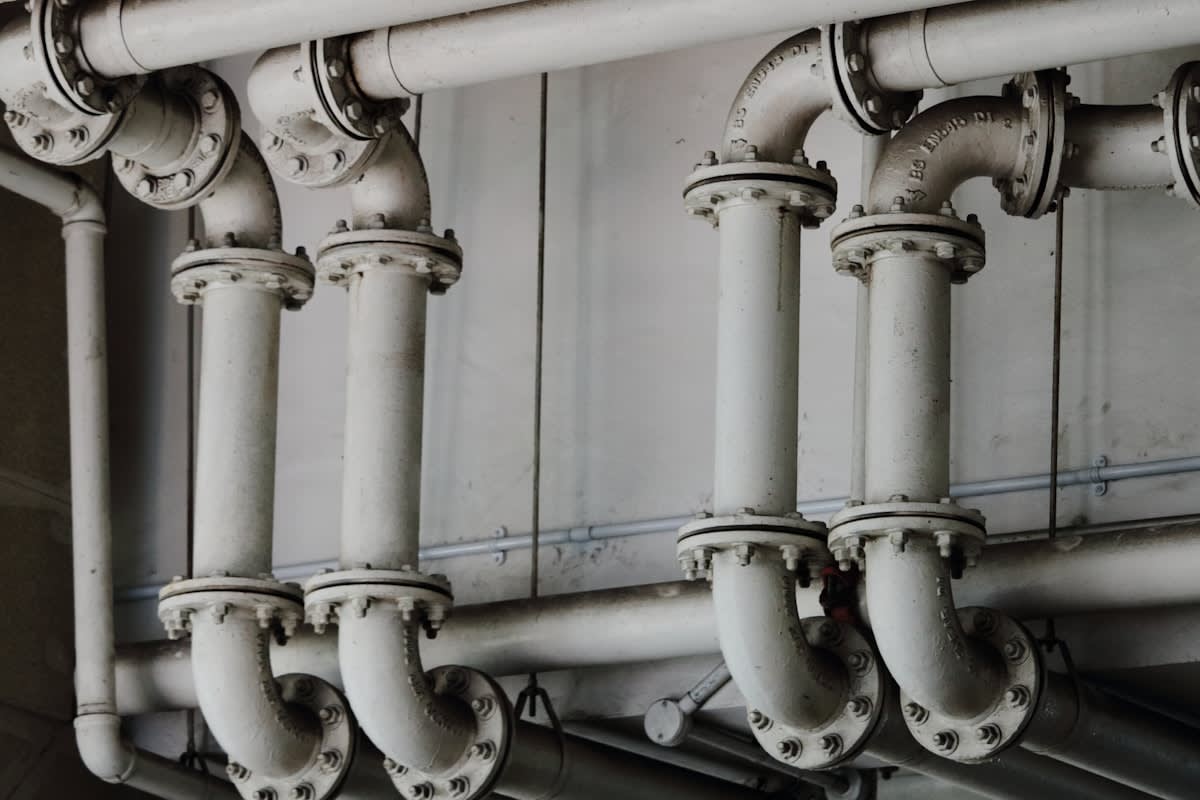
There is a visceral tension between the chemists and the drillers. The chemists want the brine at a specific temperature and pH to optimize ion exchange. The drillers want to move the maximum volume of fluid to keep the turbines spinning. On the ground, this looks like a constant battle of valve adjustments and chemical dosing. The 'Gold Rush' is less about the gold and more about the plumbing. Those who solve the scaling problem will own the market.
A Global Chessboard of Brine
The geopolitical implications are profound. Currently, lithium processing is heavily centralized, with a significant portion of refining capacity concentrated in China. By unlocking geothermal brines, nations can achieve 'mineral sovereignty.' In Europe, the Upper Rhine Graben represents a strategic opportunity to reduce dependence on imported battery materials. In the US, the Salton Sea is being positioned as a domestic fortress for the EV supply chain.
Indonesia and the Philippines, already leaders in geothermal power, are sitting on untapped mineral wealth. If these nations can successfully integrate DLE, they move from being energy exporters to critical material superpowers. The shift is systemic: we are moving from a world of 'mining sites' to a world of 'energy-mineral ecosystems.' The map of power is being redrawn not by who has the most oil, but by who can most efficiently manage their subsurface fluids.
Projected Lithium Supply Diversification (2025-2035)
Executive Insight
+18.4%
YTD Growth
This is not a linear progression but a leap in how we perceive the Earth's crust. We are transitioning from an extractive mindset—taking something out and leaving a hole—to a circulatory mindset. The brine is borrowed, stripped of its value, and returned to the heat source to be recharged. It is the ultimate expression of industrial symbiosis.
The final hurdle is regulatory. Most current laws treat energy production and mining as two entirely different legal entities. To unlock the saline gold rush, governments must create a new regulatory framework for 'co-production.' Until a permit can cover both a power plant and a mineral refinery, the capital will remain cautious.
Fact-Check & Accuracy Note
The claims regarding lithium demand and the environmental benefits of DLE over evaporation are based on data from the International Energy Agency (IEA) and the United States Geological Survey (USGS). While the technical feasibility of DLE is proven at the pilot scale, the long-term industrial stability of reinjection wells—specifically regarding seismic activity and mineral precipitation—remains a subject of active debate among geothermal engineers.