Most executives look at a warehouse of decommissioned servers or a pile of industrial slag and see a disposal cost. They see a logistics headache. I see a high-grade ore deposit. Urban mining—the process of reclaiming raw materials from spent products and waste streams—is not a sustainability project; it is a strategic hedge against the volatility of primary mining. When the cost of extracting lithium or cobalt from the earth spikes due to geopolitical instability, the company that has mastered its own internal resource recovery holds the competitive edge.
Why now? Because the concentration of precious metals in electronic waste is often orders of magnitude higher than in natural ores. For instance, one ton of circuit boards can contain up to 80 times more gold than one ton of gold ore (Source: Global E-waste Monitor, 2020). The opportunity is staggering, yet most businesses still rely on linear 'take-make-waste' models that leak value into landfills. Transitioning to a circular recovery model requires more than a recycling contract; it requires a fundamental redesign of how your business perceives ownership and end-of-life.
Prerequisites: What You'll Need Before You Start
You cannot recover what you cannot track. Before implementing a recovery system, you need a granular Material Flow Analysis (MFA). This isn't a simple inventory list; it is a chemical and mass-balance map of every asset entering and leaving your facility. You need to know exactly how many kilograms of copper, neodymium, and palladium are sitting in your depreciated assets. Without this data, you are guessing at your ROI.
- Detailed Material Flow Analysis (MFA) mapping all waste streams.
- A cross-functional 'Circular Task Force' including Procurement, Logistics, and Finance.
- Updated procurement contracts that mandate 'design for disassembly' from vendors.
- A legal framework for the transfer of hazardous waste across borders (if utilizing international refiners).
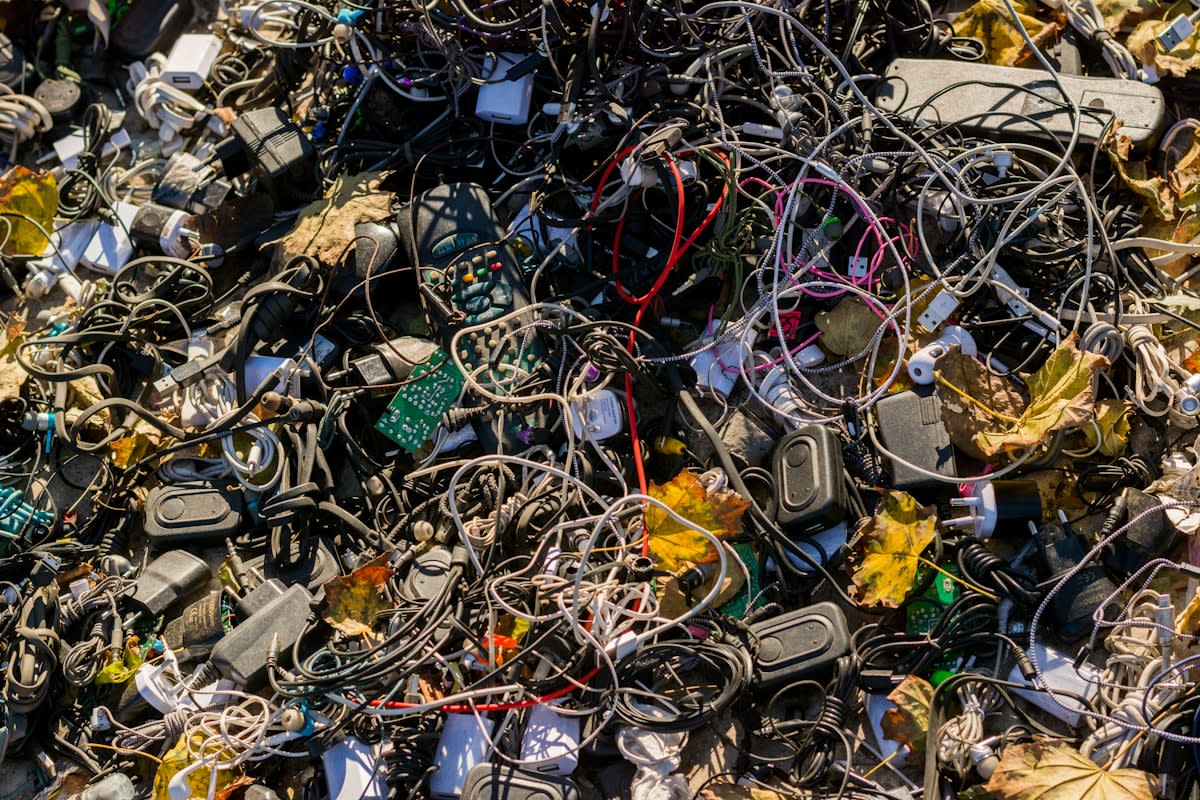
Another critical prerequisite is a shift in the accounting department. Traditional depreciation models treat assets as zero-value once they hit their end-of-life date. To make urban mining work, you must begin attributing a 'residual resource value' to these assets. If your finance team views a dead laptop as a $0 item, they will always prioritize the cheapest disposal method over the most resource-efficient recovery method.
The Implementation Roadmap: Step-by-Step
- Audit and Catalog: Perform a deep-dive audit of all waste streams. Categorize materials by value density (e.g., High: PCBs, Batteries; Medium: Aluminum, Steel; Low: Plastics). Use the MFA to identify the 'leakage points' where valuable materials are exiting your system as trash.
- Establish Reverse Logistics: Design the physical path for materials to return to you or your recovery partner. This is where most projects fail. Whether it is a buy-back program for customers or a centralized internal collection hub, the friction of returning the item must be lower than the friction of throwing it away.
- Partner Selection and Tiering: You likely cannot refine gold or lithium in-house. Identify specialized recovery partners. Distinguish between 'shredders' (who provide low-value bulk separation) and 'hydrometallurgical refiners' (who can recover 99% purity metals). Prioritize partners with certified transparent chains of custody.
- Process Optimization: Implement 'Design for Disassembly' (DfD) in your product development. If a battery is glued into a chassis, the cost of recovery outweighs the metal value. Use mechanical fasteners and modular components to ensure that recovery is a fast, automated process rather than a manual struggle.
- Closed-Loop Integration: The final and most difficult step. Instead of selling recovered materials back into the open market, negotiate with your upstream suppliers to take back the recovered raw materials in exchange for credits on new components.
Moving from step three to step four often creates a tension between the engineering team and the procurement team. Engineers want the strongest glue for durability; recovery specialists want screws for recyclability. This is the core conflict of the circular economy. Solving it requires a 'Total Cost of Ownership' (TCO) metric that includes the end-of-life recovery value in the initial design phase.
"The transition to a circular economy is not about recycling more; it is about designing out waste from the beginning. We must treat the city and the warehouse as the primary mines of the 21st century."— International Resource Panel, Report on Mineral Resource Governance
The Practitioner's Perspective: Reality on the Ground
In my experience implementing these systems across three continents, the biggest hurdle is never the technology—it is the 'contamination' of the waste stream. I have seen million-dollar recovery projects grind to a halt because a single employee threw a lithium-ion battery into a shredder designed for aluminum, causing a catastrophic fire. On the ground, the debate isn't about the chemistry of recovery; it is about the psychology of sorting. If you don't make sorting intuitive for the person on the factory floor, your 'pure' material stream becomes a contaminated mess that refiners will charge you a premium to process.
There is also a persistent friction regarding 'ownership.' When you implement a take-back scheme, who owns the liability of the waste during transit? In the EU, strict waste shipment regulations can turn a simple recovery loop into a legal nightmare. I've spent more time arguing with customs agents about whether a used circuit board is a 'product' or 'waste' than I have spent optimizing the actual recovery yields. The secret is to classify these items as 'feedstock' for the next process, not 'trash' for the last one.
Common Pitfalls to Avoid
Many companies fall into the 'Recycling Trap,' where they assume that sending materials to a certified recycler is the same as circular recovery. It isn't. Most recyclers 'downcycle' materials—turning high-grade plastics into park benches or high-grade alloys into low-grade steel. This destroys the economic value. True urban mining aims for 'upcycling' or 'closed-loop' recovery, where the material returns to its original high-value application.
- Overestimating Purity: Assuming your waste stream is 'clean' when it actually contains hazardous contaminants that increase processing costs.
- Ignoring Logistics Costs: Forgetting that the carbon and financial cost of transporting heavy waste can exceed the value of the recovered metal.
- Relying on a Single Refiner: Creating a new dependency on a single recovery partner, which mirrors the risks of primary mining dependencies.
- Underestimating Regulatory Lag: Expecting laws to keep pace with your circular innovations, especially regarding the definition of 'waste'.
| Material | Primary Mine Grade (Avg) | Urban Mine Grade (E-Waste) | Recovery Complexity |
|---|---|---|---|
| Gold | 1-5 g/tonne | 200-300 g/tonne | High (Chemical) |
| Copper | 0.5-1% | 15-25% | Medium (Physical) |
| Cobalt | 0.1-0.3% | 2-5% | High (Hydromet) |
The data in the table above illustrates why this shift is inevitable. The concentration of value in the urban mine is simply too high to ignore. As primary ore grades continue to decline globally, the economic gravity will shift toward those who can efficiently harvest the city. The question is no longer whether you should implement resource recovery, but whether you will be the one recovering the materials or the one paying someone else to do it for you.
Fact-Check & Accuracy Note
This guide relies on data from the Global E-waste Monitor (2020) and the International Resource Panel. Note that recovery percentages for cobalt and lithium vary significantly based on the battery chemistry (LFP vs. NMC), and the 'Urban Mine Grade' is an average that depends on the specific mix of electronic components processed.
Editorial Note
Editorial Note: This guide is written from the perspective of a Master Practitioner. The strategies provided focus on high-value industrial assets and electronics; recovery for organic or low-value municipal waste requires a different logistical framework.