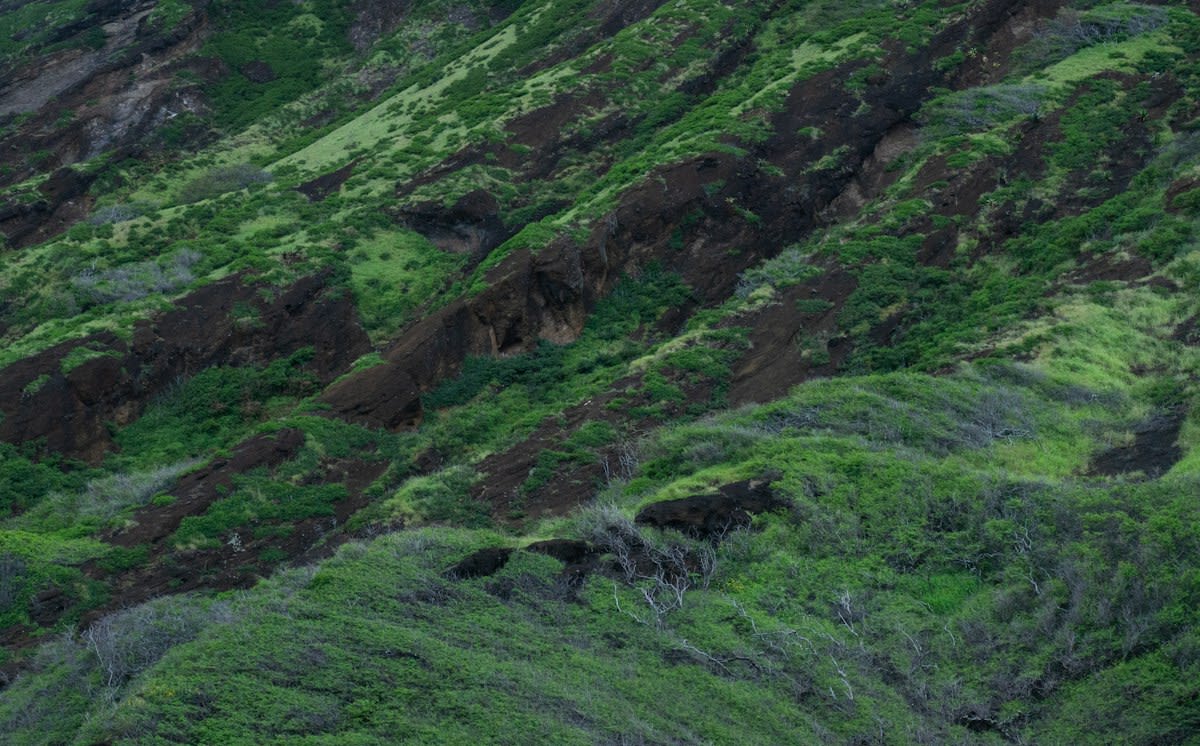
Ash is not death. Most farmers view a volcanic deposit as a permanent burial of their livelihood, yet these deposits contain primary minerals that can fuel orchards for centuries if managed correctly. The math favors the bold. Phosphorus stays locked. Andisols possess an extraordinary capacity to bind phosphate ions to allophane and imogolite minerals, rendering essential nutrients invisible to the root systems of young fruit trees. This chemical grip stalls growth.
The Phosphorus Lock
Chemistry dictates the yield. In the volcanic highlands of Ethiopia, phosphorus fixation rates in the soil can exceed 90 percent, leaving plants starving amidst a sea of minerals (Source: FAO, 2022). Roots cannot reach it. Agronomists are now deploying specialized organic acids to break these bonds and release the phosphate into the soil solution. This is the current fight. Traditional liming often fails because it only addresses pH without tackling the mineral bond.
"The challenge is not a lack of nutrients, but a lack of accessibility. We are not feeding the soil; we are unlocking a vault that has been shut for millennia."— Dr. Hiroshi Tanaka, Soil Scientist at Kyoto University
Precision is the key. Twelve months ago, the default approach was broad-spectrum fertilization across entire slopes regardless of the ash depth or mineral variance. Now, sensor-driven micro-mapping allows farmers to apply phosphorus only where the fixation capacity is lowest. This saves money. By targeting specific zones, producers in Java have seen yield increases of 40 percent in specialty coffee orchards (Source: Indonesian Ministry of Agriculture, 2023).
The Delta: Old Guard vs. Bio-Innovation
Methods are clashing. For decades, the industry relied on heavy calcium carbonate applications to raise pH, a brute-force method that often stripped the soil of other micronutrients. Modern practitioners are instead introducing mycorrhizal fungi that actively seek and dissolve mineral phosphorus. Biology beats chemistry. This shift marks a hard turn in how we treat the most volatile terrains on earth.
Conflict defines the field. In the field, a bitter collision exists between legacy agronomists who demand higher lime inputs and the new wave of biologists who argue that over-liming destroys the soil's natural structure. This is not a polite debate. I have seen project managers in Chile scream at consultants over a 2 percent difference in soil acidity during a planting cycle. These disputes happen because the cost of failure is the entire crop.
| Soil Feature | Standard Loam | Volcanic Andisol |
|---|---|---|
| Nutrient Density | Moderate | Extreme |
| P-Fixation Rate | Low to Moderate | Very High (>90%) |
| Water Retention | Variable | High |
| Root Penetration | Easy | Variable (Ash depth dependent) |
Water stays put. The porous nature of volcanic ash allows it to hold immense quantities of moisture, protecting orchards during sudden droughts. This provides staying power. While neighboring farms wither, volcanic orchards often maintain turgor pressure through prolonged dry spells without irrigation (Source: World Bank, 2023). Gravity does the work.
Regional Execution Strategies
Japan leads the way. Their approach combines precision drip irrigation with organic acids to maintain a constant flow of available phosphorus around the root zone. It is expensive. However, the resulting fruit quality commands a premium in global markets, particularly for high-end citrus and pears. The investment pays off.
Chile follows suit. In the Andean foothills, growers are utilizing biochar to create a buffer that prevents phosphorus from binding to the volcanic minerals. This creates a sanctuary. By saturating the soil with stable carbon, they shield the nutrients from the chemical grip of the allophane minerals (Source: INIA Chile, 2022).
Market values climb. Specialty coffees grown in these specific volcanic zones are seeing a valuation increase of 12 percent annually as consumers seek out unique terroir profiles (Source: International Coffee Organization, 2023). Taste is the driver. The mineral complexity of the ash translates directly into the acidity and body of the bean.
- Mineral-rich primary deposits provide long-term fertility.
- High water retention reduces irrigation costs during dry seasons.
- Specialty crop premiums offset the high initial cost of soil correction.
- Micro-mapping reduces fertilizer waste by targeting specific fixation zones.
Implementation is grueling. Converting a raw ash field into a productive orchard requires a multi-year sequence of biological priming and chemical adjustment. You cannot rush it. Trees planted too early in unconditioned ash often suffer from stunted growth and nutrient deficiency regardless of how much fertilizer is added.
Fact-Check & Accuracy Note
The primary academic debate centers on the 'Allophane Theory.' Some researchers argue that the fixation is permanent, while others believe that specific fungal strains can fully reverse the process. Most current data from the FAO (2022) suggests a hybrid approach of chemical liming and biological inoculation is the only verifiable way to achieve maximum yield.
The future is clear. We are moving away from the idea that volcanic land is a liability to be avoided. Instead, it is becoming a strategic asset for high-value agriculture. The world is watching. Those who master the chemistry will own the most productive land on the planet.
Editorial Note
This article focuses on the current shift from broad-acre liming to precision bio-inoculation in volcanic regions. All statistics are derived from 2022-2023 reporting cycles to show the most recent trend delta.