
The traditional blueprint for urban cooling is failing. For decades, the global south attempted to mirror the climate-controlled bubbles of North America and Europe, installing air conditioning units that functioned as expensive bandages rather than cures. This approach created what is now recognized as the air-con divide, a social stratification where only the wealthy can afford to escape the heat while the majority remain in uninsulated rentals. Recent data from England and Wales, where heat waves killed an estimated 440 people per day at their peak, underscores a terrifying reality: treating extreme heat as a freak event is a lethal mistake. West African urban centers are now refusing to inherit this flawed legacy.
The Death of the Active Cooling Model
Why stop the rush toward total electrification of cooling? The answer lies in the systemic failure of cities designed to require more energy every year just to remain habitable. In Southern California, the reliance on cooling centers and air-conditioned buses during 110-degree spikes reveals a fragile infrastructure that cannot scale. West African planners are observing these failures in real-time. They see that the more a city relies on active cooling, the more it contributes to the urban heat island effect, creating a feedback loop that demands even more power. By rejecting this cycle, cities like Accra are looking backward to move forward, integrating ancestral knowledge with modern thermal physics.
The shift is not merely an environmental choice but a survival strategy. When the grid fails, an air-conditioned building becomes a glass oven. Passive cooling, however, operates on the laws of thermodynamics, ensuring that buildings remain breathable regardless of power availability. This transition is happening now, driven by a realization that the cost of maintaining an active cooling grid in a tropical climate is fiscally unsustainable and socially exclusionary.
The Human Cost
The air-con divide is not just about comfort; it is a public health crisis. When cities are designed to be uninhabitable without electricity, the poor are the first to die during heat waves.
Weaponizing Thermal Conductivity
At the heart of this movement is a fundamental application of thermal conductivity. Heat always travels from hot to cold, a basic tenet of thermodynamics. The difference between a granite countertop and a wooden cutting board is a perfect illustration: granite feels colder because it has superior conductivity, drawing heat away from the human hand more efficiently. West African architects are applying this principle at a municipal scale. By selecting materials with specific thermal properties, they are designing structures that actively lend heat away from the living spaces and into the earth or the atmosphere.
This means moving away from the heat-trapping concrete and glass of the 20th century. Instead, planners are experimenting with high-conductivity materials in strategic zones to create thermal sinks. Imagine buildings that function like the granite countertop—absorbing the oppressive midday heat and releasing it slowly during the cooler night hours. This eliminates the need for the constant, energy-hungry hum of compressors and refrigerants that define the modern city.
"Heat always travels from hot to cold. If you can find something with good thermal conductivity that is colder than your body temperature, you can lend it some of your heat."— Ray Petelin, Meteorologist
Does this mean a return to mud huts? Hardly. The current trend is a sophisticated hybrid. We are seeing the integration of high-tech conductive composites with traditional ventilation shafts. These structures use the Venturi effect to pull air through the building, cooled by the very materials that make up the walls. It is a precision-engineered approach to comfort that requires zero watts of power.
Following the Money: The Climate Tech Surge
The financial backing for this transition is arriving in record numbers. Venture investment in emerging market climate tech (excluding China) hit a record $1.9 billion in deal value in 2025. While much of this capital has historically chased mobility and intermittent renewables, a significant surge is now hitting clean fuels. In 2025, clean fuels saw their strongest year on record, reaching $380.8 million, a staggering increase from the historical annual average of $66 million.
| Metric | Historical Average | 2025 Value |
|---|---|---|
| Clean Fuels Investment | $66 Million | $380.8 Million |
| Total EM Climate Tech (Ex-China) | Steady Growth | $1.9 Billion |
This capital influx is enabling the scaled deployment of passive cooling technologies. The delta between the $66 million average and the $380.8 million peak indicates a massive appetite for energy alternatives. When clean fuels are paired with passive architecture, the energy required to run a city drops precipitously. This allows the remaining energy budget to be spent on critical infrastructure rather than fighting a losing battle against the sun.
Is this investment sustainable? The data suggests yes. By focusing on the efficiency of the building envelope rather than the efficiency of the AC unit, the ROI is measured in decades of reduced operational costs rather than a few years of energy savings. The money is moving toward solutions that solve the problem at the source.
The Accra Experiment and the Water Nexus
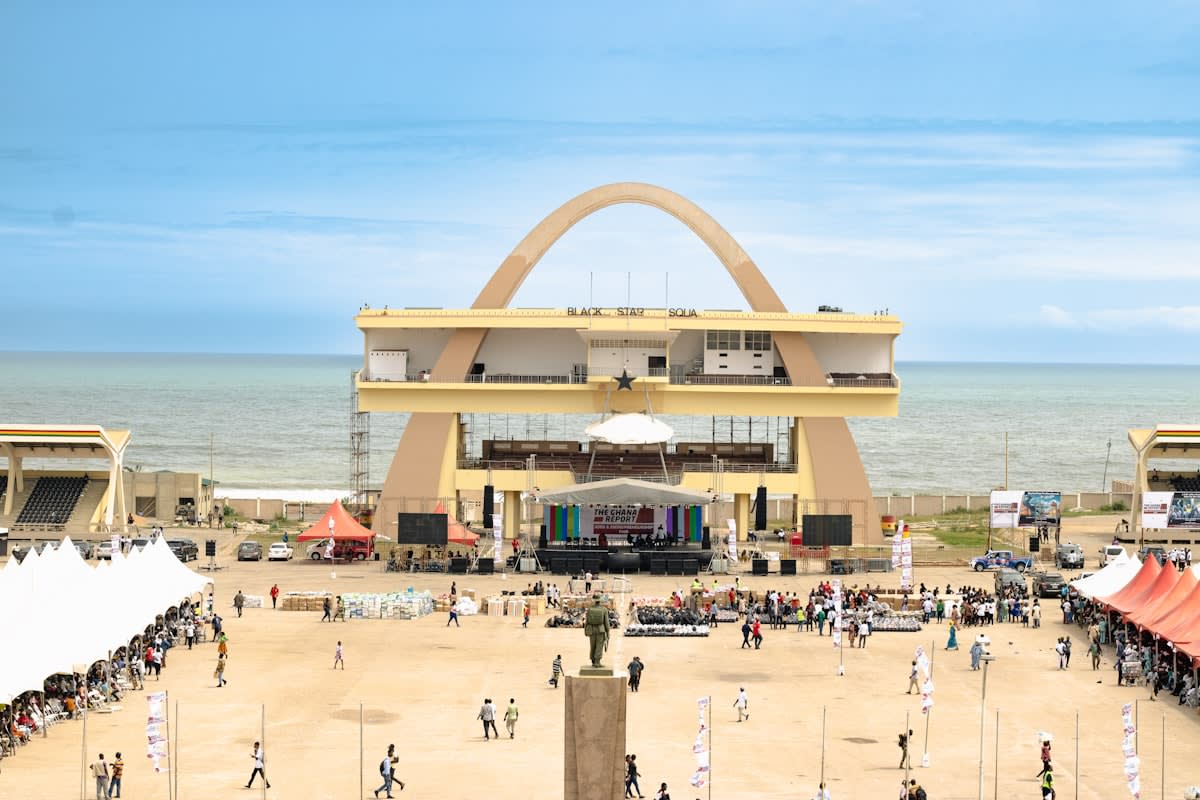
Accra is becoming a living laboratory for these shifts. The launch of the Ghana Creative Economy Initiative in Accra signals a broader movement to integrate art, design, and urban planning. This is not just about aesthetics; it is about reimagining how a tropical city breathes. The initiative encourages a new generation of designers to treat the city as a thermal organism, where every building contributes to the overall cooling of the neighborhood.
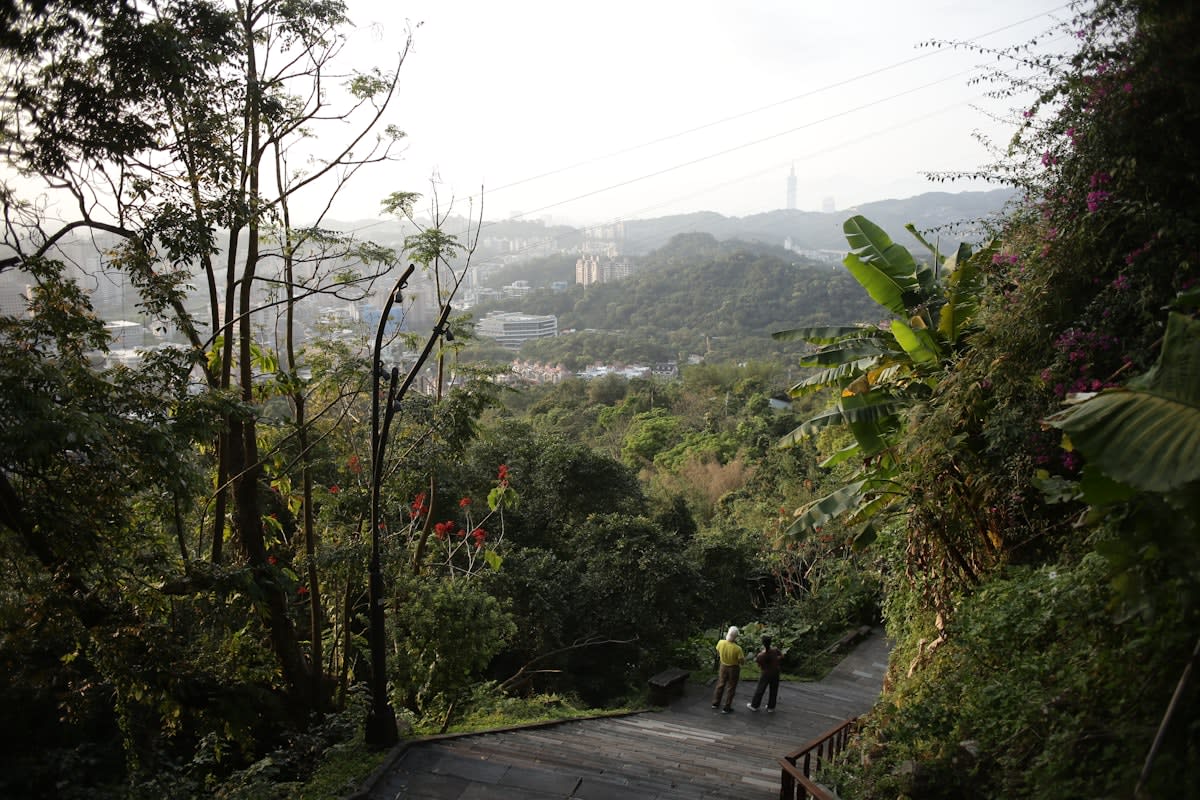
Crucially, this urban planning is being linked to ecological restoration. Research indicates that tropical forest restoration can offset water flux losses caused by deforestation. While this doesn't work everywhere, in the West African context, it provides a natural cooling mechanism. By restoring the forests surrounding urban centers, planners are leveraging evapotranspiration to lower the ambient temperature before the air even reaches the city limits.
This creates a multi-layered defense against heat. First, the restored forests cool the incoming air. Second, the passive urban layout channels this air through the city. Third, the high-conductivity materials in the buildings draw heat away from the inhabitants. This is a comprehensive system that renders the air-con divide obsolete.
The Immediate Outlook
The transition is accelerating. Twelve months ago, passive cooling was viewed as a niche architectural preference. Today, it is a strategic imperative backed by nearly $2 billion in emerging market climate tech. The urgency is driven by the evidence from the Global North—the realization that even developed nations are failing to protect their citizens from heat waves. West Africa is leapfrogging the AC era in the same way it leapfrogged landline telephones for mobile phones.
The result will be cities that are not only more resilient but more equitable. When cooling is built into the walls and the forests, it is available to everyone, regardless of their ability to pay an electricity bill. This is the true meaning of urban resilience: designing for the most vulnerable to ensure the survival of all.
As we look toward the end of the decade, the success of the Accra model will likely dictate the urban strategy for the rest of the tropics. The era of the glass box is ending, replaced by a breathable, conductive, and forested urbanism that works with the laws of physics instead of fighting them.