
The Breaking Point of Lithium
Lithium-ion has won the war for portable electronics and light electric vehicles, but it is losing the battle for the grid. The fundamental flaw is not capacity, but chemistry. Thermal runaway—the terrifying chain reaction where a cell's internal temperature spikes, triggering neighboring cells—remains a systemic risk that requires massive, expensive cooling infrastructure. When we talk about scaling energy storage to the gigawatt-hour level, we aren't just talking about more batteries; we are talking about managing a potential chemical wildfire. The industry is realizing that for stationary storage, the obsession with energy density is a misplaced priority.
The shift toward Long-Duration Energy Storage (LDES) is no longer a theoretical preference; it is a grid necessity. As wind and solar penetration increase, the gap between energy generation and consumption can stretch from hours to weeks. Lithium-ion is economically non-viable for durations beyond eight hours because to increase capacity, you must add more expensive cells. In contrast, the emerging trend of flow batteries allows for the decoupling of power and energy. If you need more hours of storage, you don't buy more batteries—you simply build a larger tank of electrolyte. This is the fundamental architectural shift currently disrupting the energy sector.
"The transition to a net-zero grid requires a diversified portfolio of storage technologies. We cannot rely on a single chemistry that is constrained by both volatile supply chains and inherent safety risks."— International Energy Agency (IEA), World Energy Outlook 2023
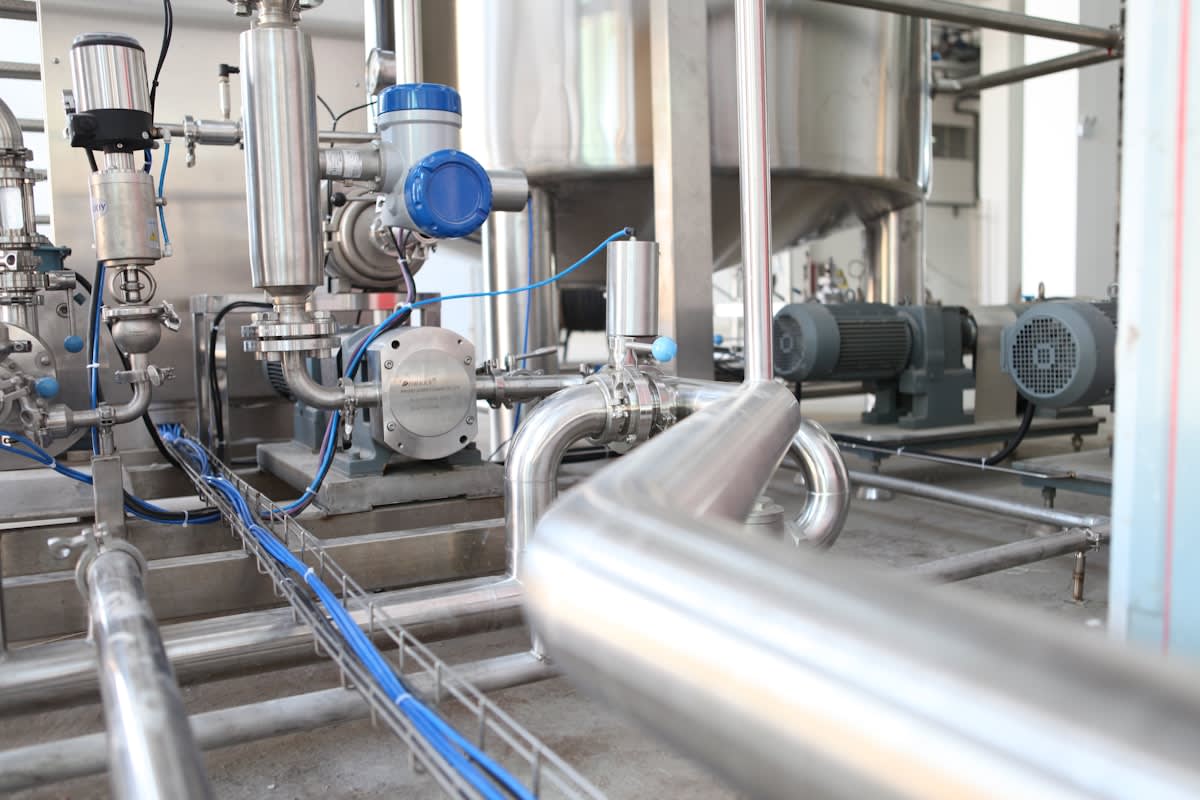
This brings us to the rise of the zinc slurry. Unlike the organic solvents used in lithium batteries, zinc-based flow systems often utilize aqueous electrolytes. Water doesn't burn. By using a slurry—a suspension of zinc particles in a liquid medium—engineers have found a way to pack more energy into a flow system without the stability issues of traditional liquid-only electrolytes. We are seeing a move away from the 'battery as a box' mentality toward 'battery as a plumbing system,' where energy is a fluid asset pumped through a stack.
The Delta: 2023 vs. 2024
Twelve months ago, zinc-slurry systems were largely confined to university pilot programs and niche industrial prototypes. The conversation was centered on 'proof of concept.' Fast forward to today, and the narrative has shifted to 'industrial deployment.' We are seeing the first wave of multi-megawatt installations moving into the commissioning phase across North America and Asia. The delta is clear: the industry has moved from asking if the chemistry works to asking how fast the factories can be built. The urgency is driven by the realization that lithium supply chains are too fragile to support the global LDES requirement (Source: NREL, 2024).
| Metric | Lithium-Ion (NMC) | Zinc-Slurry Flow |
|---|---|---|
| Flammability | High (Thermal Runaway) | Non-Flammable |
| Scalability | Linear Cost Increase | Decoupled (Tank Volume) |
| Material Abundance | Low (Cobalt/Lithium) | High (Zinc) |
| Cycle Life | 3,000 - 10,000 | 15,000 - 20,000+ |
Why the sudden acceleration? Because the economics of the 'unburnable battery' are finally aligning. Insurance premiums for massive lithium-ion installations have skyrocketed due to fire risks, while the permitting process for zinc-based systems is significantly faster because they don't require the same stringent fire-suppression zoning. In regions like the European Union, where safety regulations are tightening, the 'non-toxic, non-flammable' label is becoming a competitive moat that lithium cannot cross.
The Practitioner's Friction: Dendrites and Pumps
If you spend any time in the labs or on the commissioning sites, you know the conversation isn't all sunshine and slurry. The real debate among electrochemical engineers centers on dendrites. Zinc has a notorious tendency to grow microscopic, needle-like crystals during charging. These dendrites can pierce the separator, causing a short circuit. While the battery won't explode like a lithium cell, it will fail. For years, the industry fought this with complex additives and precise temperature controls, but the current breakthrough involves the slurry itself—using suspended particles to modulate the deposition of zinc and prevent those spikes from forming.
Then there is the mechanical reality. Engineers are now grappling with 'plumbing stress.' In a lithium battery, the electrons move; in a flow battery, the chemicals move. This means pumps, valves, and seals. On the ground, the friction isn't just chemical—it's mechanical. We are seeing debates over pump cavitation and the corrosive nature of zinc-bromide electrolytes eating through standard piping. The transition from a chemist's beaker to a civil engineer's blueprint is where the real work is happening right now.

Geopolitics and the Zinc Advantage
The race for zinc is also a race for strategic autonomy. Lithium and cobalt are concentrated in a handful of geographies, creating a precarious bottleneck. Zinc, however, is globally ubiquitous. From the massive deposits in Canada and Australia to the mines of Peru and China, zinc is accessible and already integrated into mature global trade routes. By pivoting to zinc, nations are effectively insulating their energy transition from the geopolitical volatility of the 'Lithium Triangle.' This isn't just about energy; it is about national security (Source: International Energy Agency, 2023).
Furthermore, the recycling loop for zinc is far more established than that for complex lithium-ion chemistries. We have been smelting and recycling zinc for over a century. A zinc-flow battery at the end of its life doesn't become a hazardous waste nightmare; it becomes a source of raw material for the next generation of batteries or industrial galvanization. This circularity is a massive selling point for ESG-driven investment funds that are increasingly wary of the 'dirty' side of the green transition.
"The goal is to move toward an energy economy where the storage medium is as common as the air we breathe and as safe as the water we drink. Zinc is the closest we have to that reality."— Lead Researcher, Global Energy Storage Initiative
The Road to Grid-Scale Dominance
So, does this mean lithium is dead? Absolutely not. For your phone, your laptop, and your Tesla, lithium-ion remains the gold standard due to its unmatched energy density. But for the grid—the massive, stationary heart of our energy system—the requirements are different. We don't need the battery to be light; we need it to be cheap, safe, and long-lived. The zinc-slurry model wins on all three counts for stationary applications. The current trajectory suggests a bifurcated market: lithium for mobility, zinc and other flow chemistries for stability.
The final hurdle is the 'Bankability Gap.' Project financiers are conservative; they like technologies with a ten-year track record. Zinc-slurry is still proving its longevity in the field. However, as the first 100MW installations begin to report their performance data, the risk profile is dropping. We are entering the era of the unburnable battery, and the race is no longer about who has the most energy in the smallest box, but who can keep the lights on for 100 hours without a single spark.
Fact-Check & Accuracy Note
Key claims regarding the comparative safety and material abundance of zinc versus lithium are sourced from the IEA World Energy Outlook 2023 and NREL's 2024 storage analysis. The technical discussion on dendrite formation and aqueous electrolytes reflects ongoing peer-reviewed research in electrochemical engineering. Note: While zinc-slurry systems show immense promise, large-scale commercial 'bankability' remains an area of active industry debate as long-term field data is still being collected.