
The Philosophy of Calorie Sovereignty
Why do we trust a fragile, thousand-mile supply chain to deliver our most basic biological needs? Calorie sovereignty is not about retreating into a romanticized version of the past; it is a strategic decoupling from centralized food systems that prioritize shelf-life over nutrient density. By shifting the locus of production from distant industrial hubs to the immediate community, we transform food from a commodity into a resilient asset. This transition requires more than just a few garden beds; it demands a systemic overhaul of how we produce, distribute, and consume energy.
The Sovereignty Mindset
Sovereignty is not isolation. It is the ability to maintain a stable caloric floor regardless of external market volatility or logistics failures.
Prerequisites: Your Sovereignty Toolkit
Before planting a single seed, you must establish the infrastructure of resilience. You cannot build a sovereign system on a foundation of ignorance or inadequate resources. Whether you are operating in a dense metropolis or a rural outpost, the requirements remain the same: access to viable land, a seed bank of climate-adapted crops, and a network of practitioners who prioritize food justice over profit.
- Secure Land Access: Identification of underutilized urban spaces or community-held land.
- Genetic Diversity: A curated library of seeds that align with local soil and climate conditions.
- Technical Expertise: Mastery of sustainable agricultural intensification techniques.
- Distribution Nodes: Established pathways for moving food from soil to table without corporate intermediaries.
- Dietary Alignment: A commitment to diets that maximize caloric output per acre of land.
The Implementation Roadmap
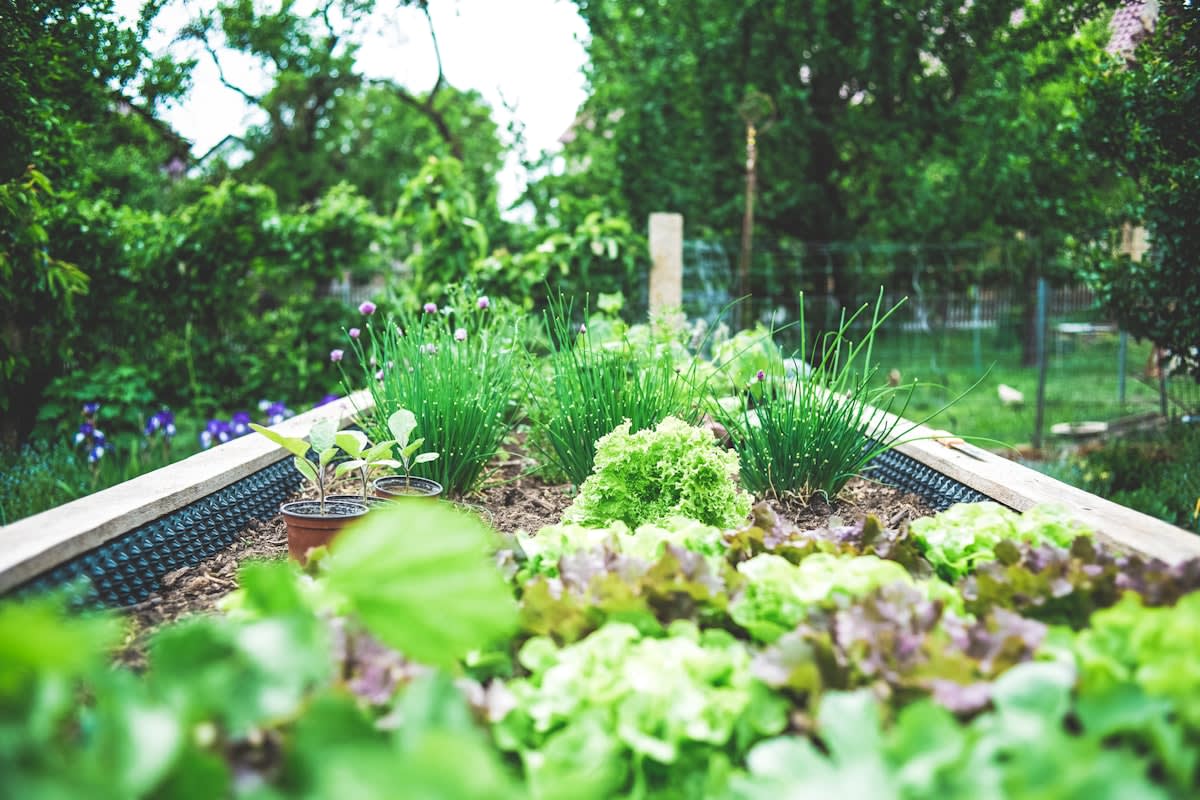
Building a sovereign food system is a phased operation. You start with small-scale proof of concepts and scale upward by integrating your production into the existing social fabric of your community. The goal is to create a redundant system where multiple nodes of production support each other.
- Establish Urban Production Hubs: Utilize agricultural engineering to convert vacant lots into high-yield farms.
- Integrate Institutional Education: Embed agriculture into schools and public spaces to create a generational knowledge base.
- Optimize Dietary Patterns: Shift consumption toward sustainable, resource-efficient diets based on global health recommendations.
- Build Localized Distribution Networks: Launch community farmers' markets to bypass supermarket monopolies.
- Implement Aggressive Waste Reduction: Halve food loss to maximize the efficiency of every calorie produced.
Step one focuses on the physical act of production. Look at the work of agricultural engineer Effie Gant, who has spent decades breaking barriers in urban farming. Through initiatives like Highways to Hedges, Gant demonstrates that environmental justice and food production are inextricably linked. By treating urban spaces as viable agricultural assets, we can produce high-value crops—like the watermelons showcased at the Freedom Farmers' Market—right where the people live. This eliminates the 'food desert' phenomenon by replacing corporate dependence with community-led abundance.
"Sustainable agriculture is the bridge between environmental justice and community resilience."— Inspired by the leadership of Effie Gant
Scaling this effort requires institutional buy-in. The approach taken by the New York City Mayor's Office of Urban Agriculture provides a scalable model. By launching programs like Reimagining Farm to School, they integrate agriculture directly into the education system, ensuring that the next generation understands the mechanics of food production. Projects like the Adlai Stevenson Educational Campus School Food Forest prove that public land can be converted into edible landscapes, providing direct community access to fresh food while mitigating the urban heat island effect.
| Metric | Business-as-Usual System | Sovereign/Sustainable System |
|---|---|---|
| Land Use Pressure | High / Expanding | 6-42% Decline by 2050 |
| Food Waste Levels | High / Systemic | 50% Reduction Target |
| Dietary Basis | Market-Driven / Processed | EAT-Lancet Recommendations |
| Distribution | Centralized Supermarkets | Localized Farmers' Markets |
Production alone is insufficient if the diet is inefficient. A July 19, 2026, study published in Nature utilized ten different global economic models to prove that a shift in dietary patterns can fundamentally reshape global agriculture. By adopting healthier diets—specifically those based on the 2025 EAT-Lancet recommendations—and combining them with sustainable agricultural intensification, we can drastically reduce the pressure on natural resources. This is not just a health choice; it is a spatial strategy. Reducing the land footprint required to feed a population increases the viability of localized, sovereign systems.
The final piece of the puzzle is distribution. If you grow your food but still rely on a corporate entity to sell it, you are not sovereign. The blueprint requires the creation of independent marketplaces. Effie Gant's initiative to launch farmers' markets in the Bay Area exemplifies this. Furthermore, the Purchasing with Purpose initiative in New York City demonstrates how to create economic opportunities for small, regional producers. When we shift our purchasing power toward values-aligned local producers, we starve the monopoly and feed the community.
The 50% Rule
The Nature study reveals that cutting food waste in half is as critical as the farming itself. Every wasted calorie is a failure of the sovereign system.
Common Pitfalls in the Quest for Sovereignty
Many attempt to build sovereign systems but fail because they treat agriculture as a hobby rather than an engineering challenge. The most common error is neglecting the 'intensification' part of the equation. Simply planting a few vegetables in a backyard does not create calorie sovereignty; it creates a supplement. To truly replace a supermarket, one must employ sustainable agricultural intensification to ensure that the caloric output matches the community's needs without destroying the soil.
- The Hobbyist Trap: Failing to scale production to meet actual caloric requirements.
- Educational Gaps: Ignoring the need for systemic agriculture education in schools.
- Distribution Blindness: Growing food but lacking a viable, non-corporate way to distribute it.
- Waste Negligence: Failing to implement the 50% waste reduction target, leading to resource inefficiency.
True sovereignty is achieved when the loop is closed: production is intensified, diets are optimized for the planet, and distribution is kept local. By following this blueprint, we move from a state of precarious dependency to one of enduring resilience. The tools are already in our hands; the only question is whether we have the will to plant them.