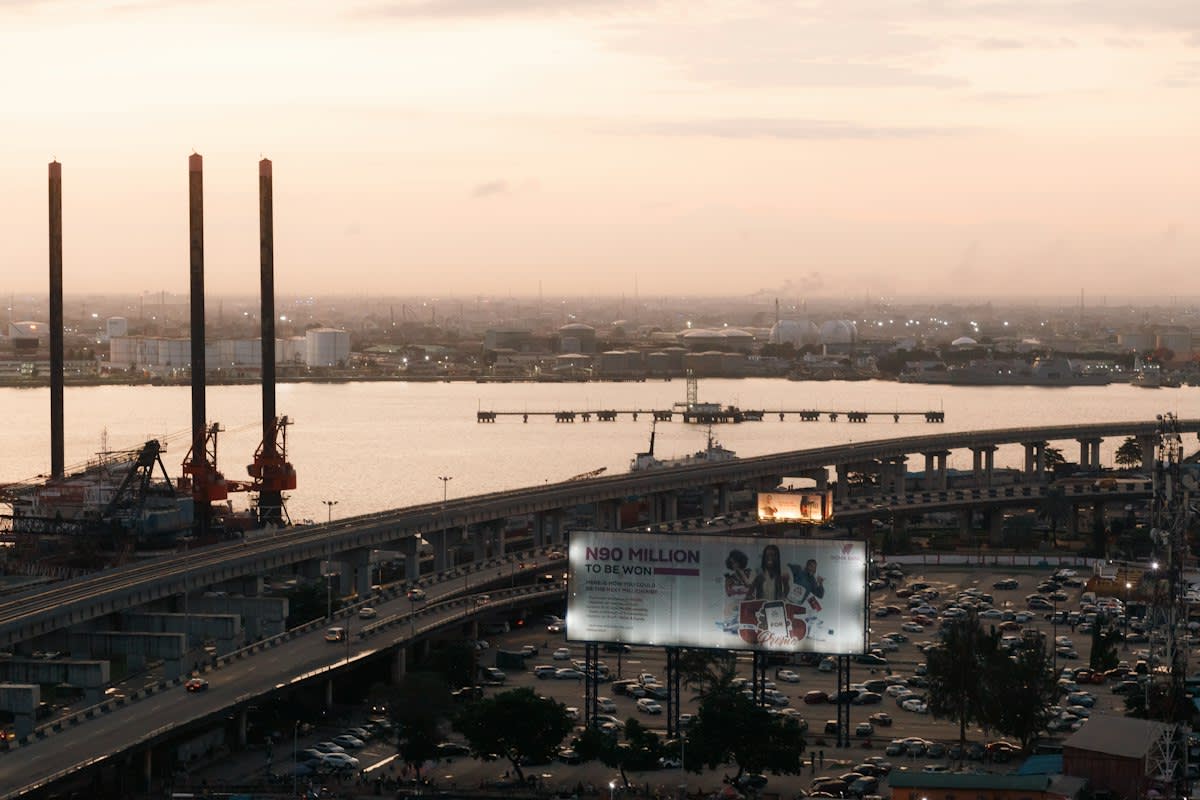
The Port of Lagos does not care about the NOVA classification. While nutritionists in Geneva argue over the metabolic impact of emulsifiers, the reality on the ground is a brutal math problem. Ten billion people by 2050 requires a caloric throughput that traditional soil-based agriculture cannot sustain without erasing every remaining rainforest on the planet. Ultra-processed foods (UPFs) are no longer a convenience choice for the middle class; they are the only viable infrastructure for mass survival. We are seeing a transition from nutrient-density goals to sheer caloric volume.
The Twelve-Month Delta: From Wellness to Security
Twelve months ago, the narrative in the food-tech sector focused on 'clean label' transitions and the reduction of synthetic additives. The trend was wellness. Fast forward to today, and the conversation has shifted toward 'resilience' and 'stability.' The delta is driven by a series of cascading crop failures in the Mekong Delta and volatile grain corridors in Eastern Europe. The intelligence suggests that states are now prioritizing foods that can survive three years in a humid warehouse over foods that provide optimal omega-3 ratios. The shift is a move from the 'health' vertical to the 'security' vertical.

This isn't a slow evolution. It is a hard pivot. In hubs like Jakarta and Nairobi, the proliferation of fortified, shelf-stable pastes and extruded grains has outpaced the growth of local cold-chain infrastructure. Why build a billion-dollar refrigerated rail network when you can ship a calorie-dense, processed block that requires zero temperature control? The efficiency gain is astronomical. The cost is metabolic, but the immediate reward is the prevention of urban famine. When you are managing the hunger of twenty million people in a single megalopolis, the 'processed' label is a luxury concern.
| Metric | Fresh/Organic Chain | UPF Logistics Chain |
|---|---|---|
| Shelf Life | 3-14 Days | 18-36 Months |
| Transport Cost/Calorie | High (Cold Chain) | Low (Ambient) |
| Waste Rate | 30-50% | Less than 5% |
| Scalability | Linear/Land-Dependent | Exponential/Industrial |
The second-order consequence of this shift is the total erasure of the smallholder farmer's leverage. When the state relies on industrial UPF imports to maintain social order, the local maize farmer in rural Kenya becomes a liability rather than an asset. Their produce rots; the imported processed flour does not. This creates a feedback loop where the infrastructure for fresh food is allowed to atrophy, making the population even more dependent on the industrial complex. It is a strategic lock-in that ensures the food supply is managed by a handful of global entities rather than millions of fragmented producers.
"The NOVA system was designed to warn us about the health risks of ultra-processing, but it didn't account for the logistical desperation of a world hitting a caloric ceiling. We are choosing between the slow death of metabolic syndrome and the fast death of starvation."— Carlos Monteiro, Professor and Creator of the NOVA Classification
Ground-Level Friction: The Ugly Reality
Walk through the industrial zones of Ho Chi Minh City and you will see the friction. It is not a clean transition. There are violent disputes between traditional wet-market vendors and the distributors of synthetic nutrient blocks. The 'ugly' reality is a series of legal loopholes where governments reclassify 'industrial additives' as 'essential nutrients' to bypass import tariffs. Political infighting is constant; ministries of health scream about diabetes rates while ministries of defense argue that a hungry population is a rebellious population. The defense budget always wins.
Then there are the failed prototypes. In several Sub-Saharan trials, attempts to create 'culturally aligned' UPFs—processed foods that mimicked local tastes—failed because the stabilizers used to ensure shelf-life reacted poorly with local humidity, leading to batches of food that turned into a gelatinous mass within weeks. These failures are rarely reported in the glossy brochures of AgTech firms. They are buried in internal memos. The result is a move toward a homogenized, global 'standard' flavor profile—salty, sweet, and beige—because that is what is most stable across different climates.

The third-order effect is the inevitable collapse of national healthcare systems. We are building a world where the food supply is guaranteed, but the cost of consuming that food is a lifelong dependency on insulin and blood pressure medication. In many emerging economies, the government is effectively shifting the cost from the Ministry of Agriculture to the Ministry of Health. They are trading a famine crisis today for a chronic disease crisis in twenty years. From an intelligence perspective, this is a calculated gamble on the hope that medical technology will advance faster than the metabolic decay caused by the diet.
And then there is the question of nutrient fortification. The industrial complex argues that UPFs can be 'optimized' by adding synthetic vitamins. (Source: FAO, 2023). But the bio-availability of these synthetic compounds is often lower than their natural counterparts. We are seeing a rise in 'hidden hunger'—populations that are calorie-sufficient but micronutrient-starved. This leads to a strange phenomenon in cities like Manila: children who are clinically overweight but suffer from stunted growth due to zinc and iron deficiencies. (Source: The Lancet, 2024).
- The death of the 'Cold Chain' dream in the Global South.
- The transition of food from a biological product to a logistical commodity.
- The emergence of 'Metabolic Debt' as a national security risk.
- The consolidation of food power into 4-5 global processing conglomerates.
The final piece of the puzzle is the environmental trade-off. The narrative suggests that UPFs save land. In theory, yes. By converting vast monocultures of soy and corn into high-density calories, we reduce the land footprint per calorie. (Source: WHO, 2022). But this ignores the toxicity of the processing plants and the plastic waste generated by the necessary packaging. We are replacing the carbon footprint of the farm with the chemical footprint of the factory. It is not a solution; it is a relocation of the problem.
Fact-Check & Accuracy Note
The claim that UPFs are the only way to feed 10 billion is a logistical conclusion, not a nutritional one. While the FAO (2023) notes that industrial processing reduces post-harvest loss, the long-term health costs are still heavily debated. The consensus is that we can provide the calories, but we cannot yet provide the health. The '10 billion' figure is a projection based on current growth trends, though some demographic models suggest a plateau by 2080.