
The End of the Acre
For ten thousand years, the equation for human survival was simple: more land equals more food. We cleared forests, diverted rivers, and exhausted soils to maintain a caloric baseline. But a quiet shift is happening in the industrial parks of Finland and the tech hubs of the United States. We are no longer tethered to the soil. Carbon-capture protein, or 'air-based' protein, leverages hydrogenotrophic microbes to synthesize amino acids directly from CO2, water, and electricity. It is not magic; it is highly efficient microbiology.
The delta between where we were eighteen months ago and today is staggering. In 2023, these technologies were largely viewed as 'moonshots'—expensive, lab-bound experiments with limited throughput. By 2024, we are seeing the first legitimate industrial-scale facilities attempting to enter the commercial supply chain. The transition from bench-top flasks to 10,000-liter bioreactors marks the moment this technology moves from a scientific curiosity to a systemic threat to traditional commodity farming (Source: Good Food Institute, 2023).
Why does this matter now? Because the traditional agricultural model is hitting a hard ceiling. With global arable land per capita declining and weather volatility rendering crop yields unpredictable, the luxury of relying on nature's timetable is disappearing. By bypassing photosynthesis—the notoriously inefficient process plants use to turn sunlight and CO2 into energy—air-protein producers can create food in a fraction of the time and space. We are effectively compressing a thousand-acre soy farm into a building the size of a warehouse.
The Mechanics of Gas Fermentation
The process is a masterclass in industrial chemistry. It begins with the capture of CO2, often sourced from industrial emissions or directly from the atmosphere. This carbon is then combined with hydrogen—ideally produced via electrolysis using renewable energy—and fed to specialized microbes. These organisms don't need sunlight; they 'eat' the gas and multiply, creating a protein-rich biomass that can be harvested, dried, and processed into a powder. This powder is chemically similar to traditional protein sources but carries a carbon footprint that is orders of magnitude lower.
"The goal is not to replace the farmer, but to replace the vulnerability of the harvest. When your feedstock is the air and your energy is the sun, you are no longer at the mercy of a drought in the Midwest or a flood in Southeast Asia."— Lead Researcher, Solar Foods
Is this just another niche 'alt-protein' fad? Hardly. Unlike plant-based meats that rely on monocultures of peas or soy, or cultivated meat that requires expensive growth media, gas fermentation is fundamentally scalable. The inputs are abundant and the output is a versatile raw material. This isn't about creating a 'burger' that tastes like beef; it's about creating the basic building blocks of nutrition that can be integrated into everything from pasta to protein shakes.
The geopolitical implications are where the real story lies. Imagine a land-locked nation in the Middle East or a city-state like Singapore producing 50% of its protein needs within its own borders. The strategic value of food sovereignty outweighs the initial capital expenditure of building these plants. We are seeing a shift in power from those who own the most fertile land to those who possess the most efficient energy grids and bioreactor IP.
The Practitioner's Reality: Steel, Steam, and Scale
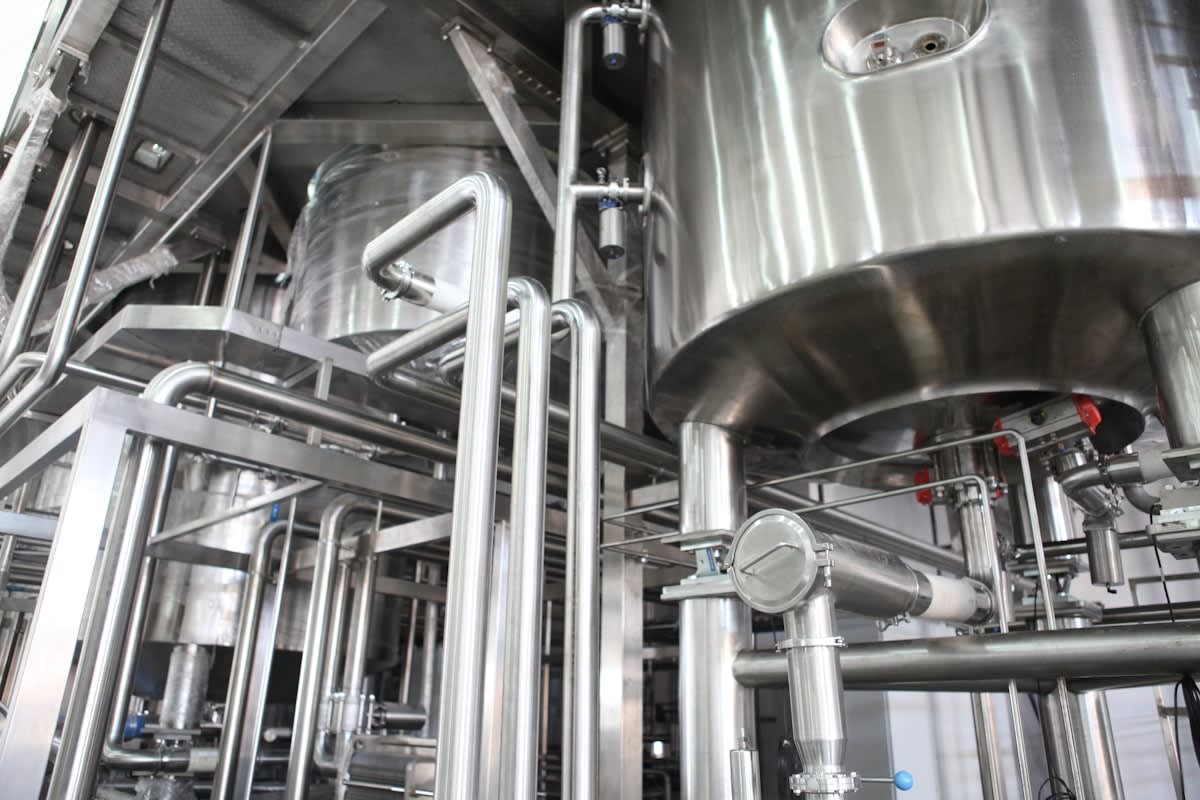
Step inside a production facility, and the glossy investor decks vanish. On the ground, the debate isn't about 'saving the planet'; it's about mass transfer coefficients. Engineers argue late into the night about the precise agitation speeds required to keep CO2 dissolved in the broth without shearing the microbes to death. It's a gritty, industrial struggle of steel, sensors, and sterilization cycles. The real friction isn't the biology—the microbes know how to eat gas—it's the plumbing. Scaling a 50-liter prototype to a 50,000-liter tank introduces chaotic fluid dynamics that can crash a whole batch in minutes.
Practitioners in the field are currently obsessed with 'energy-cost parity.' While the land use is negligible, the electricity requirement for hydrogen production is massive. The industry is currently split between those who believe in centralized 'mega-factories' powered by dedicated nuclear or solar arrays, and those pushing for decentralized, modular units that can be plugged into existing industrial waste-gas streams. This is the frontline of the battle: not the taste of the protein, but the kilowatt-hour per gram of output.

Comparative Resource Efficiency
To understand the disruption, one must look at the resource delta. Traditional livestock farming is an exercise in inefficiency, where the vast majority of caloric input is wasted in the animal's metabolic processes. Even soy farming, the gold standard for plant protein, requires immense tracts of land and water. Gas fermentation flips the script. By removing the plant and the animal entirely, the path from carbon to calorie is direct.
| Protein Source | Land Use (m2/kg) | Water Use (L/kg) | Production Time |
|---|---|---|---|
| Beef (Traditional) | 150 - 250 | 15,000 | 18-24 Months |
| Soy (Plant-based) | 2 - 10 | 2,000 | 4-6 Months |
| Air-Protein (Gas Ferm) | < 0.1 | < 100 | Days/Weeks |
The data suggests a future where the 'cost' of protein is no longer tied to the price of corn or the availability of pasture. Instead, it becomes a derivative of energy prices. As the cost of renewables continues to plummet, the economic viability of air-protein scales linearly. We are moving toward a world where calories are a manufactured commodity rather than a harvested one (Source: World Economic Forum, 2024).
The Road to Integration
Will this end traditional farming? Not overnight, and perhaps not entirely. The cultural and sensory value of 'terroir'—the taste of a place—cannot be replicated in a stainless steel tank. However, for the bulk of the world's protein needs—the powders, the fillers, the livestock feed—the incentive to shift is overwhelming. The integration will likely happen in the B2B sector first, where food manufacturers swap soy isolate for air-protein isolate to hit ESG targets and secure their supply chains.
- Reduction of deforestation pressure in the Amazon and Southeast Asia.
- Stabilization of global food prices by removing weather-dependency.
- Conversion of industrial CO2 waste streams into high-value nutritional assets.
- Creation of a 'circular' food economy where emissions feed the population.
The final hurdle is regulatory. Agencies like the EFSA in Europe and the FDA in the US are still catching up to the concept of 'food from air.' The classification of these proteins as 'Novel Foods' creates a bureaucratic bottleneck that slows deployment. But the momentum is too great to ignore. When the choice is between a fragile, land-dependent system and a resilient, energy-driven one, the market will always choose resilience.
Fact-Check & Accuracy Note
Key claims regarding land and water use are based on comparative life-cycle assessments (LCAs) typically cited by the Good Food Institute and the World Economic Forum (2023-2024). While the technical feasibility of gas fermentation is proven, the 'energy-cost parity' remains a point of active debate among industrial engineers, as the efficiency of green hydrogen production is the primary limiting factor for global scaling.