
The era of cheap chocolate is over. For decades, the global appetite for cocoa was sustained by a fragile, outdated infrastructure that prioritized volume over viability, effectively subsidizing Western confectionery through the systemic underpayment of West African farmers. We have treated cocoa as an infinite resource, ignoring the biological and economic limits of the land. Now, the bill has come due. But is this truly a crisis, or is it a long-overdue market correction?
To understand the current volatility, one must look past the headlines of crop failure. The real story lies in a systemic failure of geographic concentration. Approximately 70% of the world's cocoa originates from a narrow strip of West Africa, primarily Ivory Coast and Ghana. When a single region holds such a disproportionate share of the global supply, any localized shock—be it a viral outbreak or a shifting rain pattern—becomes a global economic event. This is not a failure of farming; it is a failure of strategic diversification.
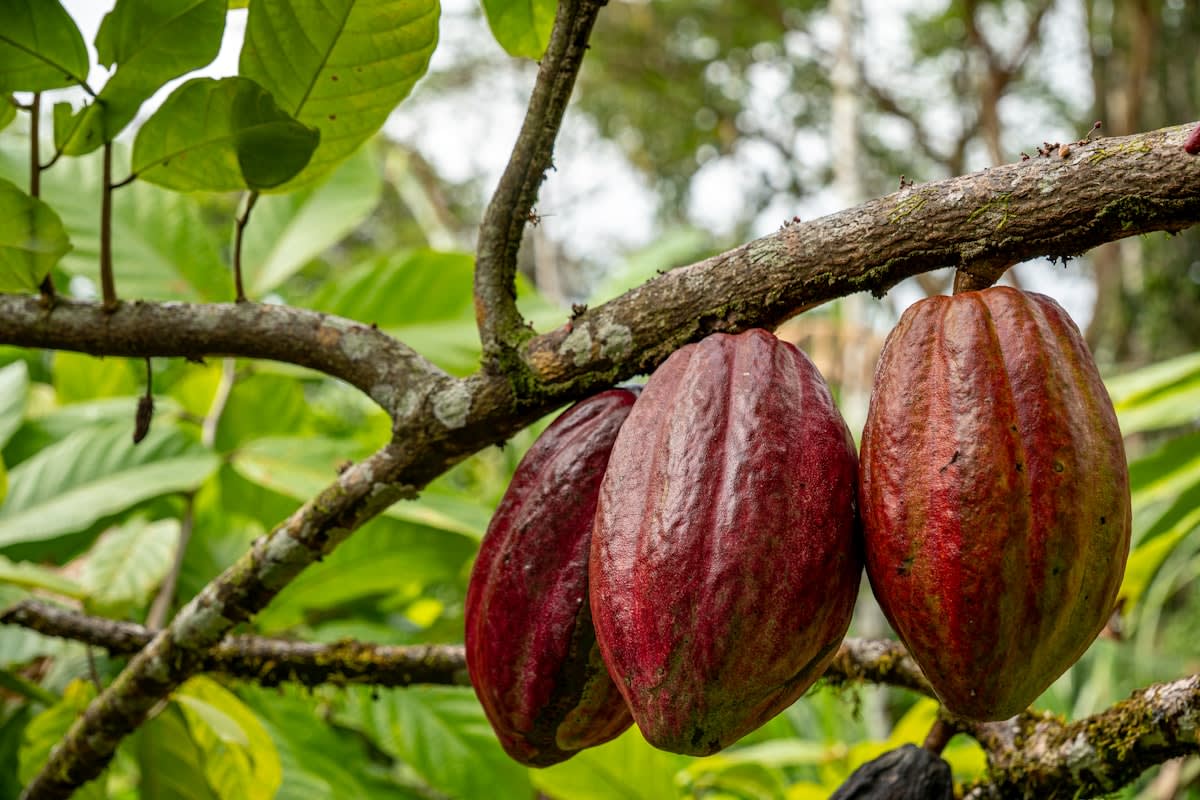
The Biology of Fragility
Why did it take a price explosion for the world to notice the soil was dying? The reliance on monoculture farming has stripped the earth of essential nutrients, leaving trees vulnerable to pests and diseases like the swollen shoot virus. In Ghana and Ivory Coast, the lack of crop rotation has created a biological vacuum. Farmers, trapped in a cycle of poverty, cannot afford the transition to agroforestry. They are forced to choose between immediate survival and long-term soil health, and survival always wins.
Climate change acts as a force multiplier here. It does not just bring droughts; it brings unpredictability. The Harmattan winds are shifting, and rainfall patterns that once dictated the harvest are now erratic. This instability creates a feedback loop: lower yields lead to lower income, which prevents investment in resilient farming techniques, which further lowers yields. We are witnessing the collapse of a biological system that was pushed far beyond its natural capacity.
"The market is finally pricing in the cost of ecological neglect. We aren't seeing a shortage of cocoa; we are seeing the end of subsidized environmental destruction."— Strategic Analyst, Global Agri-Foods
This biological fragility is now colliding with new regulatory frameworks. The European Union Deforestation Regulation (EUDR) is a prime example. By demanding proof that cocoa is not sourced from deforested land, the EU is effectively forcing a transparency revolution. While some argue this adds undue burden to smallholders, it actually provides the necessary leverage to move away from the slash-and-burn methods that have dominated the industry for half a century.
The Traceability Pivot
The shift toward EUDR compliance is not just about saving trees; it is about creating a traceable, digital ledger for every bean. This transparency is the first step toward a fair-trade model that actually works.
As we move from biological failure to economic reality, the focus shifts to the pricing mechanism. For years, the 'farm-gate price' remained stagnant while retail prices for premium chocolate soared. This decoupling created a perverse incentive: farmers had no reason to invest in their land because the rewards were captured entirely by mid-stream processors and downstream brands.
The Great Decoupling: Economics of the Bean
The recent surge in cocoa futures—with prices hitting historic peaks above $10,000 per metric ton—is a violent awakening. This isn't just market speculation; it is a desperate attempt by the market to find a new equilibrium. When the cost of production exceeds the incentive to plant, farmers switch to other crops like rubber or palm oil. This shift is permanent. Once a farmer clears a cocoa grove to plant something more profitable, that supply is gone for a decade.
| Feature | The Legacy Model | The Resilient Model |
|---|---|---|
| Sourcing Strategy | Concentrated (West Africa) | Diversified (Global South) |
| Pricing Logic | Commodity-driven / Low Floor | Value-based / Living Income |
| Ecological Approach | Monoculture / Deforestation | Agroforestry / Regenerative |
| Supply Chain | Opaque / Multi-layered | Transparent / Direct-to-Farm |
Can the industry survive this transition? Yes, but not by trying to return to the 2010s. The opportunity lies in value-addition. For too long, West African nations have exported raw beans and imported finished chocolate. By shifting the processing—the roasting, grinding, and molding—to the origin countries, these nations can capture a larger share of the value chain, providing the capital needed to modernize agriculture.
We must also look toward Latin America and Southeast Asia. Ecuador and Brazil are expanding their footprints, utilizing more sustainable farming methods from the outset. These regions are not just filling a gap; they are redefining the standard for what high-quality, sustainable cocoa looks like. The center of gravity for cocoa production is slowly shifting away from the West African bottleneck.

The Synthetic Frontier
While we rebuild the fields, the laboratory is offering a parallel path. Cellular agriculture is no longer a sci-fi concept. Companies are now producing cocoa butter and flavor compounds through precision fermentation. By using yeast or algae to mimic the molecular structure of cocoa, we can decouple the 'experience' of chocolate from the 'extraction' of the bean.
Is this a replacement? Hardly. But it is a vital hedge. By integrating synthetic fats and flavors into mass-market confectionery, we reduce the pressure on natural forests. This allows the remaining traditional cocoa to move into a 'luxury' tier, where consumers pay a premium for the terroir and the ethical story of the farm. We are moving toward a bifurcated market: synthetic for volume, organic for value.
This evolution requires a mindset shift from the consumer. The expectation of a $1 chocolate bar is a relic of an era of ecological exploitation. Accepting higher prices is not just a financial burden; it is an act of participation in a sustainable food system. If we demand the old prices, we guarantee the total collapse of the supply.
Ultimately, the 'Chocolate Cliff' is a mirror. It reflects the broader fragility of our global food systems. Whether it is coffee, cocoa, or palm oil, the pattern is the same: over-reliance on a few regions, underpayment of laborers, and a disregard for soil health. The cocoa crisis is simply the first to hit the breaking point because of its extreme biological sensitivity.
The path forward is not found in searching for a 'silver bullet' seed or a new fertilizer. It is found in systemic resilience. This means diversifying the genetic pool of cocoa trees, diversifying the geography of production, and most importantly, diversifying the economic benefits. When the farmer earns more than the bare minimum, the land recovers. When the land recovers, the supply stabilizes.
We are standing at the edge of a new era for the world's favorite treat. The transition will be volatile, and the prices will remain high for the foreseeable future. But on the other side of this correction is a chocolate industry that is ecologically sound and economically just. That is a future worth paying for.