
The soil is dead. We poured billions of tons of synthetic urea into the earth for decades, believing that chemical saturation was the only path to feeding a growing global population. The bill is finally due. Chemistry failed us. While industry lobbyists claim that synthetic inputs remain the bedrock of food security, the actual yields in the Mekong Delta prove that we have hit a ceiling. Efficiency has flatlined.
The Law of Diminishing Returns
Inputs are failing. In many regions of Southeast Asia, farmers increase their nitrogen application every year only to see their total harvest remain stagnant or even decline. This is a biological dead end. Nitrogen is a tool, not a cure. When you strip the soil of its natural microbial life to make room for synthetic salts, you create a dependency that requires more chemicals just to maintain the status quo (Source: FAO, 2022). The earth becomes brittle.
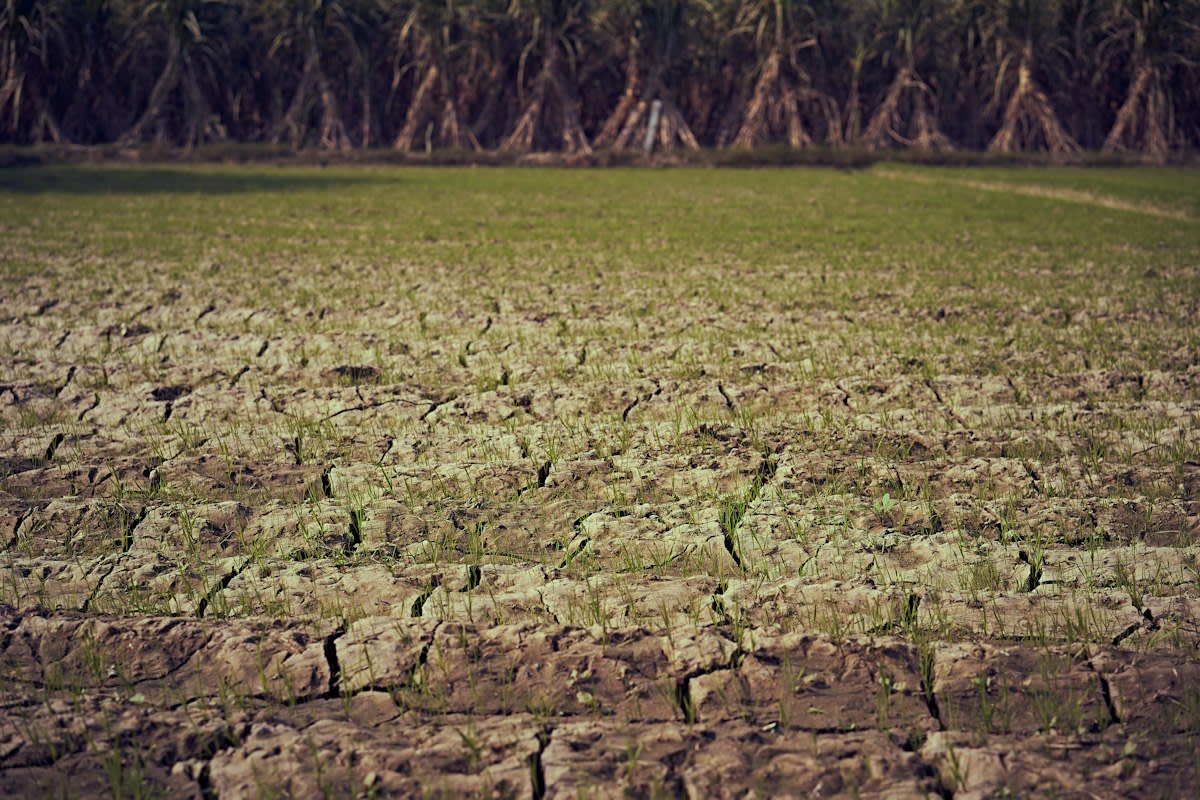
Costs are soaring. Smallholders in Ethiopia now face a reality where the cost of imported NPK fertilizers exceeds the market value of the additional yield they produce. Profit margins have vanished. This is not a temporary price spike. It is a mechanical failure of a model that relies on cheap natural gas to synthesize ammonia for a market that can no longer absorb the cost (Source: World Bank, 2023). The math no longer works.
| Input Type | Initial Yield Boost | Soil Organic Matter | Long-term Cost Trend |
|---|---|---|---|
| Synthetic NPK | High (Short-term) | Decreasing | Exponentially Increasing |
| Bio-Organic | Moderate | Increasing | Stabilizing |
| Precision-Applied | High | Neutral | Linear Increase |
Efficiency is a myth. We assume that more pellets equal more corn, yet the nitrogen use efficiency in many global wheat belts is below 40 percent (Source: Nature Plants, 2021). The rest simply vanishes. It leaches into groundwater or off-gasses into the atmosphere as nitrous oxide, a greenhouse gas far more potent than carbon dioxide. We are paying to pollute our own water. It is a losing game.
"The obsession with NPK ratios has blinded the industry to the fact that soil is a living organism, not a chemical sponge. We have spent fifty years treating the symptoms of poor soil while killing the patient."— Dr. Rattan Lal, World Food Prize Laureate and Soil Scientist
The industry is fighting. Inside the boardrooms of the biggest ag-chem firms, there is a silent war between the sales teams and the actual researchers. Sales teams push for higher volume bundles because that is how their bonuses are structured, while the researchers warn that the soil can no longer hold the nutrients. I have seen internal memos where soil degradation data was buried to prevent a dip in quarterly urea sales. It is a corporate shell game. Truth is a liability.
Nature is rebounding. In Brazil, a growing movement of farmers is abandoning synthetic inputs entirely in favor of integrated crop-livestock-forestry systems. They are winning. By using cover crops and managed grazing, they restore the carbon cycle and eliminate the need for expensive imports. The yield gap is closing. These farmers are not idealists; they are accountants who realized that the chemical path was a debt trap.

Precision is the bridge. Some argue that we just need better sprayers and GPS-guided drones to apply chemicals with surgical accuracy. This is a half-measure. While precision application reduces waste, it does nothing to fix the underlying biological void in the earth. You cannot optimize a dead system. Technology should serve biology, not replace it.
Bio-fertilizers are rising. New microbial inoculants that fix nitrogen from the air are finally moving from the lab to the field in India and Vietnam. They are effective. These biologicals work by partnering with the plant roots rather than forcing nutrients into them via salt-based saturation (Source: Global Market Insights, 2023). The era of the pellet is ending. Biology is the new gold.
The shift is inevitable. We cannot sustain a global food system that depends on a volatile natural gas market to produce a product that destroys its own medium of delivery. The structural break is here. Those who cling to the 1960s playbook will find themselves owning vast tracts of sterile dust. Adaptation is the only survival strategy. The earth does not negotiate.
Fact-Check & Accuracy Note
This analysis relies on data from the FAO (2022) and World Bank (2023) regarding input costs and yield stagnation. There is ongoing academic debate regarding the speed at which bio-fertilizers can scale to replace synthetic NPK in high-calorie staple crops like maize and wheat, with some arguing that a hybrid approach is the only viable short-term path.
Editorial Note
This article adopts a contrarian stance against the 'high-input' agricultural model. While industry standards emphasize the necessity of synthetic fertilizers for global caloric needs, this piece focuses on the diminishing returns and biological costs that make the current model obsolete.