The Urban Agrarian Shift
The modern grocery store is a monument to inefficiency. We accept as normal the fact that a head of lettuce travels an average of 1,500 to 2,000 miles before it hits our plates, losing a significant portion of its volatile nutrients every hour it spends in a refrigerated truck. Why do we outsource our basic survival to a fragile, globalized logistics chain? The goal of the hyper-local harvest isn't to achieve total off-grid autonomy—which is a fantasy in a 600-square-foot apartment—but to seize control of the most nutrient-dense portion of our diet. By shifting from a consumer to a producer of high-value crops, you eliminate the transit gap and ensure your calories are packed with peak bioavailable vitamins.
Building a food system in an urban environment requires a fundamental shift in perspective. You are no longer a gardener; you are a biological systems engineer. In a city like Tokyo or New York, space is your most expensive resource, and light is your most scarce. To succeed, you must stop thinking in terms of pots and soil and start thinking in terms of verticality and light spectra. The objective is to maximize the output of nutrients per square centimeter. This means prioritizing crops that offer the highest nutritional return on investment, such as microgreens and sprouts, rather than attempting to grow low-density crops like corn or wheat in a living room.
The Nutritive Edge
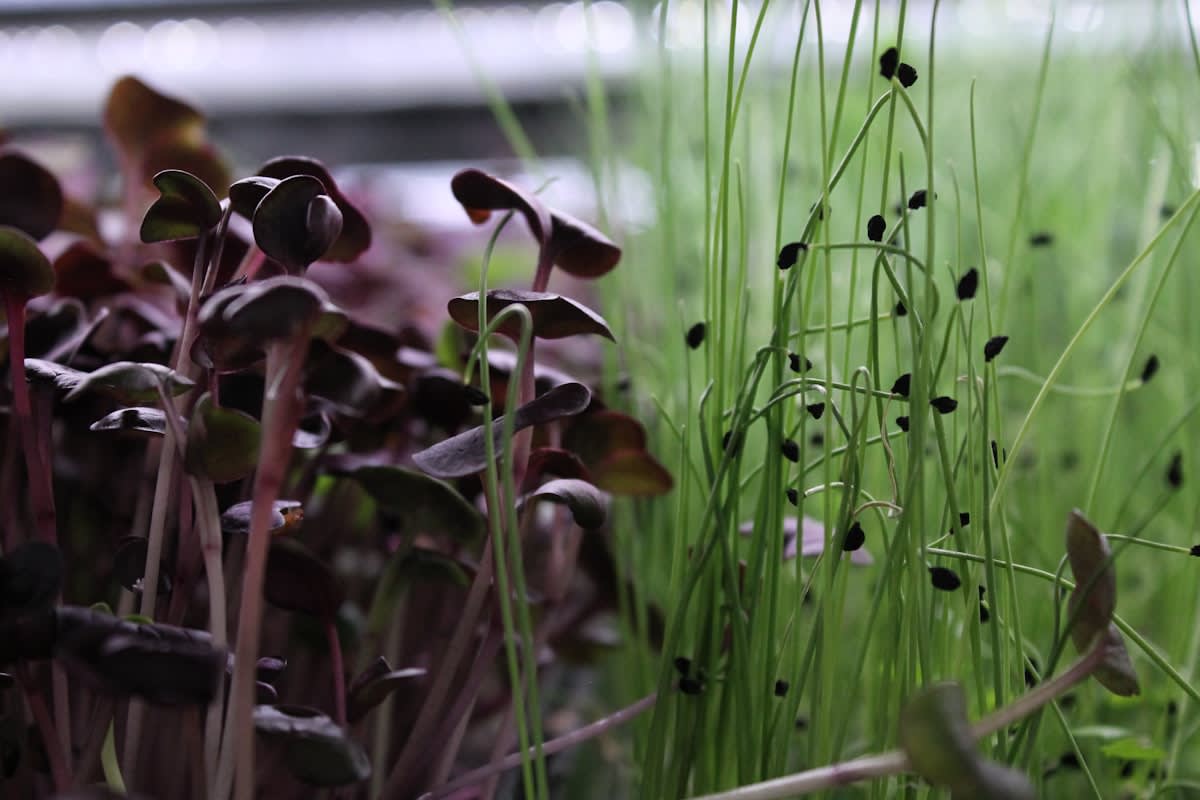
Microgreens are the ultimate urban cheat code. Research indicates these young seedlings can contain 4 to 40 times the nutrient density of their mature counterparts. You get the peak biological energy of the plant in a fraction of the space and time.
Prerequisites: Your Apartment’s Biological Blueprint
Before you buy a single seed, you must audit your environment. Most urban dwellers fail because they assume a south-facing window is sufficient. It isn't. Windows filter out critical wavelengths of light and rarely provide the Photosynthetically Active Radiation (PAR) required for anything beyond basic survival. You need to map your apartment's light zones. Where are the dead zones? Where is the heat buildup? Understanding the thermal dynamics of your space prevents the common mistake of placing a high-intensity LED array right next to a drafty window, which shocks the plants and stunts growth.
- Full-spectrum LED grow lights (minimum 20-30 watts per square foot for leafy greens)
- Digital pH meter and EC (Electrical Conductivity) meter for nutrient monitoring
- Growing medium: Coco coir, rockwool, or high-quality organic potting mix
- Aeration system: Small oscillating fans to prevent stagnant air and mold
- Watering system: Distilled or filtered water to avoid chlorine buildup
The Implementation Blueprint
- Audit and optimize your light spectra for the specific growth stage.
- Select a delivery system based on your time availability and space.
- Curate a seed library focused on high-nutrient, fast-turnaround crops.
- Establish a precise nutrient dosing schedule using N-P-K ratios.
- Implement a staggered harvest cycle to ensure a continuous food supply.
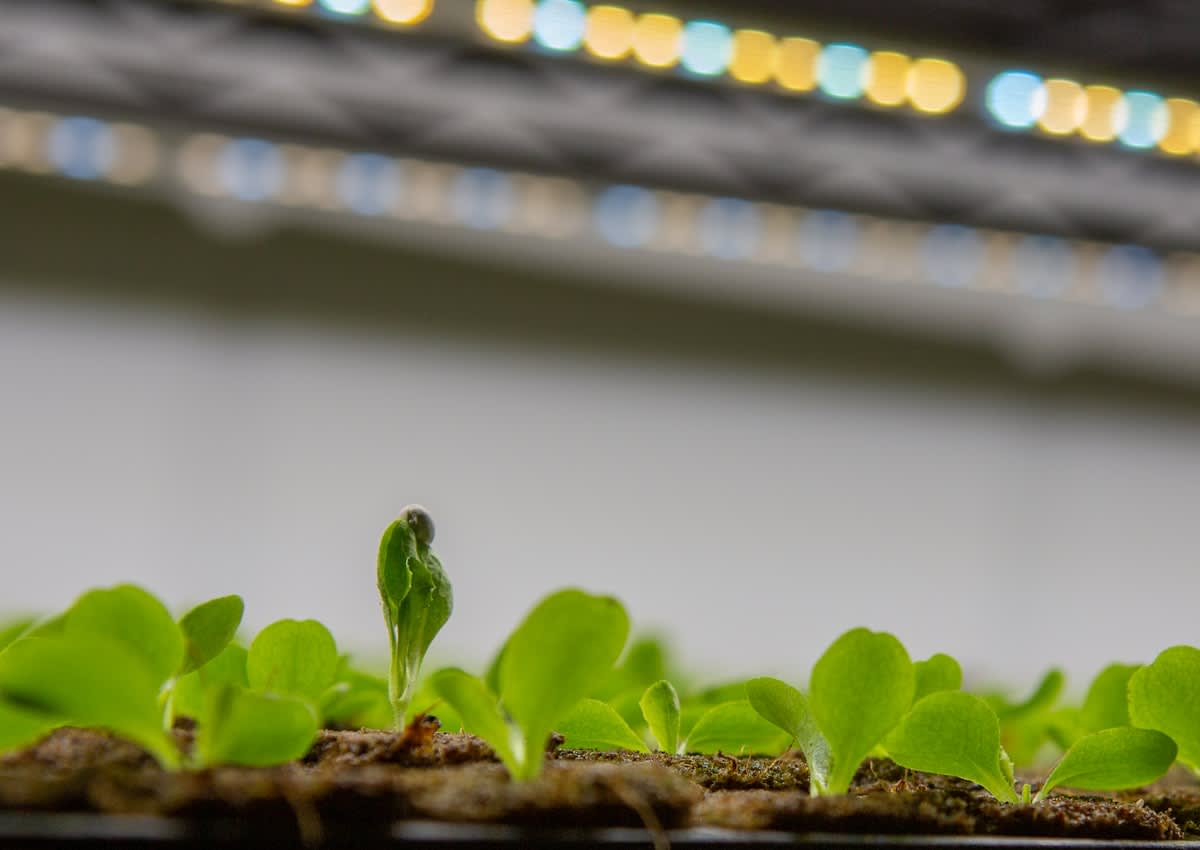
Step one is about light, not just brightness. Plants require blue light for vegetative growth (leaves) and red light for flowering and fruiting. If you only use standard white LEDs, you are leaving yield on the table. Invest in full-spectrum panels that mimic the solar curve. In cities like Singapore, where the government pushes the 30-by-30 goal (producing 30% of nutritional needs locally by 2030), the use of tailored light recipes is standard. You should aim for a 14-16 hour light cycle for greens, ensuring the plants never enter a dormant state due to the lack of natural winter/summer cues in an indoor setting.
Choosing your delivery system is where most beginners overcomplicate things. Soil is forgiving but bulky and prone to pests. Hydroponics—growing in water—is faster and cleaner, often using 90% less water than traditional farming. For the urban apartment, a Deep Water Culture (DWC) system or a Nutrient Film Technique (NFT) setup is ideal. These systems allow you to control every single variable, from the oxygen levels in the root zone to the exact parts-per-million of nitrogen available to the plant. This precision is what transforms a hobby into a food system.
| System | Water Efficiency | Space Requirement | Complexity | Growth Rate |
|---|---|---|---|---|
| Organic Soil | Low | High | Low | Standard |
| Hydroponics | High | Low | Medium | Fast |
| Aeroponics | Very High | Very Low | High | Very Fast |
Your seed selection must be ruthless. Do not waste space on crops with low nutrient density or long growth cycles. Focus on 'cut-and-come-again' varieties of kale, arugula, and bok choy. These allow you to harvest the outer leaves while the center continues to grow, providing a perpetual harvest from a single plant. For those with slightly more room, dwarf varieties of peppers and cherry tomatoes can be integrated, but these require higher light intensity and more complex nutrient profiles (higher phosphorus and potassium) to produce actual fruit.
Nutrient management is the heartbeat of the system. You cannot rely on the 'luck' of soil. You must understand the N-P-K ratio: Nitrogen for leaf growth, Phosphorus for root and flower development, and Potassium for overall cellular health and disease resistance. In a hydroponic setup, you will use a concentrated solution. The danger here is over-fertilization, which leads to nutrient burn. Use your EC meter to ensure the solution isn't too salty; if the conductivity is too high, the plant cannot absorb water through osmosis, effectively dehydrating the plant in a pool of nutrients.
"The true measure of urban resilience is not how much you can store in a pantry, but how much you can generate in your living room."— Urban Agronomy Collective
Finally, you must implement a staggered harvest. If you plant everything on Monday, you will have a glut of greens for one week and nothing for the next three. Divide your growing area into four quadrants. Plant one quadrant every week. This creates a circular flow of production, ensuring that as one batch of microgreens is hitting its peak nutrient density, the next is just beginning to sprout. This is the difference between a gardening project and a reliable food system.
Common Pitfalls and System Failures
The most common failure in urban farming is the 'Love to Death' syndrome. This manifests as overwatering. In a closed apartment environment, evaporation happens slower than in a field. If the soil or medium remains saturated, you invite Pythium—root rot—which kills the plant from the bottom up. Always check the moisture level with your finger or a sensor before adding water. In hydroponics, this means ensuring your air stones are pumping enough oxygen into the water to prevent anaerobic conditions.
Ventilation is the second most overlooked variable. Plants breathe carbon dioxide and exhale oxygen, but they also transpire water. Without air movement, a humid micro-climate forms around the leaves, creating a playground for powdery mildew and aphids. A simple USB-powered oscillating fan is not a luxury; it is a requirement. It strengthens the stems of the plants by simulating wind (thigmomorphogenesis) and ensures that fresh CO2 is constantly available for photosynthesis.
Lastly, beware of the light-burn trap. Many beginners buy the most powerful LED they can find and place it too close to the canopy. If the tips of your leaves are turning brown and curling, you are scorching the plant. Maintain a distance of at least 6-12 inches, depending on the wattage. The goal is to provide enough energy to drive growth without cooking the cellular structure of the leaf. Balance is the only way to achieve sustainable, high-density yields in a domestic setting.