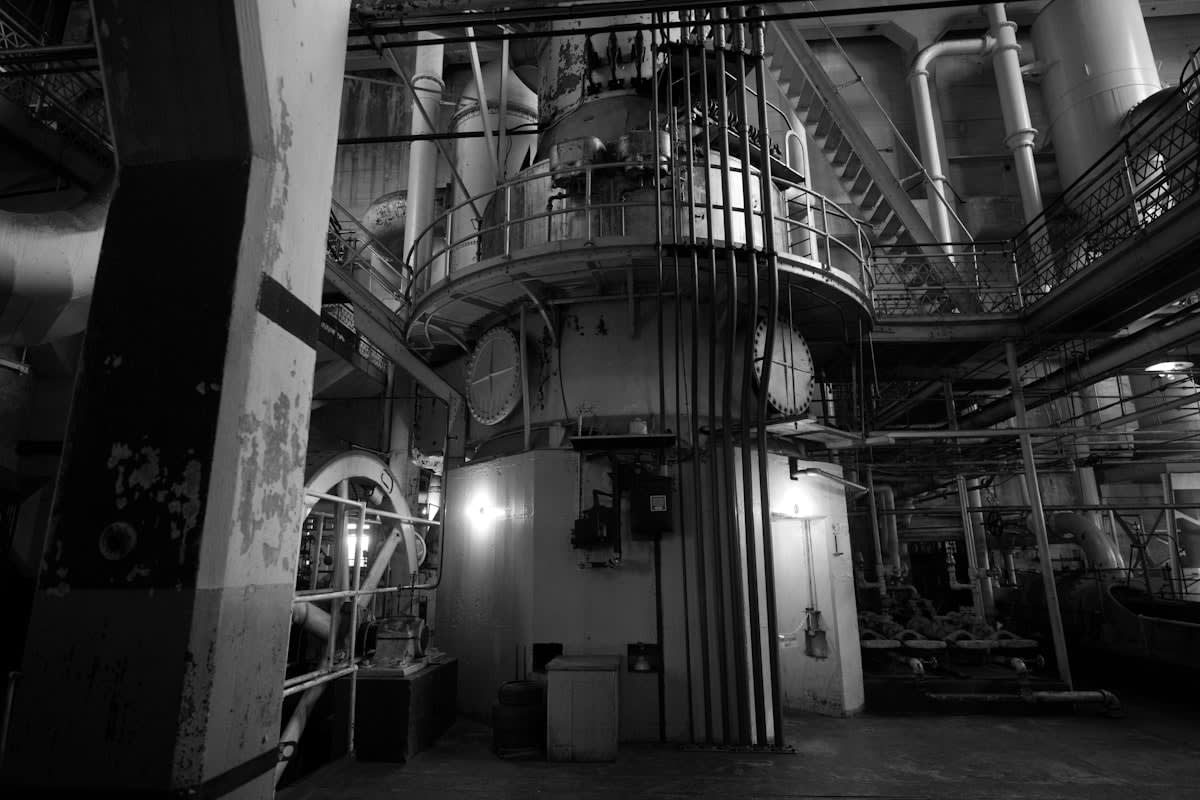
Most large-scale fermentation operations are flying blind. They rely on static, mounted monitoring systems that provide a single-point perspective of a massive, swirling vat of biological activity. This approach ignores the reality of heterogeneous bioreactor platforms, where temperature, pH, and dissolved gases fluctuate wildly depending on the location within the tank. When you rely on a single probe, you are averaging a chaotic environment, which leads to suboptimal yields and unpredictable batch failures. The objective is not just to add more sensors, but to change how sensors exist within the medium.
Prerequisites for Digitization
Before deploying advanced automation, the facility must move beyond legacy PLC (Programmable Logic Controller) silos. Digitization requires an infrastructure capable of handling high-velocity data streams from thousands of points rather than a few dozen. This means establishing a foundation of edge AI and industrial computing that can process data locally to reduce latency. Without this, the 'real-time' promise of digitization becomes a bottleneck of lagging network packets and delayed response times.
- Edge AI hardware for real-time local data processing
- Industrial computing nodes capable of seamless factory connectivity
- Modular hardware architecture to allow scaling without therapy or process redevelopment
- API-ready software platforms for real-time data exchange across robotic and AI systems
- High-bandwidth industrial networking to support sensor-dense environments
Execution Steps for System Integration
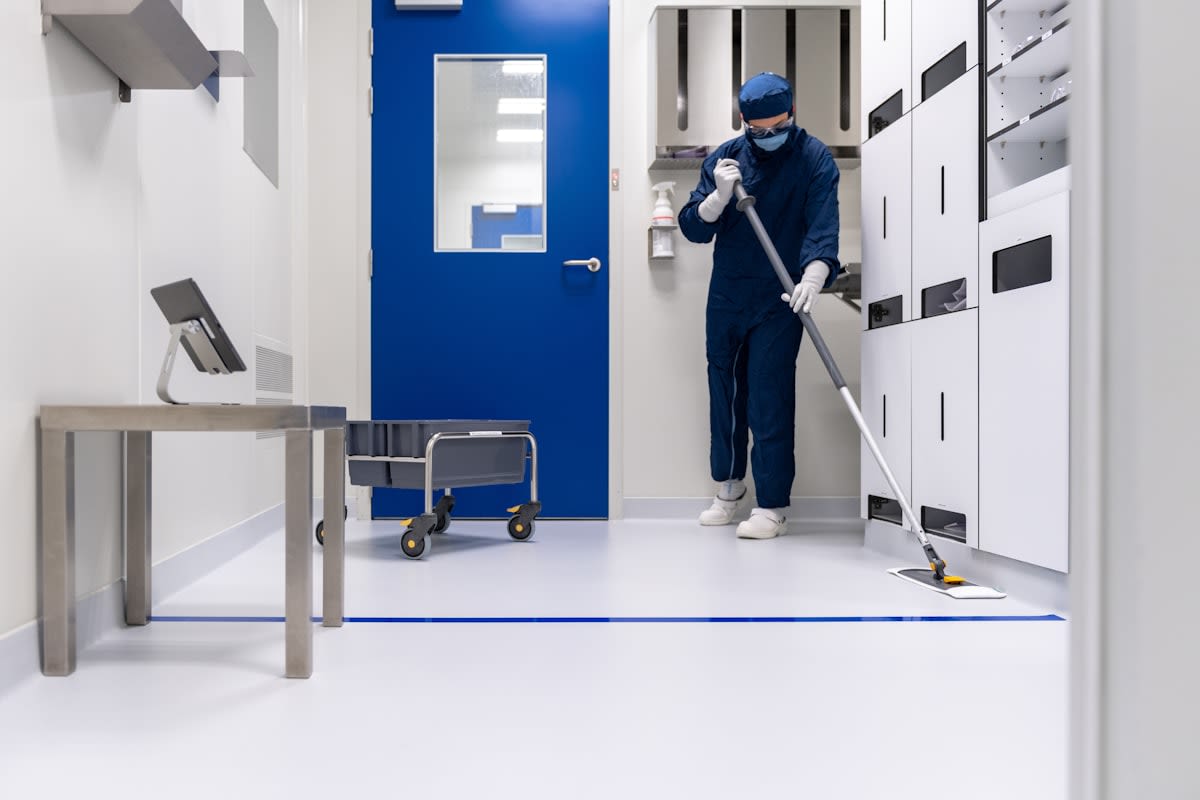
Integration is not a software update; it is a physical and digital overhaul. The process begins with the hardware layer and moves upward toward the enterprise control layer. In regions like Taiwan, the current ecosystem is already shifting toward this model by integrating machine vision and smart connectivity directly into the OEM layer. The goal is to create a responsive environment where the biological state of the fermentation dictates the mechanical response of the system.
- Deploy Edge AI and Industrial Computing: Install high-performance computing nodes at the point of production. As demonstrated by Taiwan Excellence companies in 2026, this enables real-time data processing and machine vision, ensuring that the factory is data-driven rather than schedule-driven.
- Transition to Free-Floating Sensors: Replace or augment static probes with bioelectronic sensor networks. Based on research from Boston University and Capra Biosciences, these sensors should be designed to float freely in the vat. This provides critical spatial information, allowing operators to see exactly where pH or dissolved oxygen levels are dipping in a heterogeneous bioreactor.
- Supercharge Sensors with Biological Components: Integrate microbes, such as bacteria or yeast cells, directly into the sensor design. This allows for the monitoring of biological parameters that electronic sensors alone cannot detect, providing a more nuanced view of the fermentation health.
- Implement Modular Automation Platforms: Integrate platforms like Autolomous' autoloMATE and Cellular Origins' modular architecture. This ensures that as demand grows, capacity can be scaled by adding modules rather than redesigning the entire process, which minimizes scale-up risk.
- Connect Enterprise Analytics to the Control Layer: Solve the 'knowledge gap' by linking global market economics and enterprise analytics directly to the control layer. As noted by Honeywell, this is particularly vital for biofuel refining where feedstocks are inconsistent and require dynamic adjustments in real-time.
Why is the spatial element so critical? In a 100,000-liter tank, the environment at the bottom is not the same as the environment at the top. A static probe tells you the average, but the microbes are experiencing the local. By using free-floating sensors, you can map the 'dead zones' in your reactor. This spatial awareness allows for the precision adjustment of agitation speeds and nutrient feed rates to eliminate these zones and maximize biomass concentration.
"How do you take some analytics and some enterprise knowledge, perhaps even some global market economics, and then make informed decisions all the way back down to the control layer?"— Lewis Sweet, General Manager for Sustainable Fuels and Chemicals at Honeywell Process Automation
This question highlights the final hurdle: the disconnect between the boardroom and the bioreactor. In conventional refining, feedstocks are consistent. In bioprocessing, the 'raw material' is a living organism that reacts to its environment. If the control layer cannot ingest data about feedstock variance and market demand in real-time, the digitization is superficial. The system must be able to pivot its operational parameters based on the specific biological profile of the current batch.
Data Integration Architecture
A successful integration requires a data architecture that safeguards intellectual property while allowing for open exchange between robotic platforms and AI systems. The modular approach used by Cellular Origins allows for the standardization of processes across different scales. This means a process developed in a 10-liter lab reactor can be digitally mirrored in a 10,000-liter production vat without the traditional 'trial and error' scale-up phase.
| Metric | Static Monitoring | Digitized Spatial Monitoring |
|---|---|---|
| Data Perspective | Single-point average | Multi-point spatial map |
| Scale-up Risk | High (Redevelopment required) | Low (Modular mirroring) |
| Sensor Capability | Chemical/Physical only | Bio-supercharged (Metabolic) |
| Response Time | Reactive (Batch end analysis) | Proactive (Real-time Edge AI) |
The shift toward these systems is not merely a technical upgrade but a necessity for survival in high-volume biomanufacturing. When the difference between a successful batch and a total loss is a 0.5 pH deviation in a localized pocket of the tank, the cost of remaining 'analog' becomes prohibitive. The integration of edge AI allows the system to detect these deviations in milliseconds and trigger a corrective action—such as increasing impeller speed—before the biological culture is compromised.
Industry Benchmark
The integration of Autolomous and Cellular Origins platforms proves that end-to-end digitization is possible. By combining a digital platform for data exchange with modular physical architecture, they have reduced the risk of therapy redevelopment during scale-up.
Common Pitfalls
Many firms fail by attempting to overlay new software on top of obsolete hardware. You cannot run an AI-driven, real-time optimization loop on a network that suffers from 500ms of latency. Another common error is ignoring the inconsistency of bio-feedstocks. If your system is tuned for a perfect, laboratory-grade feedstock, it will crash when faced with the variability of industrial-scale organic inputs. The system must be designed for variance, not for perfection.
- Over-reliance on 'average' data from static probes
- Neglecting the 'control layer' connection to enterprise analytics
- Scaling via duplication rather than modular architecture
- Ignoring spatial heterogeneity in large-volume vats
- Implementing AI without the necessary edge computing infrastructure
Ultimately, the transition to digitized bioprocessing is a move toward autonomy. The goal is a system where the bioreactor monitors itself, identifies its own spatial deficiencies, and adjusts its parameters without human intervention. This is the only way to achieve the consistency required for global food and agriculture demands.