Delhi PWD to put 6, Flagstaff Road bungalow to commercial use
Source Entity
Latest News: Today's Latest News Headlines from India & World | Hindustan Times | Hindustan Times
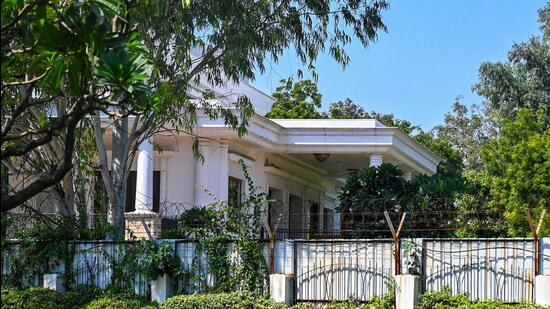
The Delhi government plans to convert the controversial 6, Flagstaff Road bungalow into a commercial luxury hospitality property. Managed by professional firms, the site will also continue to host official government functions and conferences.
Repurposing a Political Symbol: The Commercial Transition of 6, Flagstaff Road
In a significant administrative shift, the Delhi government, through the Public Works Department (PWD), has announced plans to explore the commercial utilization of the bungalow located at 6, Flagstaff Road in Civil Lines. This move, spearheaded by PWD Minister Parvesh Verma, seeks to transform the property into a luxury hospitality venue. The strategy involves a dual-purpose operational model: leasing the premises to established hospitality companies for professional management while simultaneously reserving the space for high-level government functions and official conferences.
The "Sheesh Mahal" Controversy and Political Friction
To understand the gravity of this decision, one must look at the property's recent history. The bungalow served as the official residence of former Delhi Chief Minister Arvind Kejriwal during his leadership. However, it became a flashpoint of intense political conflict between the Aam Aadmi Party (AAP) and the Bharatiya Janata Party (BJP). The BJP coined the term "Sheesh Mahal" (Palace of Mirrors) to describe the residence, alleging that the property had undergone excessively expensive renovations and fittings during Kejriwal's tenure. This narrative of extravagance versus public austerity became a central theme in the political discourse leading up to the 2025 Delhi Assembly elections.
Strategic Shift Under the Current Administration
Following the transition of power to the BJP government last year, the repurposing of 6, Flagstaff Road has evolved from a point of criticism into a policy objective. By seeking a partnership with professional hospitality firms, the current administration aims to move the property away from its identity as a disputed political residence and toward becoming a revenue-generating asset. This approach suggests a desire to monetize state-owned real estate in prime locations like Civil Lines, ensuring that the upkeep of such lavish properties is funded by commercial interests rather than the public exchequer.
Implications for Governance and Public Perception
This move is not merely an administrative change but a calculated political statement. By converting a site associated with the previous administration's perceived extravagance into a commercial hub, the current government effectively "neutralizes" the controversy while demonstrating a pragmatic approach to asset management. The decision to maintain the property's use for government conferences ensures that the state does not entirely relinquish control over a strategic location, balancing commercial profitability with administrative utility.
Future Trends in Urban Asset Management
Looking forward, this development may signal a broader trend in how government-owned residential properties in Delhi are managed. As political transitions occur, the shift toward "hybrid-use" properties—where luxury hospitality meets government utility—could become a blueprint for other controversial or underutilized state assets. This transition highlights a growing intersection between public administration and private sector efficiency in the management of high-value urban real estate.
Conclusion
Ultimately, the plan to commercially utilize 6, Flagstaff Road represents the final chapter of a heated political saga. By transitioning the "Sheesh Mahal" from a symbol of partisan dispute to a professional hospitality venue, the Delhi PWD is attempting to reclaim the narrative of the property. The success of this initiative will depend on the government's ability to secure a reputable hospitality partner while maintaining the property's viability for official state functions.
Verification Required?