
Seed banks are where crop varieties go to wait for a future that may never arrive. Traditional preservation relies on the hope that a dormant seed can simply wake up in a world that has fundamentally changed its chemical and thermal profile. Why do we treat genetic preservation as a library exercise rather than a biological reconstruction? To save dying varieties, we must move from storage to active metabolic mapping, identifying the exact molecular trajectories that lead to plant failure under stress and intervening before the continuum reaches a point of no return.
Prerequisites for Metabolic Reconstruction
Executing a metabolic mapping protocol requires more than just a laboratory; it requires a convergence of germplasm diversity and high-resolution bio-informatics. You cannot map a trajectory without a baseline. This necessitates access to diverse genetic samples from arid or stressed regions to understand the limits of plant endurance. Without these baseline markers, any attempt to 'save' a variety is merely guesswork based on outdated phenotypic observations.
- Diverse germplasm libraries (e.g., the 120 unique arid-region samples recently cataloged by the Belt and Road Joint Laboratory in Shaanxi Province).
- High-throughput transcriptomic profiling tools to identify regulatory programs.
- Mycorrhizal fungi inoculants capable of enhancing nutrient and water uptake, such as those developed by Groundwork BioAg.
- AI-assisted decision-making platforms for precision farmland management.
- Plasma-accessible biomarker panels to monitor systemic plant health in real-time.
The Execution Protocol
The goal is to treat crop decline not as a binary state of 'healthy' or 'dying', but as a continuous molecular trajectory. By applying the logic of data-driven frameworks—similar to those used to reconstruct the molecular continuum of human MASLD progression—we can position a crop variety along a trajectory of decline. This allows us to identify the ordered activation of signaling pathways and cellular remodeling processes that precede total crop failure.
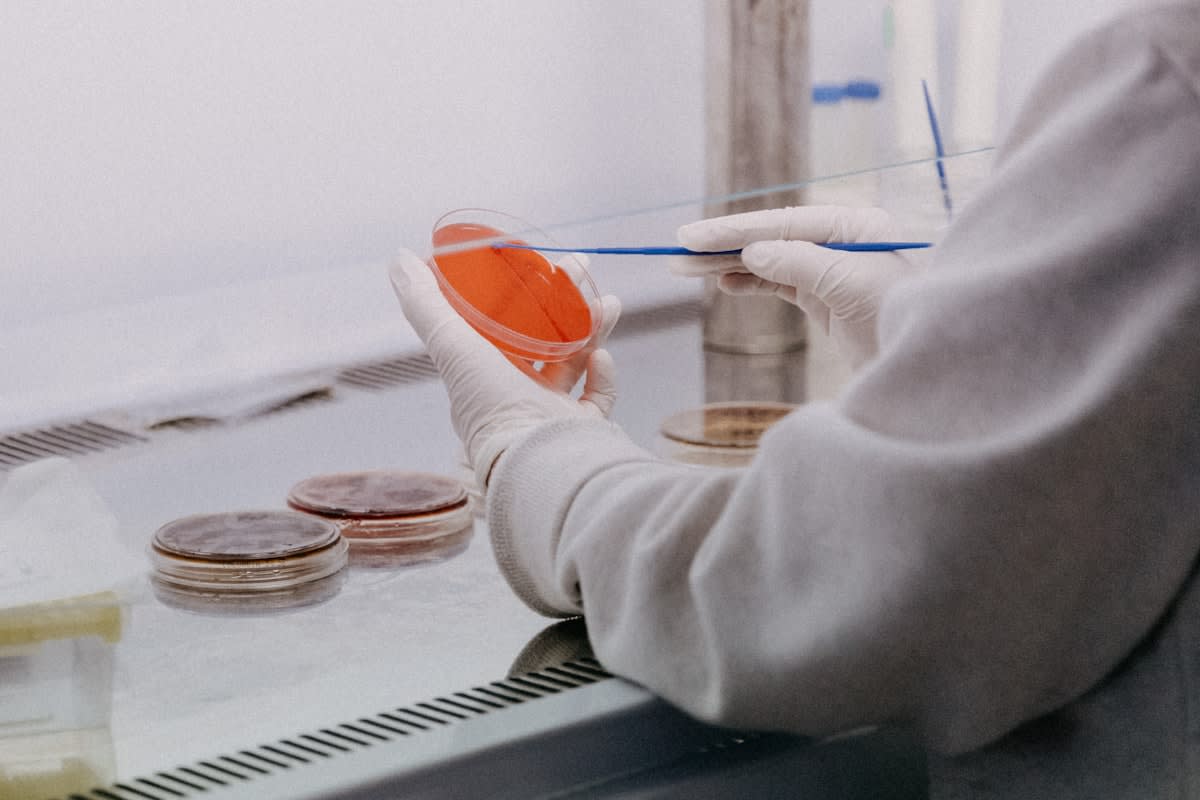
- Establish a Molecular Baseline: Collect cross-sectional transcriptomic profiles from the target crop across varying stress levels. Use these to map the molecular continuum from optimal health to advanced senescence.
- Identify Biomarker Panels: Develop a specific gene panel (analogous to the 57-gene plasma-accessible panels used in medical diagnostics) that predicts advanced fibrosis or metabolic collapse in the plant. This allows for non-invasive stratification of which varieties are closest to the 'extinction' threshold.
- Intervene with Mycorrhizal Symbionts: Deploy fungi-based technology to boost resilience. As demonstrated by the $50 million partnership between Syngenta and Groundwork BioAg, mycorrhizal capabilities improve nutrient uptake and water efficiency, effectively pushing the plant back toward the healthy end of the metabolic trajectory.
- Implement Adaptive Planting Patterns: Shift crop selection based on real-time environmental data. In East Java, for instance, farmers have successfully adapted to low rainfall by shifting from potatoes to cabbage and scallions. Metabolic mapping informs exactly when this shift must occur to avoid total yield loss.
- Validate through Carbon Sequestration: Use soil carbon solutions to create a feedback loop. Improving soil health through mycorrhizal fungi not only saves the crop but generates carbon credits, providing the financial liquidity needed to maintain expensive mapping protocols.
Does the integration of fungi actually alter the genetic trajectory, or does it simply mask the symptoms of a dying variety? The evidence suggests the former. By improving the root-soil interface, we are not just providing a temporary nutrient boost; we are altering the plant's ability to regulate its own metabolic pathways under stress. This transforms the plant from a passive victim of its environment into an active participant in its own survival.
The Symbiotic Edge
The synergy between intelligent breeding and mycorrhizal technology creates a biological safety net. While the genetic mapping tells us where the plant is failing, the fungi provide the physical infrastructure to bridge those gaps.
The transition from lab to field is where most initiatives fail. The data collected in Shaanxi Province regarding arid-region germplasm must be operationalized through precision farmland management. This means using AI-assisted decision-making to apply mycorrhizal treatments only when the metabolic biomarkers indicate a downward trajectory. Blanket application is an inefficient use of resources; targeted intervention is a strategic necessity.
| Intervention Layer | Mechanism | Primary Outcome | Metric of Success |
|---|---|---|---|
| Transcriptomic Mapping | Molecular Continuum Analysis | Early Warning Detection | Biomarker Accuracy |
| Mycorrhizal Inoculation | Fungi-Root Symbiosis | Nutrient/Water Uptake | Yield Resilience % |
| Adaptive Shifting | Phenotypic Rotation | Climate Adaptation | Harvest Volume/kg |
| Carbon Programming | Soil Carbon Sequestration | Financial Sustainability | Credit Revenue ($) |
Consider the economic implications of this approach. The Syngenta-Groundwork deal isn't just about crop yields; it is about the commercial validation of mycorrhizal capabilities. When we can prove that a dying variety can be rescued and made productive again, we transform a liability (a failing crop) into an asset (a resilient, carbon-sequestering variety). This shifts the value proposition of biodiversity from purely ecological to aggressively economic.
Common Pitfalls in Metabolic Implementation
Many practitioners mistake phenotypic observation for metabolic understanding. Seeing a plant wilt is an observation of failure; knowing the regulatory program that caused the wilt is an understanding of the process. If you intervene only after the physical symptoms appear, you have already lost the molecular window of opportunity. The trajectory has progressed too far toward the 'fibrosis' stage of plant decline.
Another frequent error is the neglect of the soil-microbe continuum. Attempting to save a variety through genetic breeding alone, without addressing the mycorrhizal health of the soil, is like trying to run high-end software on broken hardware. The $50 million investment in fungi-based technology highlights a critical realization: the plant is only half of the equation. The other half is the symbiotic network that facilitates its metabolism.
Finally, there is the danger of over-reliance on a single biomarker. Metabolic trajectories are complex and non-linear. A single gene expression may indicate stress, but it does not define the trajectory. This is why a multi-gene panel—similar to the 57-gene approach used in advanced medical stratification—is non-negotiable for accurate prediction and intervention.
"By combining market access with proven mycorrhizal capabilities, we are positioning mycorrhizal fungi as both a valuable agricultural input and a significant pathway for climate mitigation."— Alon Werber, CEO of Groundwork BioAg
Ultimately, the survival of our global food supply depends on our ability to treat biodiversity as a dynamic system. We cannot simply archive the past; we must actively engineer the metabolic future of our crops. By mapping the continuum of decline and intervening with symbiotic technology, we ensure that dying varieties do not just survive, but thrive in a volatile climate.