
The Industrial Illusion of Abundance
We have spent the last seventy years treating the earth as a sterile sponge. The logic was simple: pump in nitrogen, phosphorus, and potassium (NPK), and the plant will grow. It worked. We achieved unprecedented caloric yields that saved billions from starvation. But this victory came with a hidden cost. We traded nutrient density for sheer volume. While our plates are fuller than ever, the biological quality of the food is eroding. Are we actually feeding the world, or are we just filling stomachs with empty calories?
This isn't a localized failure; it is a systemic shift in how we perceive soil. In the industrial mindset, soil is merely a medium to hold a plant upright while we drip-feed it synthetic chemicals. This approach ignores the complex symbiotic relationship between mycorrhizal fungi and root systems. When we bypass these natural conduits with soluble fertilizers, the plant stops 'hunting' for micronutrients. It becomes lazy, relying on the easy NPK stream while ignoring the zinc, magnesium, and selenium that actually drive human health (Source: FAO Soil Portal, 2022).
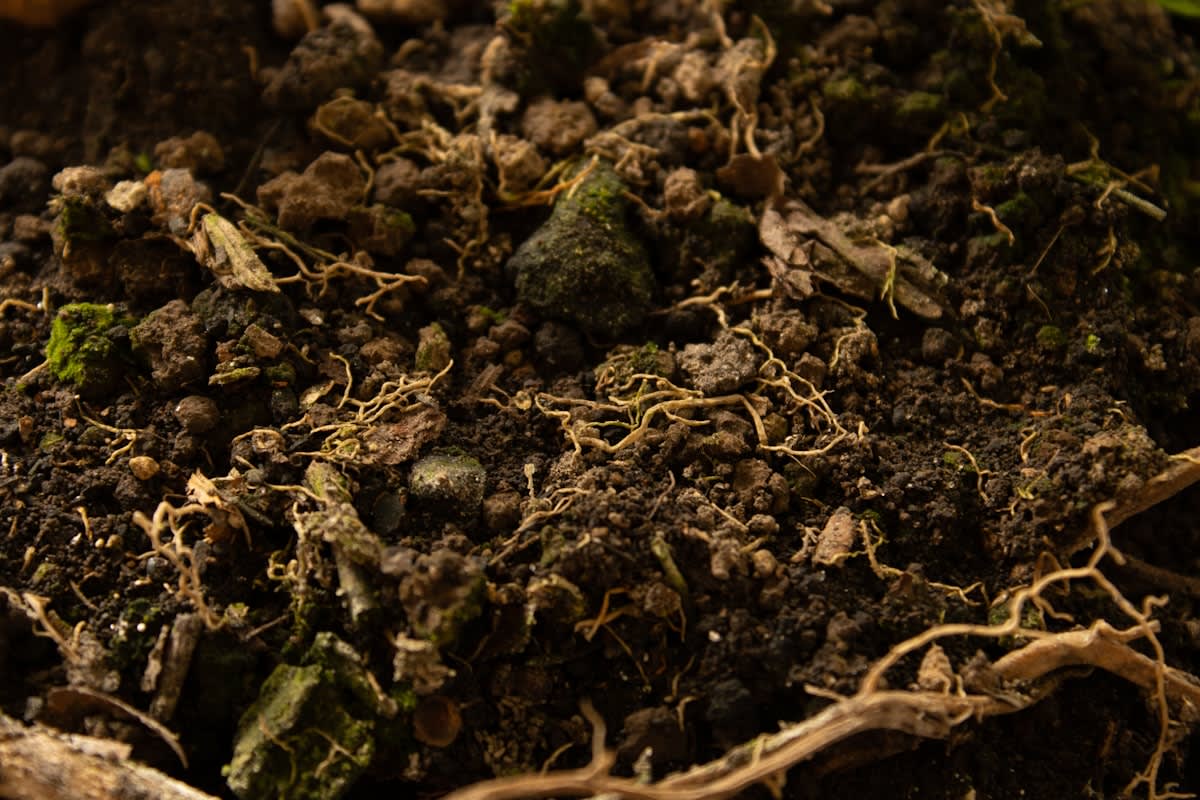
The result is a phenomenon known as the 'Dilution Effect.' As we breed crops for higher yields and faster growth, the plant's biomass increases faster than its ability to absorb minerals from the soil. We are essentially watering down our nutrition. A tomato from 1950 contained significantly higher concentrations of iron and calcium than a modern hybrid grown in a high-input system (Source: Davis et al., Journal of the American College of Nutrition, 2004).
"The obsession with yield-per-acre has blinded us to the more critical metric: nutrient-per-acre. We have optimized for the scale of the harvest, not the quality of the nourishment."— Dr. Rattan Lal, World Food Prize Laureate and Soil Scientist
This shift has created a global divergence in food quality. In the American Midwest, the reliance on monoculture corn and soy has stripped the soil of its microbial diversity. In Brazil's Cerrado, the aggressive application of lime and synthetic phosphorus to tame acidic soils has created high-yield zones that are biologically hollow. Even in India's Punjab region, the Green Revolution's legacy is a soil profile that requires ever-increasing chemical inputs just to maintain stagnant yield levels (Source: World Bank Agriculture Report, 2021).
The Chemistry of the Gap
To understand why this is happening, we have to look at the soil's electrical charge. Most essential micronutrients are cations—positively charged ions. In healthy soil, organic matter acts as a reservoir, holding these ions and releasing them slowly. Synthetic fertilizers, however, often acidify the soil or disrupt this cation exchange capacity. When the soil's 'battery' is dead, the plant cannot access the minerals even if they are technically present in the ground.
| Metric | Conventional Industrial Soil | Regenerative Biological Soil |
|---|---|---|
| Primary Nutrient Driver | Synthetic NPK Salts | Microbial Mineralization |
| Carbon Sequestration | Low/Declining | High/Increasing |
| Mycorrhizal Connectivity | Severely Disrupted | Highly Integrated |
| Mineral Bioavailability | Low (Chemical Lock) | High (Biological Unlock) |
| Resilience to Drought | Low (Poor Water Retention) | High (Organic Sponge) |
This chemical imbalance isn't just a farming problem; it's a public health crisis in slow motion. We see an increase in mineral deficiencies in populations that are technically consuming enough calories. This 'hidden hunger' is a direct reflection of the soil's bankruptcy. If the soil is missing zinc, the crop is missing zinc, and the human eating that crop is missing zinc. It is a linear chain of depletion.
But is the answer simply 'more organic' farming? Not necessarily. The real opportunity lies in a sophisticated hybrid approach that blends geochemistry with microbiology. We need to stop treating soil as a chemistry set and start treating it as a living organ. This means shifting focus from adding nutrients to the plant to fostering the environment that allows the plant to feed itself.
The Practitioner's Friction: Chemists vs. Biologists
On the ground, this debate is visceral. If you spend time in the field, you'll see the tension between the 'chemists'—the traditional agronomists who rely on standard soil tests—and the 'biologists' who look at soil food webs. The chemist sees a nitrogen deficiency and prescribes more urea. The biologist asks why the nitrogen-fixing bacteria have died off in the first place. This friction is where the real innovation is happening. Practitioners are now debating the use of NMR (Nuclear Magnetic Resonance) spectroscopy to map soil health in real-time, moving away from static, once-a-year soil samples that provide a blurred snapshot of a dynamic system.
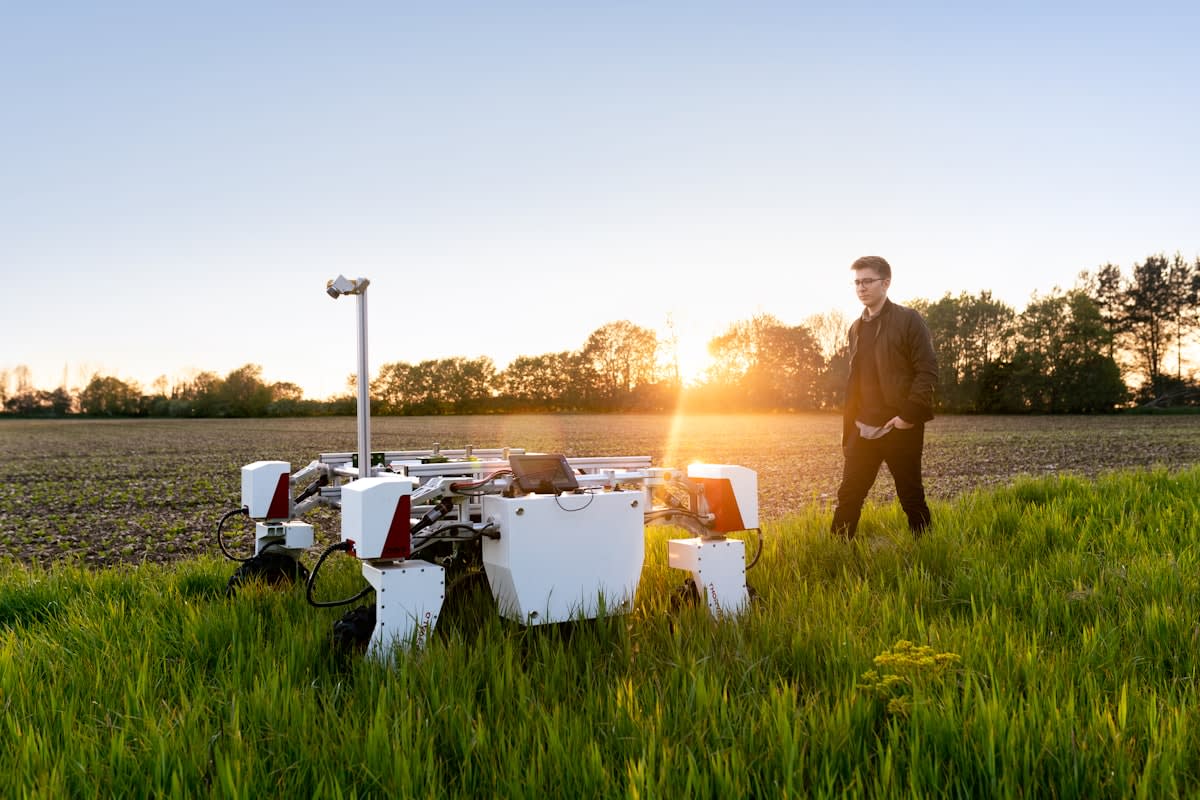
The real-world struggle is economic. For a farmer in the US Midwest or the plains of Ukraine, switching to a biological-first model is a massive risk. It requires a transition period where yields may dip before the soil's natural intelligence recovers. The current insurance and subsidy structures reward volume, not density. Until the market pays a premium for mineral-dense food, the systemic incentive remains skewed toward the chemical shortcut.
Charting the Path to Resilience
The path forward requires a fundamental redesign of our agricultural KPIs. We must move toward 'Nutrient-Density Metrics.' Imagine a world where food is priced not by weight, but by its mineral profile. This would flip the economic incentive, encouraging farmers to invest in cover crops, diverse rotations, and compost teas that rebuild the soil's microbiome.
- Integration of bio-char to increase cation exchange capacity and hold micronutrients.
- Deployment of precision microbial inoculants tailored to specific soil biomes.
- Shift from NPK-centric subsidies to soil-health-based incentives.
- Adoption of diversified crop rotations to break pest cycles and naturally replenish minerals.
The erosion of soil chemistry is a quiet crisis, but the solution is an opportunity for a new era of agriculture. By restoring the biological intelligence of our land, we don't just fix the nutrient gap—we build a food system that is resilient to climate shocks and capable of truly nourishing the human population. The tools exist; the chemistry is understood. What remains is the strategic will to prioritize the quality of life over the quantity of the harvest.
Fact-Check & Accuracy Note
The claims regarding the 'Dilution Effect' and the decline of mineral concentrations in crops are primarily sourced from the longitudinal study by Davis et al. (2004) published in the Journal of the American College of Nutrition. Data on global soil degradation and the role of NPK in disrupting mycorrhizal networks are aligned with reports from the FAO (2022) and the World Bank (2021). The debate between chemical and biological soil management reflects ongoing discourse within the regenerative agriculture movement and is a subject of active research in soil science.