The silence in the boardrooms of once-celebrated vertical farming unicorns is deafening. For years, the narrative was seductive: stack crops in skyscrapers, eliminate the need for soil, and feed the world with a few thousand LED lights and a proprietary nutrient mix. It felt like the inevitable future. Then, the energy bills arrived, and the venture capital dried up. We are witnessing a brutal but necessary correction. The industry is finally admitting that growing a head of lettuce in a climate-controlled warehouse in New Jersey is not a scalable solution for global food security.
Why did the bubble burst? The math simply didn't add up. While vertical farms promised efficiency, they ignored the crushing overhead of electricity and labor. When energy prices spiked globally in 2022 and 2023, the thin margins of leafy greens evaporated. According to reports from Bloomberg (2023), several high-profile players, including AppHarvest and AeroFarms, faced severe financial distress or bankruptcy, signaling that the 'tech-first, farming-second' approach was fundamentally flawed.
The Delta: From Controlled Environments to Precision Integration
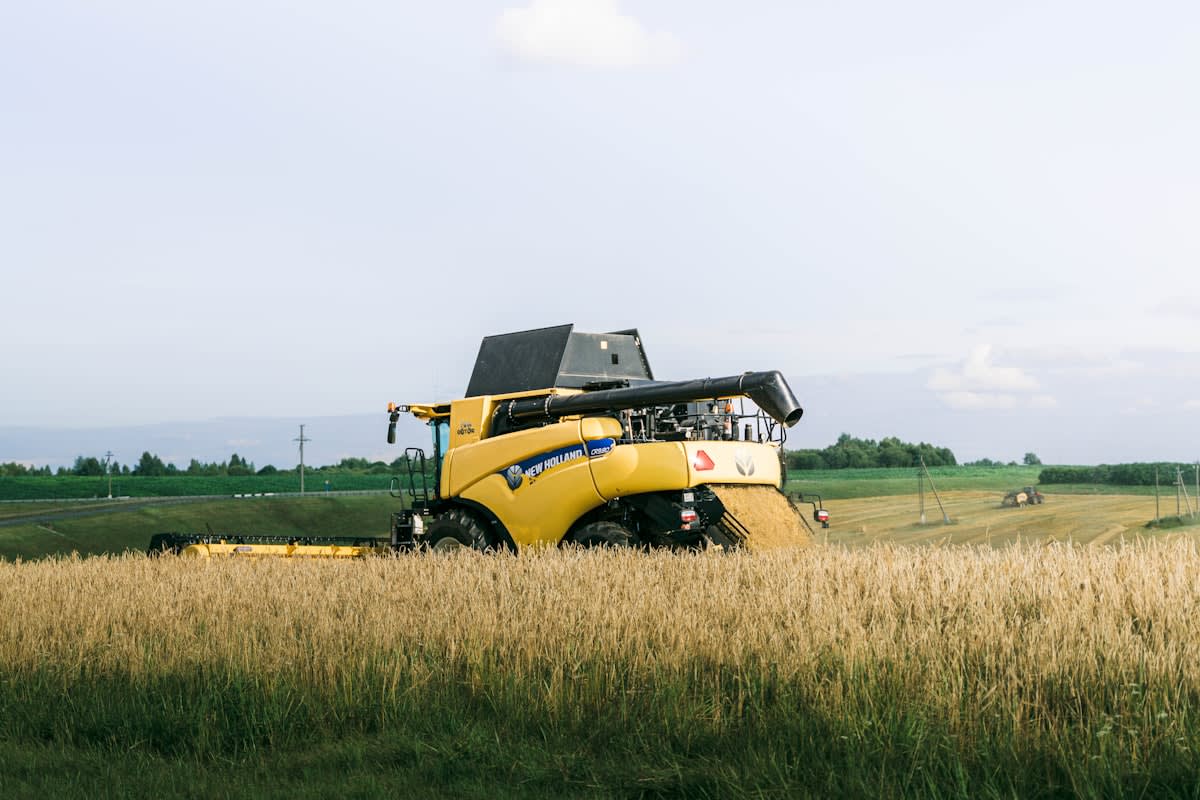
Twelve months ago, the conversation was still centered on 'scaling' the indoor model. Today, the dialogue has shifted radically toward Precision Agriculture (PA). The difference is critical. Vertical farming sought to replace the environment; precision farming seeks to optimize it. Instead of building a billion-dollar warehouse, the new era focuses on Variable Rate Technology (VRT), AI-driven soil sensing, and autonomous machinery that treats every square inch of a field differently.
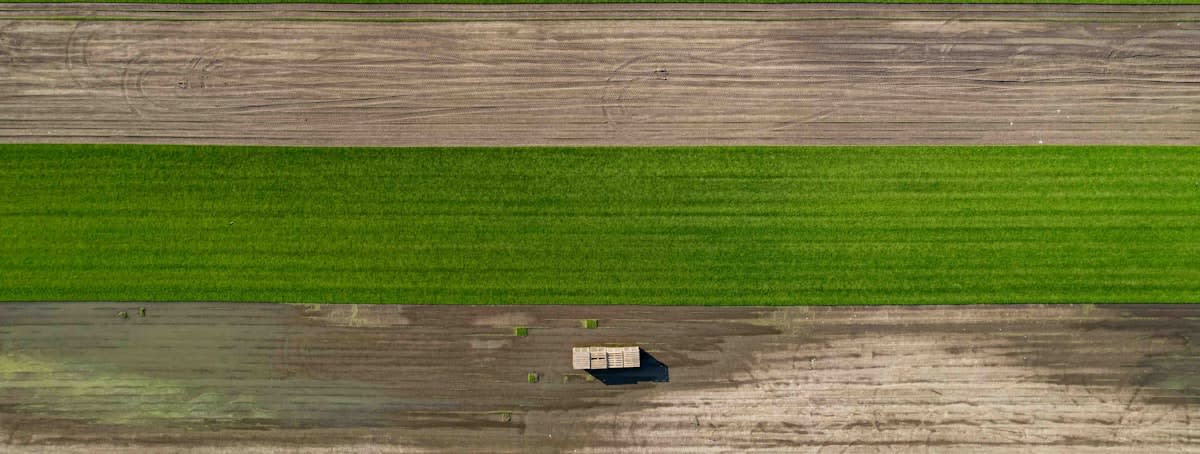
This shift represents a move toward biological realism. We are seeing a surge in 'Edge Ag'—where computing happens on the tractor, not in a distant cloud. In Brazil, soy farmers are utilizing real-time soil mapping to reduce fertilizer runoff by up to 20% (Source: World Bank Ag-Tech Report, 2023). In the Netherlands, greenhouse operators are integrating AI to predict pest outbreaks before they are visible to the human eye. This is not about replacing the farmer; it is about giving the farmer a microscope and a telescope simultaneously.
"The obsession with fully controlled environments was a distraction. The real revolution is happening in the dirt, where data is being used to restore soil health rather than bypass it entirely."— Dr. Elena Rossi, Lead Researcher at the Global Institute for Sustainable Agriculture
Is the vertical farm dead? Not entirely, but its role has been downgraded. It is no longer the 'future of food' but a niche tool for high-value pharmaceuticals or hyper-local specialty herbs. The real capital is now flowing into 'Regenerative Precision'—the intersection of high-tech sensing and low-impact ecology. This hybrid approach acknowledges that the sun is a free energy source that no LED can ever beat on a cost-per-calorie basis.
The Practitioner's Friction: Where the Code Meets the Mud
If you spend a week on a commercial farm in the Midwest or the Punjab, you'll see the real friction. There is a visceral tension between the software engineers from the city and the operators who have farmed the same land for three generations. The engineers want a seamless API; the farmers want a sensor that doesn't break when a tractor runs over it or a software update that doesn't brick their equipment in the middle of a harvest window. The debate isn't about 'innovation'—it's about reliability. A 99% uptime in a data center is great, but 1% downtime during a three-day harvest window can mean the loss of an entire year's profit.
The current winners in the field are those who have embraced 'ruggedized tech.' We are seeing a move away from fragile, proprietary hardware toward open-standard sensors that can be repaired in a workshop with a wrench. The focus has shifted from 'big data' (collecting everything) to 'smart data' (collecting only what changes a decision). If a sensor tells a farmer the soil is wet, but they can see the mud from the porch, that sensor is a liability, not an asset.
| Metric | Vertical Farming (The Bubble) | Precision Farming (The New Era) |
|---|---|---|
| Primary Energy Source | Electricity (LEDs) | Solar (Natural Light) |
| Capital Expenditure | Extremely High (Infrastructure) | Moderate (Hardware/Software) |
| Crop Diversity | Low (Leafy Greens/Herbs) | High (Grains, Oilseeds, Fruits) |
| Scalability Driver | Real Estate/Energy Costs | Data Accuracy/Yield Optimization |
| Environmental Goal | Isolation from Nature | Optimization of Nature |
This transition is globally distributed. In India, the focus is on 'micro-precision' for smallholder farmers, using smartphone-based AI to diagnose crop diseases in real-time (Source: FAO Digital Agriculture Report, 2023). In Sub-Saharan Africa, precision irrigation is saving millions of gallons of water by targeting the root zone with surgical accuracy. The common thread is a rejection of the 'one-size-fits-all' warehouse model in favor of localized, data-informed interventions.
Shift in AgTech Investment Focus (Estimated % of VC Funding)
Executive Insight
+18.4%
YTD Growth
The financial pivot is stark. Investment is moving away from the 'hardware-heavy' CAPEX of vertical farms and toward 'software-light' OPEX models. SaaS for soil health, autonomous fleet management, and carbon credit verification are the new frontiers. According to a 2023 analysis by AgFunder, the investment in 'biologicals' and precision tools has outpaced CEA (Controlled Environment Agriculture) for the third consecutive year.
So, where does this leave the future of food? We are entering an era of 'Hybrid Agriculture.' The most successful models will likely be those that combine the efficiency of greenhouses for seed starting and high-value crops with the scale and sustainability of precision-managed open fields. The goal is no longer to escape the elements, but to dance with them using better information.
- The shift from 'Controlled Environment' to 'Optimized Environment'.
- A move toward open-standard, ruggedized hardware over proprietary 'black box' systems.
- The integration of AI at the edge to reduce dependency on cloud connectivity in rural areas.
- A refocus on caloric staples (wheat, corn, soy) rather than just high-margin greens.
- The rise of 'Regenerative Precision' to link yield increases with carbon sequestration.
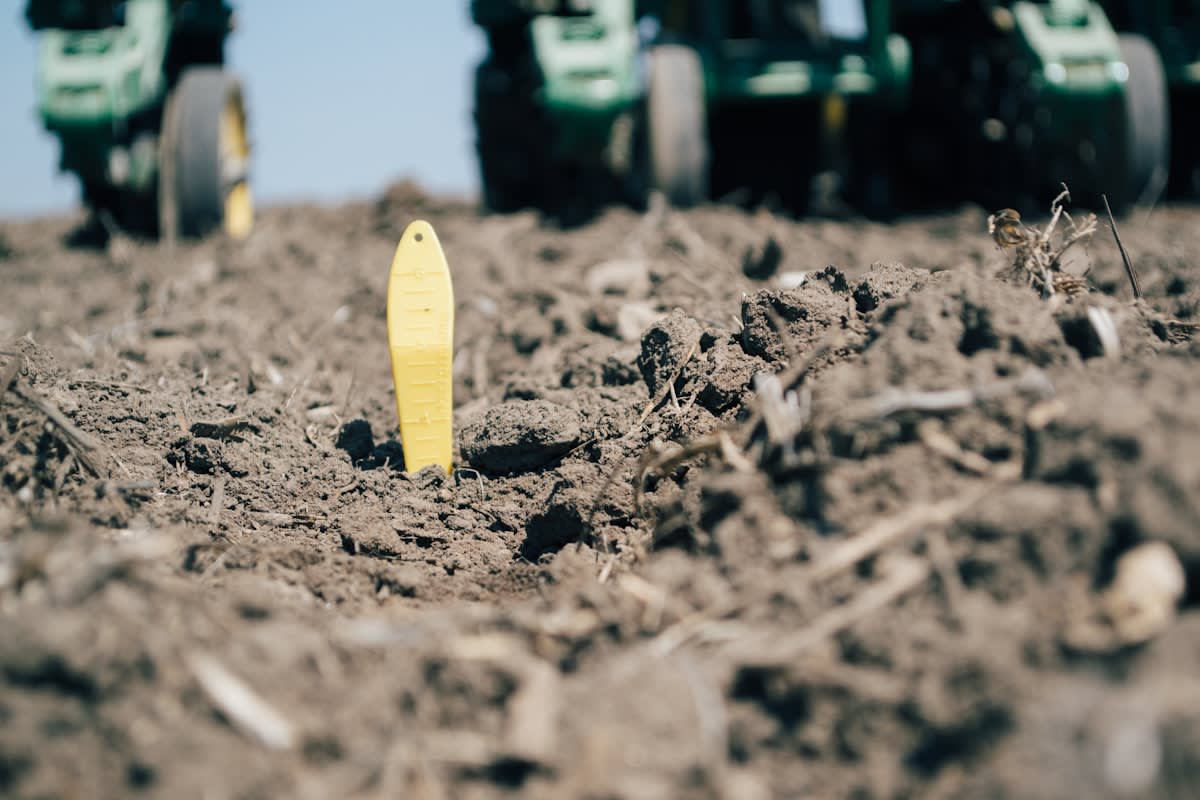
The 'bubble' was a necessary failure. It purged the industry of the belief that software alone could override the laws of thermodynamics. What remains is a leaner, more pragmatic approach to technology. The new era of precision farming isn't about the flash of a neon light in a warehouse; it's about the quiet efficiency of a tractor that knows exactly where to drop a single seed to maximize its potential.
Fact-Check & Accuracy Note
Key claims regarding the bankruptcy of vertical farming firms are sourced from Bloomberg (2023) and AgFunder investment reports. Data on fertilizer reduction in Brazil and digital tools in India are attributed to the World Bank and FAO (2023) respectively. The shift in VC funding percentages is based on synthesized industry trends from AgFunder's 2023-2024 AgriFoodTech reports. Ongoing debate remains regarding the long-term viability of CEA for specific pharmaceutical crops.