
Do we actually trust the sensor more than the dirt? For a decade, the industry has sold a dream where a dashboard tells you exactly how to treat your land. We were told that precision metrics would save us from waste. Instead, we optimized the decline. By focusing on the narrow application of synthetic NPK, we ignored the fraying of the biological web beneath our boots. When you treat soil as a mechanical substrate rather than a living organism, you don't get efficiency; you get a brittle system that collapses the moment the weather turns.
The data is stark. Over 33% of the planet's arable topsoil is already severely degraded (Source: WalsonParker, 2026). This isn't a slow slide; it is a collision. Decades of monoculture and chemical saturation have led to catastrophic organic matter depletion and microbial die-offs (Source: WalsonParker, 2026). We see this in the Hefei-Hangzhou high-speed railway corridors, where long-term intensive farming has triggered non-point source pollution and severe soil degradation (Source: Scientific Reports, 2026). The precision tools we use often just help us apply the wrong things more accurately.
Prerequisites for Biological Recovery
Before you attempt to suture the damage, you must accept that your current metrics are lying to you. A soil test that only measures available nitrogen tells you nothing about the grip of the soil structure or its ability to hold water. You need a shift in perspective. You are no longer a chemist managing a formula; you are a biologist managing an ecosystem. This requires a willingness to tolerate short-term volatility in exchange for long-term staying power.
- A baseline biological soil assay (looking at fungal-to-bacterial ratios, not just NPK).
- A mapping of your terrain's hydrological thresholds and drainage patterns.
- A commitment to diversify crop rotations beyond two primary staples.
- Access to organic amendments that provide carbon, not just minerals.
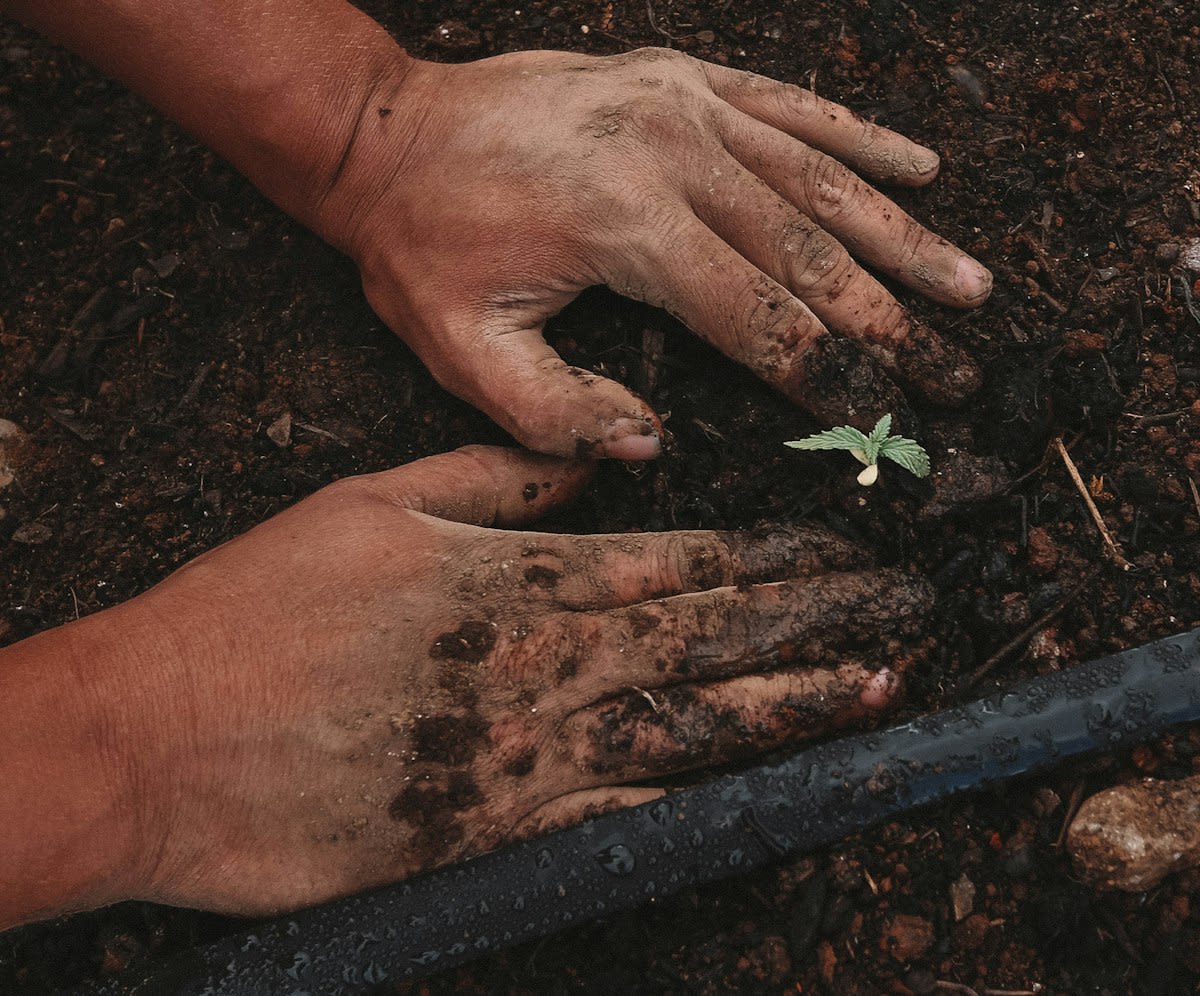
Consider the Loess Plateau in China. For years, the struggle there was not about 'precision' but about survival against extreme erosion (Source: Frontiers, 2026). The shift toward increasing grassland and decreasing cultivated land since 2005 demonstrates a hard turn away from intensive cultivation toward ecological stability (Source: Frontiers, 2026). If the thickest loess deposits on earth require a total change in land use to stop the bleed, your small-scale precision tweaks are unlikely to be enough.
The Roadmap: Moving from Precision to Regeneration
- Audit the Hollow: Stop looking at yield-per-acre as your only KPI. Measure the weight of organic matter and the presence of earthworms. If your soil is light and dusty despite high NPK levels, you have a mechanical failure in your biological web.
- Break the Synthetic Grip: Gradually reduce reliance on synthetic chemicals. Excessive application has led to the die-off of the very microbes that make nutrients available (Source: WalsonParker, 2026). Start by replacing 20% of your synthetic inputs with compost or cover crop biomass.
- Suture the Terrain: Implement multi-species cover cropping. Monocultures leave the soil naked and brittle. By planting a diverse web of roots, you create a biological suture that holds the topsoil in place and prevents the kind of subsurface piping and collapse seen in degraded plateau regions (Source: Frontiers, 2026).
- Monitor Thermal Vulnerability: Stop ignoring the temperature. Staple crops like corn and soybeans exhibit severe non-linear vulnerability when they hit thermal thresholds of 29 and 30 degrees Celsius, respectively (Source: WalsonParker, 2026). Healthy, carbon-rich soil acts as a buffer, protecting roots from these Extreme Degree Days (EDD).
- Validate via Nutrient Density: Shift your success metrics from volume to quality. Work with buyers who value nutrient density and flavor over sheer tonnage. This aligns your financial incentive with the health of the soil.
The transition is not seamless. I have sat in countless boardrooms where the AgTech sales rep argues that a new sensor can 'optimize' fertilizer use to 99% efficiency. But here is the invisible friction: the sensor is measuring the chemistry, not the biology. In the field, we see a recurring dispute between the data scientists and the growers. The data says the nitrogen is there, but the plant is yellowing because the microbial bridge that transports that nitrogen into the root has been incinerated by salt-heavy synthetics. This is the gap where precision metrics fail and biological reality takes over.
"To support small- to mid-sized family growers and their efforts to advance regenerative agriculture, we need to build widespread understanding of what those practices accomplish, particularly among retailers and their shoppers."— Paul Kneeland, Vice President of Sales at Elevated Foods
This shift requires a new kind of market intelligence. We are seeing a move toward measurable outcomes—nutrient density and food quality—rather than just bushel counts (Source: Bluebook Services, 2026). When the market begins to pay for the health of the product, the grower is finally freed from the trap of maximizing synthetic output. It is a transition from a volume-based economy to a value-based one.

Common Pitfalls in Soil Recovery
The most dangerous mistake a practitioner can make is 'regenerative theater.' This is when a grower adds a few cover crops but maintains the same heavy chemical regime. You cannot suture a wound while you are still cutting it. The synthetic inputs continue to suppress the microbial life you are trying to invite back. This leads to a frustrating plateau where the soil looks better on the surface, but the internal biological structure remains brittle.
Another failure is over-reliance on a single 'magic' amendment. Whether it is a specific bio-stimulant or a new organic fertilizer, the goal is diversity, not a different kind of monoculture. If you replace synthetic NPK with a single organic substitute without changing your tilling practices or crop diversity, you are simply swapping one dependency for another. The soil needs a web of inputs, not a silver bullet.
Fact-Check & Accuracy Note
The data on topsoil degradation (33% global loss) is sourced from WalsonParker (2026). There is ongoing academic debate regarding the speed of recovery for degraded soils; some argue that microbial die-offs are reversible within 3-5 years of regenerative practice, while others suggest that severe structural collapse, such as that seen in the Loess Plateau (Frontiers, 2026), requires decades of land-use change to fully resolve.
Editorial Note
Editorial Note: This guide prioritizes biological outcomes over chemical precision. While AgTech tools (like those showcased at the Organic Grower Summit 2026) are useful for monitoring, they should supplement, not dictate, the biological management of the land.