
Does precision actually equal health? Most agribusiness executives believe that more data equals a better crop. They are wrong. While we track every drop of water via satellite and inject nutrients with surgical accuracy, the biological vitality of the soil often vanishes under the weight of the very tools meant to save it. We have traded the messy, living complexity of the earth for a clean dashboard.
The shift is happening now. In the last twelve months, the industry has moved from experimenting with 'smart' tools to a full-scale commercial embrace of precision nutrition. The Agricultural Nano Fertilizer Market is the primary engine here. Valued at $2.89 billion in 2025, it is projected to hit $9.14 billion by 2033 (Source: Verified Market Research, 2026). This is not a slow climb. It is a steep ascent driven by a 15.5% CAGR (Source: Verified Market Research, 2026). Growers are no longer just farming; they are managing chemical delivery systems.
The Yield Illusion: Lessons from the East
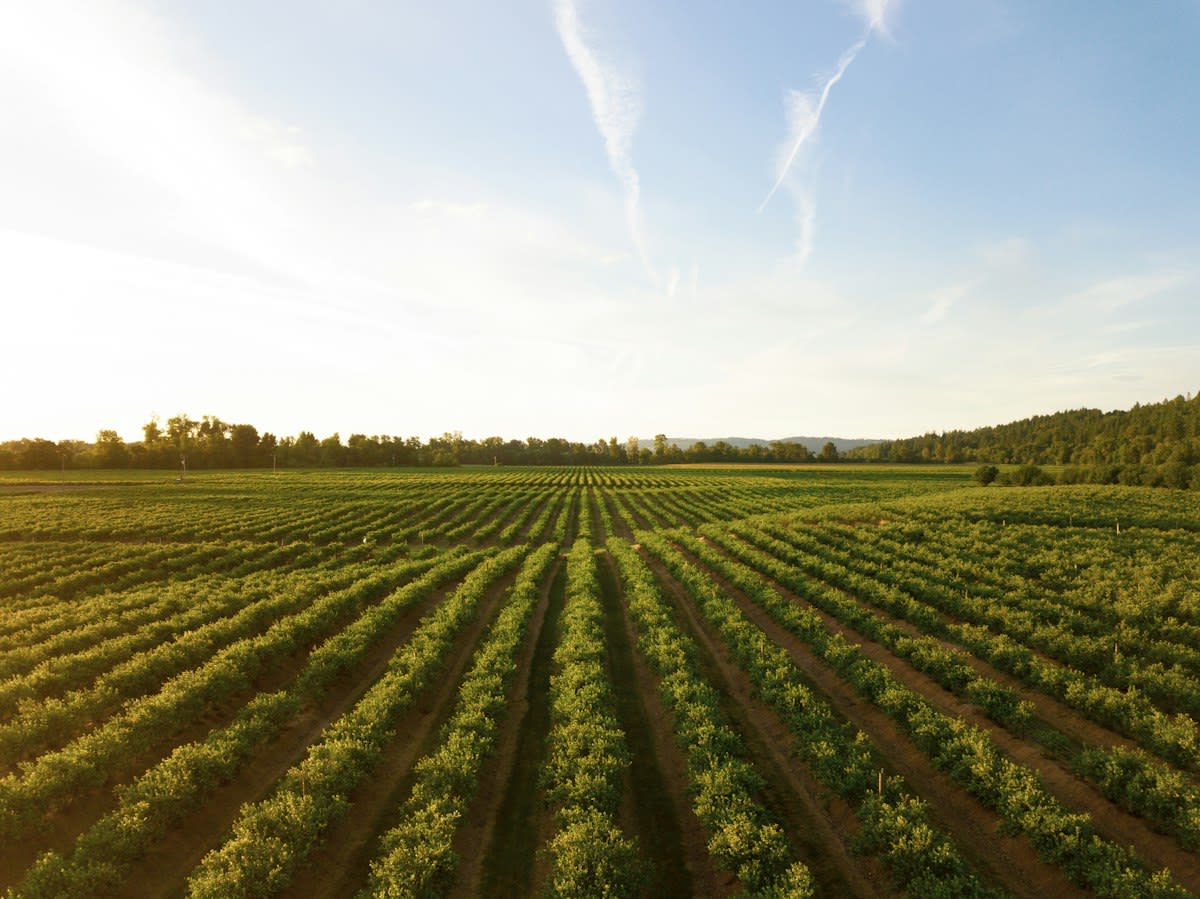
Look at China. The numbers are staggering. Fruit cultivation area expanded from 8,931.58 thousand hectares in 2000 to 12,722.29 thousand hectares by 2024 (Source: National Bureau of Statistics of China, 2026). Even more aggressive is the yield surge. Output climbed from 62.25 million tons in 2000 to 251.68 million tons in 2024 (Source: National Bureau of Statistics of China, 2026). On paper, this is a triumph of productivity. In reality, this scale of intensification often leaves the soil brittle.
Why does this matter? Because yield is a vanity metric. A plant can be fed intravenously by nano-fertilizers and high-tech irrigation while the soil around its roots becomes a dead medium. We see a collision between the desire for immediate volume and the long-term requirement for organic stability. The growth rate of fruit yield—6.02% annually—outpaces the growth of the land itself (Source: National Bureau of Statistics of China, 2026). This means we are squeezing more from less, often ignoring the biological cost.
The Fragmented Defense
The policy response is lagging. In the United States, the approach to saving the soil has been a mess of disconnected programs. Agriculture Secretary Brooke Rollins recently admitted that conservation efforts at the USDA’s Natural Resource Conservation Service are severely fragmented (Source: Civil Eats, 2026). They address one part of the problem while ignoring the whole. A new regenerative agriculture initiative now attempts to unify this process through whole-farm planning (Source: Civil Eats, 2026).
"Biochar has the potential to build more resilient agroecosystems by improving soil health, stabilizing and increasing yield and profitability, increasing beneficial microbial communities, improving soil water availability, and providing an efficient means to immediately improve degraded soils, particularly in high disturbance and water-limited systems."— Dr. Bianca Moebius-Clune, Climate and Soil Health Director at AFT
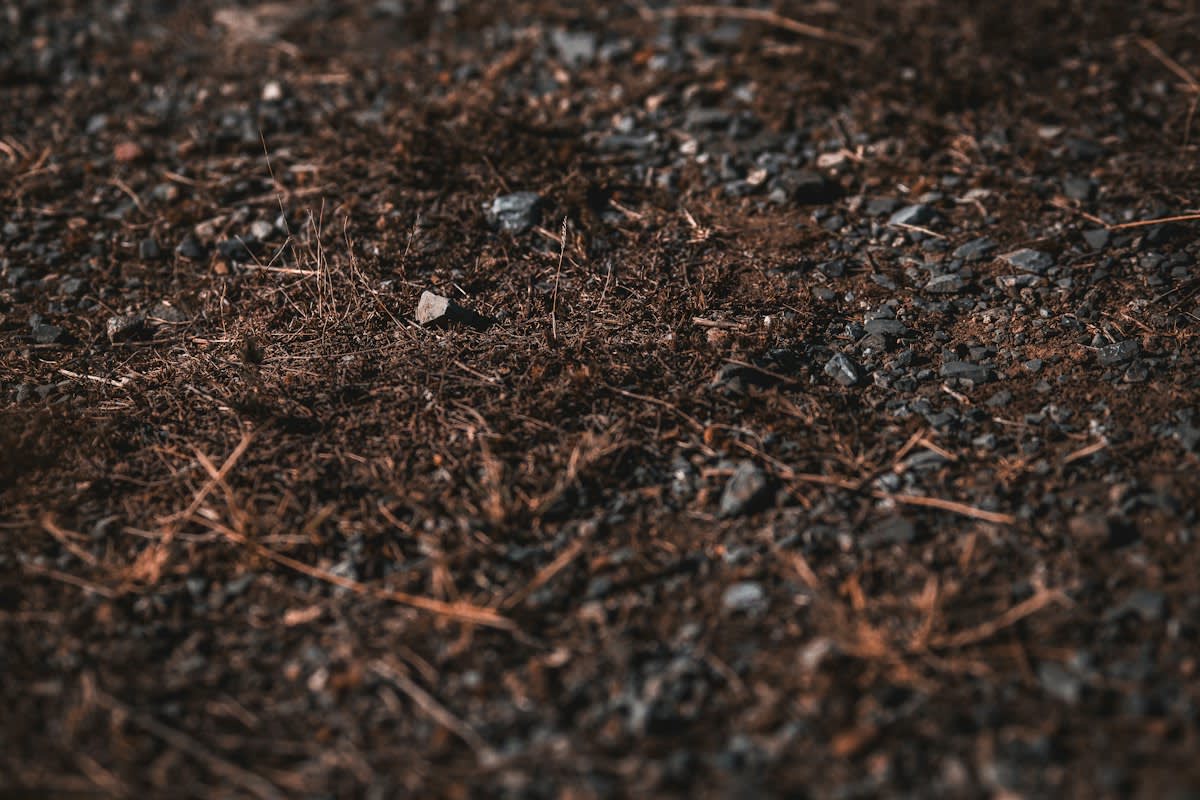
The USDA is betting on biochar to fix the damage. A $5 million award was recently granted to expand nationwide soil health research, connecting 35 demonstration farms across 14 states (Source: Farms.com, 2026). This is a critical admission. The government is finally acknowledging that the 'smart' hardware of the last decade did not solve the soil crisis. Instead, they are returning to carbon-based solutions to restore the microbial communities that precision chemicals often erase.
The Practitioner's Friction
Walk into any regional agronomy office and you will find a war. On one side are the data scientists. They trust the sensors. They want to optimize every milligram of nitrogen. On the other side are the veteran farmers who can smell when a field is dying. The friction is invisible to the shareholder but visceral to the grower. The data might say the nutrient levels are optimal, but the farmer sees a lack of tilth and a disappearance of earthworms. This is the gap where 'smart farming' fails.
This tension is reflected in the markets. Deere & Company reported worldwide sales of roughly $51.7 billion for fiscal 2024 (Source: autorskesperky, 2026). Yet, they faced a year-on-year decline. Why? A slowdown in the farm market. Farmers are hesitant to buy more expensive, high-tech machinery when the fundamental health of their land is in question. The hardware is hitting a ceiling because the biology is bottoming out.
The New Agronomy Web
We are seeing a shift toward integrated farmland services. It is no longer just about buying a tractor. Demand is growing for professional farm management, soil testing, and crop advisory services (Source: openPR, 2026). This is an attempt to suture the divide between technology and ecology. The goal is to move from 'precision'—which is often just efficiency in extraction—to 'stewardship', which is efficiency in regeneration.
The trajectory is clear. The first wave of smart farming was about the machine. The second wave is about the molecule, seen in the rise of nano-fertilizers. The third wave, which we are entering now, must be about the microbe. If we continue to prioritize the dashboard over the dirt, we will have the most precise way possible to manage a wasteland.
Fact-Check & Accuracy Note
The data used in this report draws from Verified Market Research (2026) regarding nano-fertilizer valuations and the National Bureau of Statistics of China (2026) for fruit yield metrics. Academic debate continues regarding the scalability of biochar across different soil types, with some researchers arguing that its benefits are highly site-specific rather than universal.
| Metric | Baseline/Start | Projected/End | Source |
|---|---|---|---|
| Nano Fertilizer Market | $2.89 Bn (2025) | $9.14 Bn (2033) | Verified Market Research |
| China Fruit Area | 8,931.58k ha (2000) | 12,722.29k ha (2024) | NBS China |
| China Fruit Yield | 62.25m tons (2000) | 251.68m tons (2024) | NBS China |