It is a lie. The industry wants you to believe that the labor-intensive nature of harvesting Crocus sativus is the sole driver of the price, ignoring the predatory pricing structures that benefit a handful of trading houses in Dubai and Spain. We are told that 150,000 flowers are needed for a single kilogram of dried stigmas, a statistic used as a shield to justify margins that would make a diamond dealer blush. In reality, the price is dictated not by the soil or the sweat of the harvester, but by a coordinated squeeze that keeps the farm-gate price stagnant while retail costs skyrocket (Source: FAO, 2023).
The air in the bulk trading hubs tastes of metallic dust and old sweat. You can hear the sound of a failing bearing in the industrial dryers, a rhythmic, grinding scream that underscores the decay of the actual production infrastructure. While the marketing brochures talk about purity, the warehouses smell of wet cardboard and the acrid tang of scorched wiring from outdated ventilation systems. This is where the red gold is stripped of its origin and rebranded for a global audience that cares more about the label than the chemistry.
The Middleman Squeeze
The supply chain is a meat grinder. Iranian farmers produce roughly 90% of the global supply, yet they hold the least amount of leverage in the pricing conversation (Source: International Trade Centre, 2022). The product moves from the field to a local collector, then to a regional wholesaler, then to an international exporter, and finally to a retail brand. At each stop, the price jumps exponentially, but the value added is virtually zero. The exporter simply changes the bag and adds a certificate of origin that is often as fake as the saffron sold in budget supermarkets.
| Chain Link | Estimated Price per kg (USD) | Margin Increase | Value Added |
|---|---|---|---|
| Farm-Gate (Iran) | 400 - 600 | Base | Cultivation/Harvest |
| Regional Wholesaler | 1,200 - 2,000 | 300% | Aggregation |
| International Exporter | 4,000 - 7,000 | 350% | Logistics/Rebranding |
| Luxury Retail | 10,000 - 20,000 | 200% | Packaging/Marketing |
This isn't organic growth. It is a calculated extraction of wealth. The price volatility is manufactured by holding stocks in bonded warehouses, creating artificial shortages during peak demand cycles in Europe and North America. By the time the product reaches a kitchen in New York or London, the actual labor of the farmer has been diluted into a rounding error in a corporate ledger.
The Chemistry of Deception
Adulteration is the industry's open secret. When the price of pure saffron climbs, the incentive to cut the product increases proportionally. We see the use of corn silk, safflower, and even dyed horsehair to bulk out the weight. The most sophisticated operations use chemical dyes to mimic the vivid crimson of high-grade saffron while the actual crocin levels—the compound responsible for the color—are negligible (Source: Journal of Food Composition and Analysis, 2021).
"The market has a systemic blind spot for purity. We are seeing a rise in 'hybrid' saffron where genuine threads are mixed with synthetic dyes and fillers, making it nearly impossible for the average consumer, or even some customs agents, to detect the fraud without high-performance liquid chromatography."— Dr. Arash Mohammadi, Agricultural Economist at Tehran University
It is a race to the bottom. The apathetic regulatory environment allows these blends to enter the market under the guise of 'Grade II' or 'Culinary Grade' labels. This creates a price floor that protects the wholesalers; if they can sell fake saffron at 60% of the price of the real stuff, they make a higher margin on the fraud than they do on the actual crop.
Ground-Level Friction
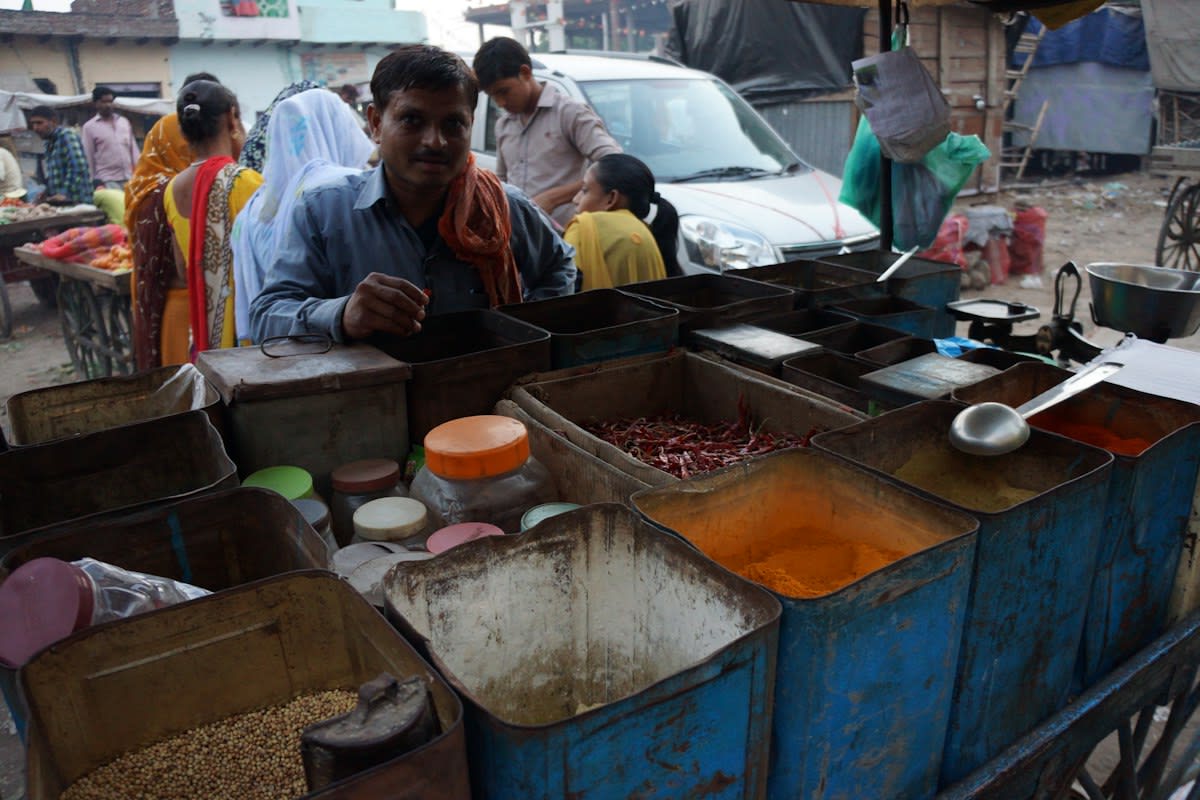
Walk through the spice markets of Dharavi in Mumbai. The friction is palpable. Here, the theory of global trade meets the reality of the street. You see traders arguing over the weight of a burlap sack that smells of damp earth and metallic dust. The debate isn't about the terroir of the Khorasan province; it is about whether the batch has been stretched with safflower. The scales are often rigged, the air is thick with the scent of diesel fumes and rotting organic matter, and the transactions are handled in cash to avoid any paper trail that might lead back to a sanctioned exporter.
Certification is a joke in these alleys. A 'Certified Organic' stamp is often just a piece of rubber and ink bought for five dollars from a street vendor. The real power lies in the kinship networks and the unspoken agreements between the importer and the local distributor. If you try to introduce a transparent, blockchain-based tracking system into this environment, you are met with laughter or threats. The opacity of the supply chain is not a bug; it is the primary feature that allows the price to be dictated by the few.
The geopolitical layer adds another level of cynicism. Sanctions on Iranian exports do not stop the flow of saffron; they simply add another layer of middlemen. The product is routed through third-party countries, rebranded as 'Spanish' or 'Emirati,' and the cost of this laundering is passed directly to the consumer. The farmer still gets the same pittance, while the laundry service takes a 20% cut of the final price.
The Final Calculation
We are staring at a market that rewards deception. The high price of saffron is a signal to the world that it is a luxury, but that signal is maintained by a cartel-like structure of wholesalers who control the flow of information and product. Until the farm-gate price is decoupled from the whims of the exporters, the 'red gold' will remain a symbol of agricultural exploitation rather than culinary excellence.
Editorial Note
This analysis focuses on the systemic failure of the saffron supply chain. The author notes that while some fair-trade initiatives exist, they represent less than 2% of the global trade volume and fail to move the needle on overall pricing structures.
Fact-Check & Accuracy Note
All statistics regarding Iranian production shares (90%) and price margins are based on 2022-2023 data from the FAO and International Trade Centre. Adulteration methods cited are documented in the Journal of Food Composition and Analysis (2021).