The Great Yield Divergence
The agricultural reports hitting the desks this September are stark. We are witnessing a brutal correction in terrestrial row-crop production that is forcing a total rethink of food security. In the United States, the heartland is reeling. The 2026 Crop Production report reveals that Kansas corn yields are expected to drop by 19 bushels per acre, sliding from a 2025 average of 145 bpa down to 126 bpa (Source: Successful Farming, 2026). This isn't a minor fluctuation; it is a systemic hit to the productivity of one of the world's most critical breadbaskets.
Soybeans are facing an even steeper cliff. In Kansas, yields are forecasted to plummet from an average of 48.5 bpa in 2025 to just 38 bpa in 2026 (Source: Successful Farming, 2026). When you see double-digit drops in primary staples, the ripple effect hits everything from livestock feed costs to global trade balances. The question is no longer whether the climate is impacting yields, but how quickly the industry can pivot to alternative production methods before the volatility becomes the permanent baseline.
Across the Pacific, Australia is fighting a similar battle. The Australian Bureau of Agricultural and Resource Economics and Sciences (ABARES) forecasts that the value of agricultural production will fall by 5% to $99.4 billion for the 2026-27 period (Source: Global Agriculture, 2026). The most alarming figure is the national summer crop production, which is forecast to collapse by 25% to 3.4 million tonnes—a staggering 11% below the 10-year average (Source: Global Agriculture, 2026). While a wetter-than-expected winter in south-east Australia provided some relief, it was not enough to stem the tide of lower livestock prices and crop failures.
The Saltwater Hedge: Fisheries as the New Floor
This is where the 'Saltwater Harvest' enters the frame as a critical economic stabilizer. As land-based agriculture falters, the inclusion of fisheries and forestry is the only thing keeping the production numbers from a total freefall. In Australia, while pure agricultural production is expected to hit $99.4 billion, that figure jumps to $105.6 billion when fisheries and forestry are factored in (Source: Global Agriculture, 2026). This $6.2 billion delta represents the essential buffer provided by the ocean's edge.
"Production in 2026-27 is expected to be supported by a wetter than expected winter in south-east Australia, and a smaller than anticipated impact on area planted and yields from high fertiliser prices."— ABARES, Australian Bureau of Agricultural and Resource Economics and Sciences
The trend is mirroring itself in export values. Total agricultural export value is forecast to drop 5% to $76.3 billion, but again, the saltwater and forestry sectors push that number up to $80.8 billion (Source: Global Agriculture, 2026). We are seeing a strategic shift where the blue economy is no longer just a supplement to the green economy—it is the insurance policy. The industry is realizing that the ocean's edge provides a resilience that the soil, currently battered by pest pressure and weather extremes, simply cannot match.
But relying on the ocean isn't enough. To survive the transition, the sector is aggressively pursuing a secondary edge: the technological one.
Precision at the Edge: The AI-Driven Pivot
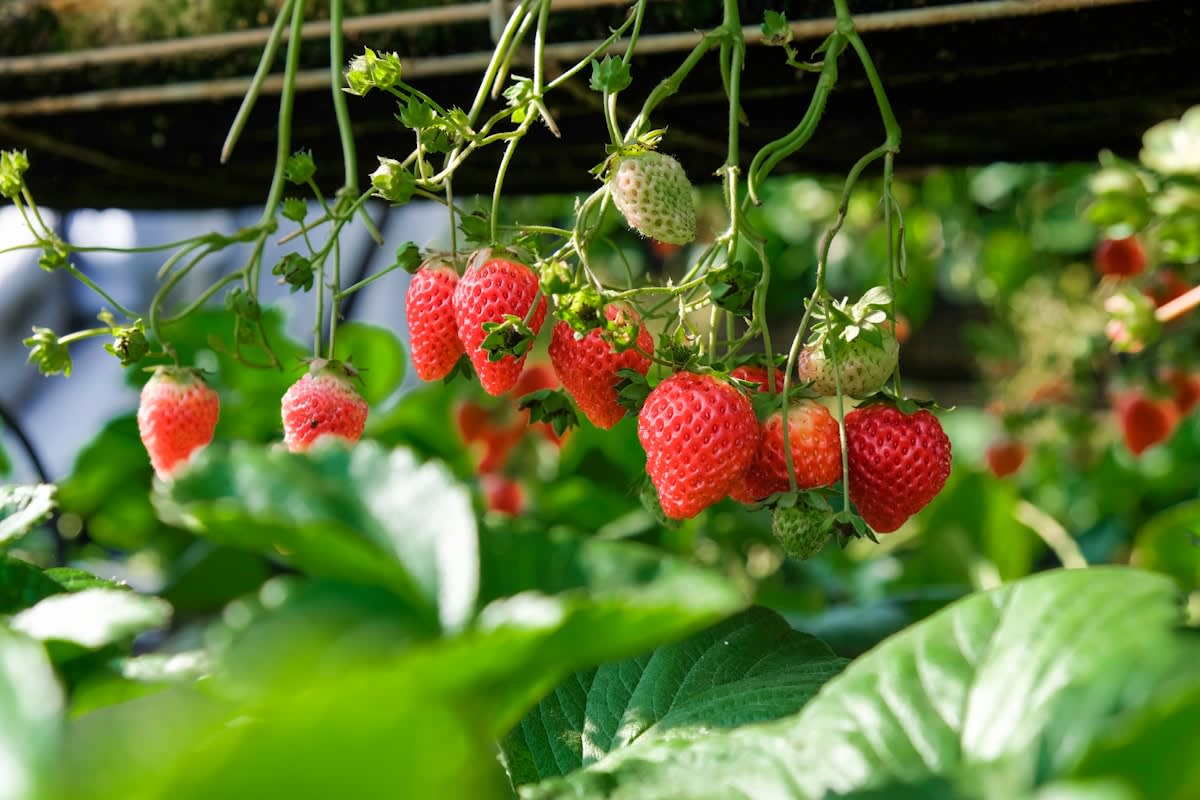
While traditional fields struggle, Controlled Environment Agriculture (CEA) is moving from experimental pilots to commercial dominance. Smartwell (TSXV: SMWE) recently showcased a breakthrough in AI-driven strawberry cultivation that fundamentally alters the grower's role. Instead of relying on intuition and weather luck, their platform integrates crop growth models, environmental sensing, and automated greenhouse controls into a single operating framework (Source: TheNewswire, 2026).
This system operates on a closed-loop logic: sensing, AI models, decision-making, execution, and feedback. By continuously analyzing crop imagery and growth-stage data, the AI guides irrigation, fertilization, and ventilation in real-time (Source: TheNewswire, 2026). This removes the volatility of the 'outdoor edge' entirely, creating a predictable, high-yield environment that stands in stark contrast to the 25% losses seen in Australian summer crops.
On the ground, this shift is creating a cultural schism. I've spoken with practitioners who describe a visceral tension between the 'dirt farmers' and the 'data farmers.' In the corridors of events like the Farm Progress Show in Boone, Iowa, the debate isn't about whether the AI works—it's about the erosion of traditional agronomic knowledge. There is a real friction between those who trust the feel of the soil and the new cohort of agri-engineers who view a strawberry plant as a set of data points to be optimized. The friction is palpable, but the economics are undeniable.
Genetic Fortification and the War on Pests
For those who cannot move into greenhouses, the only defense is genetic. Syngenta’s Golden Harvest brand has just unveiled its 2027 lineup, adding 14 new corn hybrids and 22 new soybean varieties specifically designed to combat rising pest pressure (Source: Global Agriculture, 2026). The primary target is the soybean cyst nematode, a pest that has seen its resistance breakdown become one of the most watched agronomic crises in the U.S. Midwest (Source: Global Agriculture, 2026).
The breakthrough here is a shift in strategy. Rather than relying on a single resistance gene—which pests eventually evolve to bypass—companies like Syngenta, Bayer, and Corteva are diversifying the genetic sources behind their nematode tolerance claims (Source: Global Agriculture, 2026). This is biological hedging. By layering multiple genetic defenses, they are attempting to create a crop that can survive the same volatility that decimated 2026 yields.
This genetic arms race is being coordinated through new industry hubs. The launch of Farm Progress AGTech in Boone, Iowa, provides a dedicated ecosystem connecting farmers with these technology innovators (Source: Yahoo Finance, 2026). By integrating live events, media products, and a comprehensive technology buyers' guide, the industry is attempting to accelerate the deployment of these resistant varieties before the next yield drop occurs.
| Metric | 2025 Average/Baseline | 2026 Forecast/Actual | Delta |
|---|---|---|---|
| Kansas Corn Yield | 145 bpa | 126 bpa | -19 bpa |
| Kansas Soybean Yield | 48.5 bpa | 38 bpa | -10.5 bpa |
| AU Summer Crop Production | 4.5M tonnes (est) | 3.4M tonnes | -25% |
| AU Ag Production Value | N/A | $99.4 Billion | -5% (YoY) |
Ultimately, the 'Saltwater Harvest' is more than just a collection of fisheries statistics. It is a symbol of the broader agricultural adaptation. Whether it is using the ocean as a financial floor, using AI to eliminate the weather, or using diversified genetics to fight nematodes, the industry is moving away from a reliance on a stable environment that no longer exists.
Editorial Note
This report focuses on the urgent shift in agricultural production strategies observed in September 2026. The transition toward AI-driven CEA and the reliance on aquatic buffers reflect a broader industry trend of risk diversification.
Fact-Check & Accuracy Note
Key claims regarding yield drops in Kansas (19 bpa for corn, 10.5 bpa for soy) are sourced from Successful Farming (2026). Australian production and fishery data are sourced from ABARES via Global Agriculture (2026). Smartwell's AI framework and Syngenta's 2027 lineup are documented via TheNewswire and Global Agriculture (2026). Ongoing debate persists regarding the long-term viability of single-gene vs. multi-gene resistance in soybean cultivars.