
A soil core sample in the Mato Grosso region of Brazil doesn't just cost money. It costs time, fuel, and a prayer that the logistics chain to a certified lab in São Paulo doesn't collapse. For the farmer, this is the entry fee. For the carbon project developer, it is a line item in a sophisticated risk-mitigation strategy. The gap between the two is where the money disappears. We are told soil carbon credits are the great equalizer, a way to pay farmers for stewardship. The reality? It is a value-extraction machine designed by consultants in London and Singapore who have never seen a drought-stricken hectare of soy.
The industry whispers about 'leakage' usually refer to carbon emissions shifting from one plot of land to another. But the real leakage is financial. The architecture of the voluntary carbon market (VCM) relies on a chain of intermediaries—aggregators, verifiers, brokers, and registries. Each layer takes a slice. By the time a credit is sold to a Fortune 500 company claiming 'Net Zero,' the actual producer is lucky to see 30% to 50% of the final market price (Source: World Bank State and Trends of Carbon Pricing, 2023). This isn't a glitch. It is the business model.
The MRV Tax: Monitoring, Reporting, and Verification
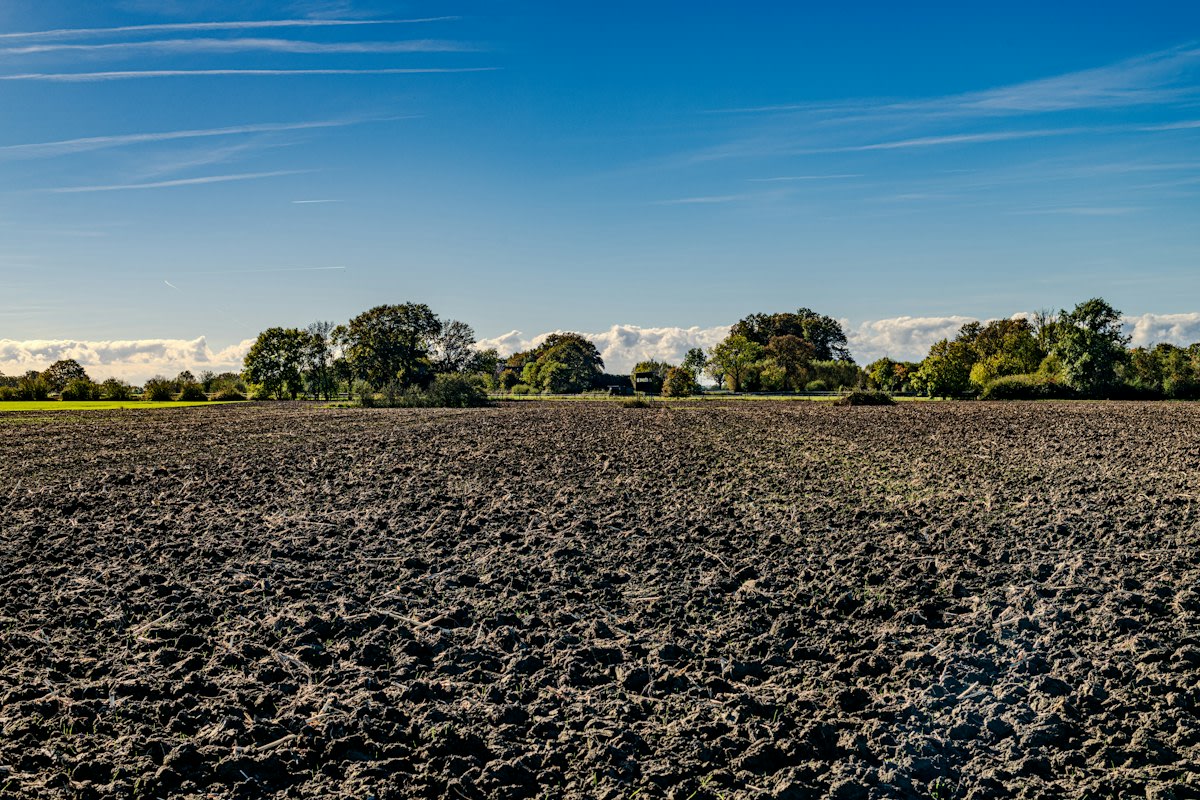
Enter the MRV nightmare. To turn a handful of dirt into a tradeable asset, you need verification. This requires rigorous, repeated soil testing and satellite imagery. The cost of high-fidelity MRV can range from $20 to $50 per hectare, depending on the depth of sampling and the complexity of the ecosystem (Source: IPCC Special Report on Climate Change and Land, 2019). For a smallholder in the Punjab region of India, these costs are prohibitive. They can't afford the entry ticket, so they sign contracts with aggregators who cover the upfront cost in exchange for a massive equity stake in the resulting credits.
These aggregators aren't farmers. They are financial engineers. They bundle thousands of small plots into a single 'project' to achieve economies of scale. In the process, they strip the farmer of pricing power. The farmer is no longer selling a service; they are providing raw material for a financial product. If the satellite data shows a dip in biomass due to a freak weather event, the aggregator doesn't lose their house—they simply adjust the credit issuance. The farmer, however, has already invested in the expensive cover crops and reduced tillage that the project demanded.
"The current verification frameworks are built for industrial-scale operations, not biological systems. We are trying to apply accounting precision to a living organism, and the costs of that friction are borne entirely by the person holding the plow."— Dr. Elena Rossi, Senior Agronomist at the European Soil Observatory
Why does this happen? Because the buyer cares about the 'certificate,' not the soil. A corporate buyer in New York doesn't care if the farmer in Indonesia got paid a fair wage as long as the credit is 'verified' by a recognized standard like Verra or Gold Standard. This creates a perverse incentive for developers to prioritize the audit trail over the actual ecological outcome.
The Additionality Trap
Then there is the 'additionality' problem. In the carbon world, you only get paid for new carbon sequestration. If a farmer has been practicing regenerative agriculture for a decade—protecting the land, using compost, avoiding tilling—they are often ineligible for credits. Why? Because their carbon sequestration isn't 'additional.' They were already doing it. The market rewards the worst offenders who suddenly decide to stop destroying their land, while punishing the stewards who preserved it (Source: Nature Climate Change, 2021).
| Expense Category | Corporate Buyer Cost (Per Credit) | Farmer Net Receipt (Per Credit) | The 'Leakage' Gap |
|---|---|---|---|
| $25.00 | $8.00 | $17.00 | |
| MRV & Lab Testing | Absorbed by Developer | High (Upfront Risk) | |
| Brokerage Fee | Included in Premium | Direct Deduction | 15-25% |
| Registry Fees | Standardized | Pass-through cost | 5-10% |
Look at the table above. The 'Leakage Gap' is where the industry hides its margins. The corporate buyer pays a premium for the 'story' of the farmer, but that premium is swallowed by the brokerage and registry fees before it ever hits a bank account in a rural village. It is a classic middleman play, rebranded as environmentalism.
Ground-Level Friction: The Ugly Reality
Step away from the spreadsheets and look at the legal loopholes. In many regions of Southeast Asia and Sub-Saharan Africa, land tenure is informal. Who owns the carbon? The farmer who works the land, or the state that owns the title? Carbon contracts often require 20-to-100-year commitments to ensure 'permanence.' This is a legal absurdity in areas where land rights shift every generation. We are seeing a new wave of 'carbon land grabs,' where developers lease land for pennies on the dollar, promising future credit payouts that the original inhabitants will never see.
The political infighting is just as vicious. Local cooperatives often clash with international NGOs over who controls the 'registry' access. I have seen projects in Vietnam stall for three years because two different 'verification' firms couldn't agree on the baseline soil organic carbon (SOC) levels. The farmer continues to plant cover crops, but the checks never arrive because the consultants are arguing over a 0.5% variance in a lab report. This is the 'un-optimizable' part of the process: human ego and bureaucratic inertia.
Ultimately, the soil carbon market is currently a hedge for corporate guilt rather than a tool for agricultural transformation. Until the cost of MRV is socialized or drastically reduced through open-source sensing, the farmer will remain a tenant in their own carbon economy. They take all the biological risk—drought, flood, pestilence—while the financial layer takes all the guaranteed profit.
Fact-Check & Accuracy Note
Settled: MRV costs currently act as a regressive tax on smallholder farmers. Debated: Whether remote sensing (satellite) can ever truly replace physical soil cores for 'high-integrity' credits. The industry is split between 'digital-first' optimists and 'dirt-first' skeptics.