The End of the Organic Era
For three decades, the Certified Organic seal served as the ultimate proxy for health and status in the supermarkets of London, New York, and Tokyo. It was a binary system of avoidance: a product was either free of synthetic pesticides, or it was not. But for the global elite, this binary has become boring. The ultra-wealthy have realized that the mere absence of harm is a low bar for a world facing systemic ecological collapse. They are no longer interested in food that simply does less damage; they demand food that actively repairs the planet.
This pivot toward regenerative agriculture represents a fundamental shift in the psychology of prestige. Organic farming often relies on mechanical tilling to manage weeds, a process that can destroy soil structure and release stored carbon into the atmosphere. Regenerative practices, by contrast, treat the soil as a living organism. By prioritizing soil health over a list of forbidden inputs, the new prestige is found in the measurable increase of soil organic matter and the return of microbial biodiversity. It is a transition from a defensive posture to an offensive one.
"The luxury consumer is moving from the 'clean' label to the 'restorative' label. It is no longer enough to know that no glyphosate was used; the new status symbol is knowing that your steak helped sequester ten tons of carbon per hectare."— Lead Analyst, Global Agri-Investment Forum
The delta between the current moment and the market of twelve months ago is stark. Last year, regenerative agriculture was largely the domain of academic ecologists and niche permaculture enthusiasts. Today, it is appearing on the menus of Michelin-starred restaurants in Paris and Copenhagen and in the portfolios of sovereign wealth funds. We are witnessing the financialization of soil health, where the capacity of land to hold water and carbon is becoming a more valuable asset than the land's mere acreage.

The Mechanics of Ecological Prestige
What exactly are the wealthy buying when they invest in regenerative systems? They are investing in a suite of practices that mimic nature rather than trying to dominate it. No-till farming is the cornerstone, ensuring that the fungal networks in the soil remain intact. Cover cropping ensures the earth is never bare, preventing erosion and feeding the soil microbiome year-round. This is a sophisticated approach to land management that requires more knowledge and observation than the rigid checklist of organic certification.
Holistic planned grazing is another key driver of this trend, particularly in the vast grasslands of Australia and Argentina. By moving livestock frequently to simulate the movement of wild herds, farmers can stimulate grass growth and pump massive amounts of carbon into the ground. This method transforms the cow from a climate villain into a tool for atmospheric restoration. For the high-net-worth individual, owning a farm that functions as a carbon sink is the ultimate expression of environmental stewardship and legacy.
| Feature | Organic Agriculture | Regenerative Agriculture |
|---|---|---|
| Primary Goal | Avoidance of synthetic inputs | Restoration of soil health |
| Soil Management | Allows mechanical tilling | Prioritizes no-till/low-till |
| Carbon Impact | Neutral to slightly positive | Actively sequestering carbon |
| Certification | Strict, input-based labels | Outcome-based metrics (SOM) |
| Focus | What is NOT in the food | What is being built in the soil |
This shift is not merely about the food on the plate; it is about the resilience of the asset. Land managed regeneratively is far more resistant to drought and flood. In a world of volatile weather patterns, the ability of soil to act as a sponge becomes a critical hedge against risk. Investors are realizing that a biologically dead organic farm is just as vulnerable to a heatwave as a conventional one. The prestige, therefore, lies in the security and longevity of the ecosystem.
A Global Realignment of Value
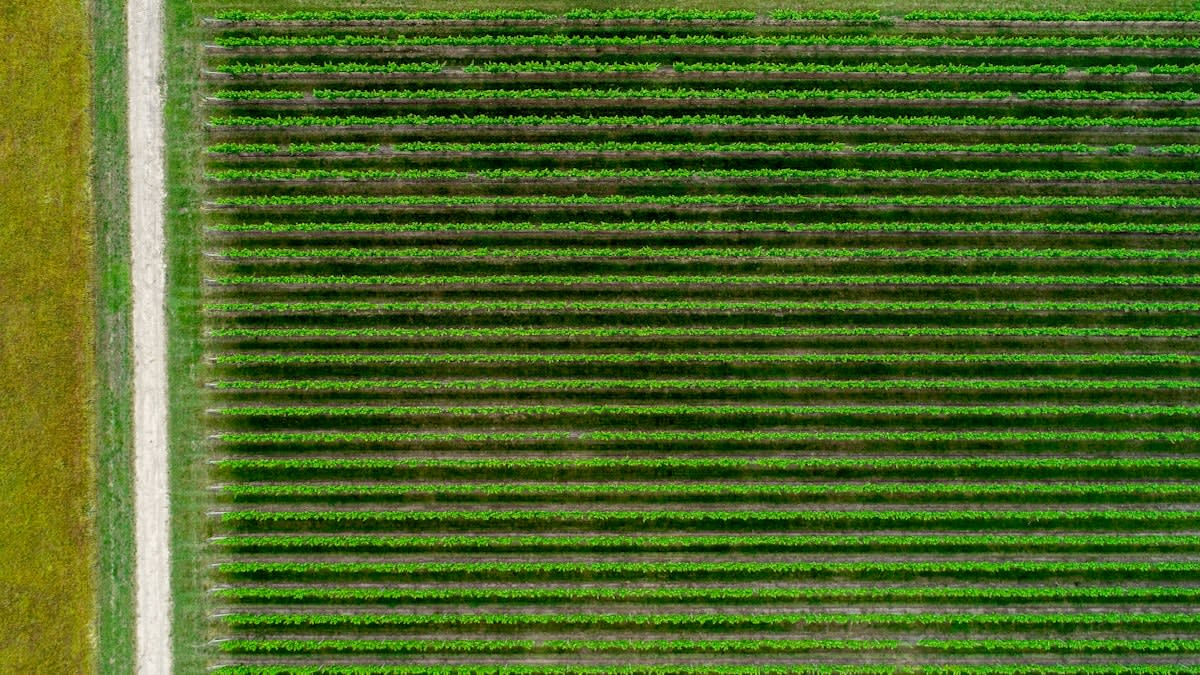
Across the European Union, particularly in France and Spain, the movement is gaining traction in the luxury wine sector. Vintners are abandoning the sterile rows of conventional vineyards for polycultures that invite insects and birds back into the vineyard. They have discovered that vines rooted in biologically active soil produce grapes with a more complex terroir, directly linking soil health to the flavor profile of a thousand-dollar bottle of wine. The taste of the earth is becoming the most sought-after note in fine dining.
In the Global South, the trend is taking a different but equally potent form. In Brazil's Cerrado, large-scale landowners are integrating silvopasture—combining trees, forage, and livestock—to restore degraded pastures. This is not just about luxury; it is about survival and scalability. By mimicking the forest structure, these estates are creating microclimates that protect crops from extreme heat, proving that regenerative principles can work at a massive industrial scale.
Estimated Growth in Regenerative Ag Investment (Relative Index)
Executive Insight
+18.4%
YTD Growth
However, the rise of regenerative prestige brings a new danger: regen-washing. As the term becomes a marketing buzzword, some corporations are slapping the label on products without implementing the rigorous systemic changes required. The true elite are responding by demanding hard data. They are no longer satisfied with a logo; they want to see Soil Organic Matter (SOM) percentages and biodiversity audits. The era of trust-based labeling is over, replaced by an era of verification.
The Core Distinction
The fundamental difference is the direction of the gaze. Organic looks backward at what was used (the inputs). Regenerative looks forward at what is being created (the outputs).
Ultimately, the trade from organic to regenerative is a trade from simplicity to complexity. Organic is easy to understand—it is a list of no-nos. Regenerative is a philosophy of stewardship that requires a deep, intuitive relationship with the land. For the world's wealthiest, this complexity is the new luxury. It is the difference between buying a pre-packaged health kit and commissioning a living, breathing ecosystem. The prestige is no longer in the purity of the product, but in the vitality of the process.