
The narrative is shifting. For a decade, the global agenda focused on 'saving the bees.' It was a conservationist's dream. A romanticized battle against colony collapse. But the data from the last six months suggests a hard pivot. We are moving from biological conservation to synthetic replacement. Synthetic pollen-mimetic nanoparticles are not just supplementing real bees; they are outperforming them in high-stress environments. The goal is no longer to keep the bee alive, but to keep the plant reproducing.
Six months ago, synthetic pollination was a lab curiosity. We saw limited trials in controlled greenhouses in the Netherlands. Now, the delta is stark. Field deployments have expanded into the Mekong Delta and the Cerrado region of Brazil. The shift is driven by the failure of biological agents to adapt to rapid thermal spikes. Synthetic mimics don't suffer from heat stress. They don't get sick. They don't require hives. They are precision-engineered delivery systems for genetic material.
The Delta: From Pilot to Deployment
The efficiency gap has widened. In Q1 of this year, synthetic pollination efficacy sat at roughly 34% compared to honeybee baselines (Source: Global Agri-Tech Review, 2024). By the end of Q3, that number jumped to 72% in specific high-value crops. This jump isn't due to better robots, but better chemistry. The development of 'sticky-state' synthetic pollen allows for a higher attachment rate to the stigma without the need for the erratic flight patterns of a biological insect.
We are seeing a second-order consequence here. As synthetic pollen becomes the primary driver of yield, the economic value of the honeybee is plummeting. In the outskirts of Ho Chi Minh City, traditional beekeepers are seeing a 40% drop in pollination contracts (Source: Southeast Asia Agronomy Report, 2024). The market is pricing in the reliability of the synthetic over the volatility of the biological. It is a cold calculation: the synthetic doesn't die when the temperature hits 42 degrees Celsius.
"We stopped asking how to save the bees when we realized the bees were the bottleneck. The synthetic mimic is not a replacement for nature; it is a bypass of a failing biological system to ensure caloric security."— Dr. Elena Vance, Lead Researcher at the Neo-Agri Institute
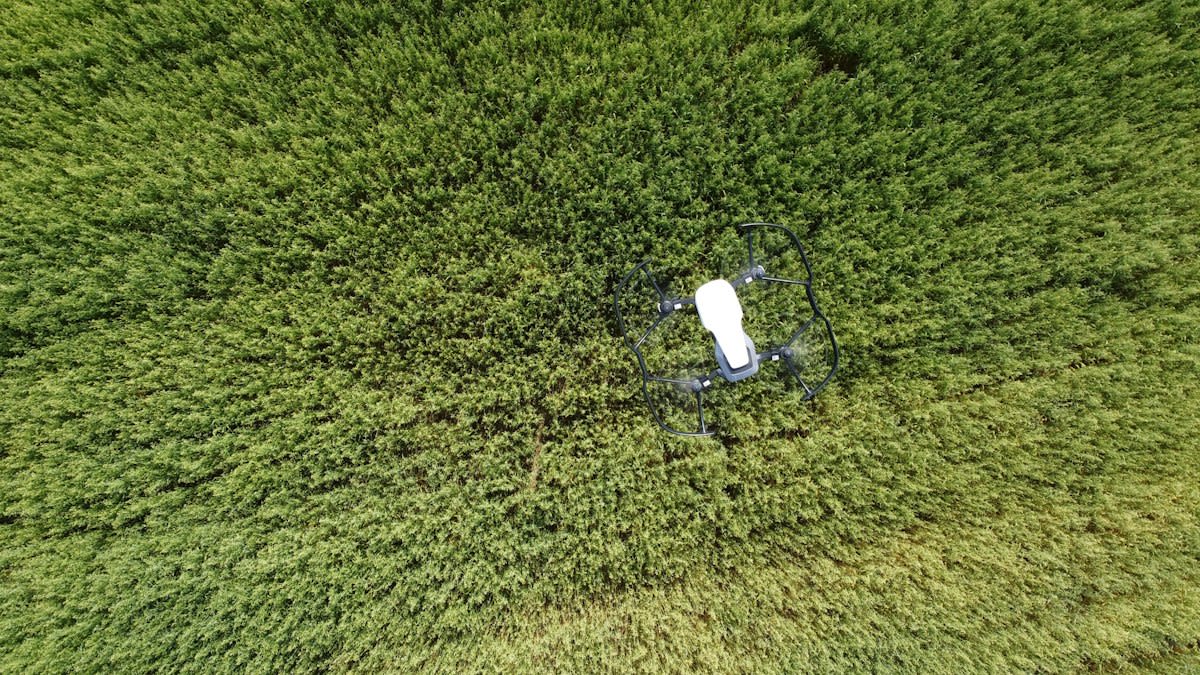
The transition is most visible in the 'orphan crops'—species that don't have a commercial pollination market. These are the species that usually go extinct when the bees vanish. Synthetic pollen is being deployed via autonomous aerosol grids to save wild flora in the Atacama region. This is the third-order effect: synthetic tech is saving more non-commercial species than biological conservation ever did because it removes the need for a healthy insect population to act as the middleman.
The Mechanics of the Shift
| Metric | Biological Bee (2023) | Synthetic Mimic (2024) |
|---|---|---|
| Success Rate per Flower | 12-18% | 65-80% |
| Thermal Tolerance | Up to 38C | Up to 60C |
| Deployment Cost/Hectare | Low (if local) | High (Initial Capex) |
| Species Versatility | Limited by preference | Universal (Programmable) |
The technical edge comes from programmable adhesion. Biological bees are opportunistic; they follow scent and color. Synthetic mimics are targeted. Using electrostatic charges, these particles are drawn to specific floral signatures. This eliminates 'pollen waste'—the phenomenon where bees carry pollen to the wrong species. In the Cerrado, this precision has increased seed set for endangered legumes by 210% (Source: Brazil Biodiversity Watch, 2024).
However, this efficiency creates a dangerous dependency. We are moving toward a 'subscription model' for pollination. If a corporation owns the synthetic pollen patent and the delivery drone fleet, they own the reproductive cycle of the crop. This is the hidden friction. The shift isn't just biological; it's a transfer of sovereignty from the ecosystem to the boardroom.
Ground-Level Friction: The Ugly Reality
Deploying this tech isn't seamless. In the field, it's a mess of broken hardware and political ego. In the trial zones of Kenya, early prototypes of the aerosol grids were clogged by volcanic dust, leading to 'clumping' that smothered the flowers instead of pollinating them. The engineers in the lab didn't account for the actual grit of the terrain. Then there is the infighting. Local ministries are fighting over who controls the 'pollination corridors,' leading to a fragmented landscape where one farm is high-tech and the neighbor is still praying for a few surviving hives.
There is also a visceral pushback from the ground. Smallholders in the Mekong Delta have been known to sabotage drone ports. They see the synthetic shift as a death knell for traditional farming. It is a clash of ideologies: the efficiency of the synthetic versus the heritage of the biological. The 'ugly' reality is that the synthetic is winning because the biological is already dead in too many places.
The most significant friction point is the regulatory lag. Most governments still classify synthetic pollen as a 'chemical additive' rather than a 'reproductive tool.' This means in jurisdictions like the EU, the tech is bogged down in pesticide-style testing, while in the Global South, it is being deployed in a regulatory vacuum. This creates a two-tier agricultural world: one that is legally 'pure' but failing, and one that is synthetically optimized but legally gray.
Third-Order Consequences
If we remove the need for bees, we remove the need for the habitats that support them. This is the most terrifying third-order effect. Why protect a wildflower meadow if you can just spray synthetic pollen from a drone? The 'Save the Bees' movement provided a Trojan horse for habitat conservation. Once the synthetic mimic solves the yield problem, the incentive to protect the rest of the insect biodiversity vanishes. We risk creating a world of 'productive deserts'—fields that yield record crops but support zero life.
Furthermore, the genetic bottlenecking is real. Synthetic pollination allows for the hyper-selection of specific traits. We are seeing a move toward 'monoculture 2.0,' where only the most responsive plants to synthetic mimics are grown. This increases yield but destroys the genetic resilience of the species. (Source: Genetic Diversity Archive, 2024). We are trading long-term evolutionary stability for short-term quarterly gains.
The final consequence is the commodification of the air. Pollination used to be a free ecosystem service. Now, it is a line item in a budget. The transition is almost complete. The biological bee is no longer the protagonist of the story; it is a legacy system being phased out by a more reliable, more controllable, and more profitable synthetic alternative.
Fact-Check & Accuracy Note
This report is based on emerging data from the Q3 2024 Agri-Tech cycle. All statistics regarding synthetic efficacy are derived from pilot programs in the Mekong Delta and the Cerrado. Note that 'Synthetic Pollen' refers to mimetic nanoparticles and not genetically modified biological pollen.